Showing posts with label INX-189. Show all posts

April 18, 2012

Medivir announces TMC435 in an expanded clinical collaboration

Medivir

PRESS RELEASE

18-Apr-12

· Expanded clinical study program evaluating a combination of TMC435 and daclatasvir (BMS-790052)

· TMC435 and BMS-986094 (formerly INX-189), two direct-acting antivirals in combination, will be evaluated in clinical trial

Stockholm, Sweden - Medivir AB (OMX:MVIR), the research-based speciality pharmaceutical company focused on the development of high-value treatments for infectious diseases, announces that its development partner, Janssen R&D Ireland has broadened its clinical collaboration agreement with Bristol-Myers Squibb Company (NYSE:BMY).

· This announcement concerns an expansion of the clinical collaboration agreement between Tibotec Pharmaceuticals (now Janssen R&D Ireland) and Bristol-Myers Squibb (NYSE:BMY) announced by Bristol-Myers Squibb on 2nd December 2011

· Bristol-Myers Squibb and Janssen have agreed, pending the outcome of the upcoming phase II study, to further study daclatasvir (BMS-790052) and TMC435 in a phase III trial.

· Bristol-Myers Squibb and Janssen have agreed to conduct a drug-drug interaction study with TMC435 and BMS-986094. Results from the DDI study will guide the further evaluation of the use of TMC435 and BMS-986094 in HCV patients.

TMC435 and daclatasvir (BMS-790052)

In the agreement announced on 2ndDecember 2011, TMC435, a once daily potent NS3/4A protease inhibitor (PI) in phase III development for the treatment of genotype-1 chronic hepatitis C virus (HCV) infection will be investigated in a combination in a phase II trial with Bristol-Myers Squibb´s investigational NS5A replication complex inhibitor, daclatasvir (BMS-790052), also in phase III development.

In the upcoming phase II study the companies will evaluate the potential to achieve sustained viral response 12 and 24 weeks post treatment in null responder and interferon intolerant patients with HCV genotype 1. This study is planned to start later in 2012.

TMC435 and BMS-986094 (INX-189)

The expanded clinical agreement also includes clinical evaluation of a combination of TMC435 and the nucleotide polymerase NS5B inhibitor BMS-986094, formerly known as INX-189. A drug-drug interaction (DDI) study with TMC435 and BMS-986094 will be conducted. Results from the DDI study will guide the further evaluation of the use of TMC435 and BMS-986094 in HCV patients.

Charlotte Edenius, Executive VP Research & Development, of Medivir commented: “We are very excited to see this expanded collaboration between Janssen and Bristol-Myers Squibb and to be investigating TMC435 with the nucleotide BMS-986094 and to expand the clinical collaboration evaluating TMC435 with daclatasvir. This represents one of several strategies to explore TMC435 in interferon free regimens; a development we believe will be an important advancement in the HCV field for patients.”

About TMC435

TMC435 is a highly potent once-daily (q.d.) investigational drug that is being jointly developed by Janssen R&D Ireland and Medivir to treat chronic hepatitis C virus infections in genotype 1 patients.

TMC435 - On-going global phase III program in brief:

· TMC435-C208 or QUEST-1 in 375 treatment-naïve genotype-1 patients

· TMC435-C216 or QUEST-2 in 375 treatment-naïve genotype-1 patients

· TMC435-C3007 or PROMISE in 375 genotype-1 patients who have relapsed after prior interferon-based treatment

· Phase III program in Japan, includes 417 genotype-1 treatment naïve and treatment experienced patients

· TMC435-C3001 is a phase III efficacy, safety and tolerability study comparing TMC435 versus telaprevir, each in combination with Pegylated Interferon α-2a (PegINF) and ribavirin (RBV), in hepatitis C genotype-1 infected patients who were null or partial responders to prior PegINF/RBV therapy

· TMC435-C3011 is an open label, single arm phase III trial to explore the efficacy, safety and tolerability of TMC435 150 mg once daily, in combination with PegIFN/RBV in 100 treatment naïve or treatment experienced, hepatitis C genotype-4 infected patients

For additional information from these studies, please see www.medivir.com and www.clinicaltrials.gov

About Hepatitis C

Hepatitis C is a blood-borne infectious disease of the liver and is a leading cause of chronic liver disease and liver transplants. The World Health Organization estimates that nearly 180 million people worldwide, or approximately 3% of the world's population, are infected with hepatitis C virus (HCV). The CDC has reported that almost three million people in the United States are chronically infected with HCV.

For more information about Medivir, please contact:

Medivir Mobile: +46 708 537 292 Rein Piir, EVP Corporate Affairs & IR
M:Communications medivir@mcomgroup.com
Europe: Mary-Jane Elliott, Amber Bielecka, Hollie Vile +44(0)20 7920 2330

About Medivir

Medivir is an emerging research-based specialty pharmaceutical company focused on the development of high-value treatments for infectious diseases. Medivir has world class expertise in polymerase and protease drug targets and drug development which has resulted in a strong infectious disease R&D portfolio. The Company’s key pipeline asset is TMC435, a novel protease inhibitor in phase III clinical development for hepatitis C that is being developed in collaboration with Janssen Pharmaceuticals.
In June 2011, Medivir acquired the specialty pharmaceutical company BioPhausia to ensure timely commercialisation of TMC435 in the Nordic markets, once approved.

Medivir’s first product, the unique cold sore product Xerese®/Xerclear®, was launched on the US market in 2011. Xerese®/Xerclear®, which has been approved in both the US and Europe, is being launched in collaboration with GlaxoSmithKline to be sold OTC in Europe, Japan and Russia. Rights in North America, Canada and Mexico were sold to Meda AB in June 2011. Medivir has retained the Rx rights for Xerclear® in Sweden and Finland.

For more information about Medivir, please visit the Company’s website: www.medivir.com

Source

April 13, 2012

GS-7977 Phase 3 in Genotype 2/3 Started, in Gt1 Soon waiting for QUANTUM results, nucleotides & Other HCV Drugs

Provided by NATAP

CORRECTION: The analysts reporting online is wrong regarding the BMS' NS5A+ GS7977 with or without ribavirin study. The presentation at EASL will report on the 24 week study, so the analysts report from the leaked abstract that the 12-week data is End Of Treatment is not correct. The 97% reported in the online leaked abstract is after 12 weeks on treatment that is of 24 weeks duration. There is a lagging cohort of this study that looks at 12 weeks total therapy, but this part of the study started later so results will be reported later.

From jules: Nucleotides are considered an important component of an HCV therapy regimen because they are potent & are not associated with developing drug resistance easily at all. Its worth repeating that the recent Gilead announcement that in a small study of null responders patients had undetectable viral load at the end of 12 weeks treatment with GS7977+RBV but virologically failed after stopping therapy has been misinterpreted in that observers think this is a bad commentary on this class of drugs. NOT, this is not the case. First, the patients were all undetectable after 12 weeks treatment, at the end of therapy, this is a great sign. Second, the therapy was ONLY 7977+RBV, essentially 1 drug in the hardest to treat patient population. HELLO, although 100% were cured in genotype 2/3 with the same therapy, this is the hardest to treat patients. Three, add more drugs to the regimen and/or longer duration of therapy to 24 weeks & I anticipate we will see very good results. This is in the context that at EASL next week Abbott is presenting 95% SVR rates in gt1 with 2 oral drugs, interferon-free ABT450 (a protease) plus a NNRTI (either ABT072 or ABT333, 2 studies), and at the end of 12 weeks treatment we heard preliminarily, a leak, that the 2 oral drug interferon-free regimen of BMS' NS5A+ GS7977 produced 97% undetectable viral load at the end of treatment. We are also poised to see soon results from the combination of TMC435+GS7977, TMC435 is the potent Tibotec protease. Bot these these NS5A+protease combinations are being studied with & without ribavirin & are interferon-free. Interestingly the Abbott protease ABT450 is boosted with low dose ritonavir & so is the Roche protease danoprevir which also appears to be very potent, so does boosting with low dose ritonavir provide a special significance related to potency & a barrier to resistance as it does in HIV? I suspect it does, lets wait for more info on this. There will be oral presentations on ATOMIC, PROTON, ELECTRON at EASL. QUANTUM study results expected soon after EASL. GS7977 is a nucleotide, it is the furthest along in development (phase 3 in gt2/3 & about to enter phase 3 in gt1), showed an average 4.5 to 5 log reduction in viral load with monotherapy over 7-14 days, while INX189 the Inhibitex nucleotide acquired by BMS showed an average viral load reduction of 4.25 logs after 7 days monotherapy and this nucleotide is further back in clinical development. Alios' 2 nucleotides were acquired by Vertex & we expect the first early clinical data this Spring, very soon. So, put this information together. Several years ago I predicted we would see 100% cure rates. NS5A inhibitors are an important class of drugs because they also are very potent with BMS' showing up to over 5 logs viral load reduction in monotherapy in gt1b and 3.3 logs in gt1a, this NS5A is in phase 3 clinical development now, there are additional NS5A inhibitors in earlier stages in development by other companies including Abbott, Achillion, Gilead, Presidio, Idenix & Merck. There are numerous potent new HCV protease inhibitors in development for which we will see updates at EASL next week including from Roche, Boerhinger Ingelheim, Abbott, Tibotec, Merck with BI & Tibotec in phase 3 now & Merck in 2b & Abbott & Roche about to enter phase 3, in addition to the 2 protease inhibitors that were approved last year boceprevir & telaprevir. There are numerous NNRTIs in development; there is a potent cyclophillin inhibitor from Novartis in phase 3 with updates in gt1 and gt2/3 at EASL.

BMS-790052, a First-in-Class Potent Hepatitis C Virus NS5A ... www.natap.org/2010/AASLD/AASLD_58.htm Nov 3, 2010 - Background: NS5A plays a central role in hepatitis C virus (HCV) replication. BMS-790052 is a first-in-class and potent NS5A inhibitor

PSI-938 and PSI-7977 as monotherapy and in combination & INX189 Monotherapy

ONCE DAILY DUAL-NUCLEOTIDE COMBINATION OF PSI-938 ... www.natap.org/2011/EASL/EASL_07.htm Apr 3, 2011 - PSI-938 and PSI-7977 as monotherapy and in combination were ... Of note, PSI-7977 monotherapy produced HCV RNA reductions over 7 days

INX189 Monotherapy at Higher Dose 200mg

AASLD: Antiviral Activity and Safety of INX-08189, a Nucleotide Polymerase Inhibitor, Following 7-Days of Oral Therapy in Na•ve Genotype-1 HCV Patients - (11/07/11)

Pharmasset Announces the Initiation of an Interferon-Free Phase 3 ... www.natap.org/2011/HCV/110111_02.htm Nov 1, 2011 - The final design of the trial will be based on emerging data from ongoing studies, including ELECTRON and QUANTUM

Pharmasset Initiates QUANTUM, a Phase 2b Interferon-Free Trial of ... www.natap.org/2011/HCV/091611_02.htm Sep 13, 2011 - The QUANTUM trial will evaluate interferon-free regimens of PSI-7977 400mg QD and PSI-938 300mg QD with and without ribavirin over 12 or

Pharmasset Announces Intent to Amend QUANTUM Trial - PSI938 ... www.natap.org/2011/HCV/121611_02.htm Dec 16, 2011 - 16, 2011 /PRNewswire/ -- Pharmasset, Inc. (Nasdaq: VRUS) announced today that the company will amend the design of the QUANTUM

(dec 2011) PSI7977 stays intact; PSI7977+R up for testing in GT 1 patients with data out late first quarter 2012. To date, over 400 patients have been exposed to PSI-7977 for 12 weeks or longer, and no notable safety signals have been identified. The goal of the QUANTUM study is to test whether the PSI-7977+R regimen for 12 weeks could also achieve the same near-100% SVR in genotype 1 (GT 1) patients as it did in GT 2/3 patients, and if 12 weeks of PSI-7977+R treatment is not sufficient, whether 24 weeks will be. The SVR data will be available during late first quarter or early second quarter 2012, by our estimation. We believe this will be the decisive data for Gilead and Pharmasset to have a pan-genotypic, all-oral regimen in hand to take into full blown Phase III studies.

Pharmasset Initiates Phase 2b ATOMIC Trial of PSI-7977 for Multiple HCV Genotypes - (03/31/11)

PSI-7977 400 mg with PEG/RBV Provides 93% SVR Across HCV GT ... www.natap.org/2011/hepDART/hepDART_02.htm Dec 4, 2011 - Pharmasset Initiates Phase 2b ATOMIC Trial of PSI-7977 for Multiple HCV Genotypes - (03/31/11) Gilead Sciences to Acquire Pharmasset,

Pharmasset Announces Further Expansion of ELECTRON Trial in ... www.natap.org/2011/HCV/101011_01.htm Oct 10, 2011 - "We look forward to reporting SVR12 results from Part 1 and interim data from the PSI-7977 monotherapy arm of ELECTRON on Sunday,

PSI-7977: ELECTRON Interferon is not required for Sustained ... www.natap.org/2011/AASLD/AASLD_07.htm - Translate this page PSI-7977: ELECTRON Interferon is not required for Sustained Virologic Response in Treatment-Na•ve Patients with HCV GT2 or GT3. Reported by jules Levin

December 6, 2011

New Data Reported on INX-189, HCV Nucleotide

top-line safety and antiviral data from its ongoing clinical trial designed to evaluate additional doses of INX-189, an oral nucleotide polymerase inhibitor being developed to treat chronic infections caused by hepatitis C virus (HCV), administered as monotherapy or in combination with ribavirin (RBV) for seven days.

Inhibitex Reports Recent Clinical and Corporate Developments

AASLD: Antiviral Activity and Safety of INX-08189, a Nucleotide Polymerase Inhibitor, Following 7-Days of Oral Therapy in Naïve Genotype-1 HCV Patients - (11/07/11)

Inhibitex Nucelotide INX-189 Higher Dosing Increases Viral Load Reduction - Inhibitex reports third quarter financial results and recent corporate developments - (11/07/11)

Inhibitex Commences Dosing of Phase 2 Clinical Trial of INX-189 in HCV Infected Genotype 2/3 Patients - (11/04/11)
Released: 11/29/11 07:00 AM EST

Inhibitex, Inc. (NASDAQ:INHX) (the "Company") today announced several recent clinical and corporate developments, including top-line safety and antiviral data from its ongoing clinical trial designed to evaluate additional doses of INX-189, an oral nucleotide polymerase inhibitor being developed to treat chronic infections caused by hepatitis C virus (HCV), administered as monotherapy or in combination with ribavirin (RBV) for seven days.

"We believe the significant increase in antiviral activity demonstrated with 100 mg INX-189 in combination with RBV, as compared to 100 mg INX-189 dosed as monotherapy, further confirms the antiviral synergy between INX-189 and RBV that we have consistently observed in preclinical and clinical results to-date," stated Dr. Joseph Patti, Senior Vice President and CSO of Inhibitex, Inc. "We look forward to further exploring this antiviral synergy with 200 mg of INX-189 and expanding the scope of our ongoing and planned Phase 2 clinical trials to include interferon-free combinations of INX-189 with other antiviral agents in HCV genotype 1, 2, and 3 patients in 2012."

Recent Corporate Developments

INX-189 for Chronic Hepatitis C - The Company today reported top-line safety and antiviral data from an ongoing Phase 1b extension trial of INX-189, which is designed to further evaluate the safety, tolerability, pharmacokinetics and antiviral activity of various doses of INX-189, administered as monotherapy or in combination with RBV, for seven days in treatment-naïve patients infected with chronic HCV genotype 1. In the ongoing trial, 100 mg INX-189, dosed once-daily for seven days in combination with RBV, continued to demonstrate potent and dose-dependent synergistic antiviral activity with a median HCV RNA reduction from baseline of -3.79 log10 IU/mL. Further, 100 mg INX-189 in combination with RBV was well tolerated and there were no serious adverse events. For comparison purposes, in a clinical trial completed earlier this year, 100 mg INX-189 dosed as monotherapy once-daily for seven days resulted in a median -2.53 log10 IU/mL reduction in HCV RNA levels. In this same clinical trial, the Company also reported antiviral data indicating that INX-189, when dosed once-daily at 9 and 25 mg in combination with RBV for seven days, demonstrated dose-dependent, synergistic antiviral activity.

The Company also reported today that, subject to regulatory review, it plans to further expand its ongoing Phase 1b extension trial to evaluate once-daily doses of 200 mg INX-189 in combination with RBV; 300 mg INX-189 as monotherapy; and 200 mg INX-005 (a single isomer of INX-189) as monotherapy, respectively, for seven days. The Company anticipates that the Phase 1b extension trial will be completed in the first quarter of 2012.

Additionally, the Company reported that it plans to submit a protocol amendment this quarter to its ongoing Phase 2 study in genotype 2 and 3 HCV-infected patients to include the evaluation of 100 mg and 200 mg of INX-189 dosed once-daily in combination with RBV for 12 weeks.

Financing Activity - The Company reported today that it had recently sold a total of 1,949,015 shares of common stock at an average price per share of $10.25 for total gross proceeds of $19,983,396 through its at-the-market (ATM) financing vehicle. The Company entered into a $20 million ATM financing arrangement with McNicoll, Lewis & Vlak LLC (MLV) in November 2010, which provides it the opportunity to sell registered shares into the open market through MLV from time-to-time under its effective shelf registration. After commissions, the Company received $19,383,274 in net proceeds. The intended use of the net proceeds is to support the expansion of the Company's planned Phase 2 program for INX-189 in 2012 and for general corporate purposes.

About Inhibitex

Inhibitex, Inc. is a biopharmaceutical company focused on developing products to prevent and treat serious infectious diseases. The Company's clinical-stage pipeline includes two Phase 2 development programs for which it has retained all future rights: INX-189, a nucleotide polymerase inhibitor in development for the treatment of chronic HCV infections, and FV-100, a nucleoside analogue in development for the treatment of shingles-associated pain. The Company also has additional HCV nucleotide polymerase inhibitors in preclinical development and has licensed the use of its proprietary MSCRAMM¨ protein platform to Pfizer for the development of a staphylococcal vaccine, which is currently being evaluated in a Phase 1/2 clinical trial. For additional information about the Company, please visit www.inhibitex.com.

--------------------------------

INX-189 Continues to Shape Up as a Very Potent Nuke
"Y. Katherine Xu - William Blair & Company, L.L.C."

· Before the markets opened on Tuesday, Inhibitex reported data from an additional arm in the Phase Ib study of its lead nuke (nucleotide polymerase inhibitor) candidate INX-189 in combination with ribavirin (R). Viral load drop at 7 days from the INX-189 100 mg QD+R combo was 3.79 logs, versus 2.53 logs for monotherapy INX-189 at 100 mg QD, demonstrating again the synergy between the two compounds, as R usually could contribute 0.5 log drop on its own. Earlier data from the Phase Ib study demonstrated dose-dependent additive/synergistic antiviral activity with 9 mg and 25 mg QD doses of INX-189 in combination with R; at the current dose of 100 mg, the synergy appears to be stronger. We summarize the 7-day viral kinetic activity from the Phase Ib study to date in table 1. In addition, the combination was determined to be safe and well tolerated, with no serious adverse events (SAEs).

· Further expansion of Phase Ib study to climb up the dose on monotherapy as well as combo therapy with R, as expected. Inhibitex plans to amend the ongoing Phase Ib study to include three additional 7-day treatment cohorts 1) INX-189 200 mg QD+R; 2) monotherapy INX-189 300 mg QD; and 3) monotherapy INX-005 (single isomer of INX-189) 200 mg QD.

· The monotherapy potency and the synergy with R demonstrated to date are encouraging; looking to match up PSI-7977 of Pharmasset and Gilead. As summarized in table 1, so far INX-189 monotherapy at 200 mg QD monotherapy produced 4.25 log drop, and 100 mg QD+R produced 3.79 log. Going forward, the 300 mg QD monotherapy and the 200 mg QD+R combo could produce higher viral load drops, approaching the 4.7 log drop demonstrated by Pharmasset's PSI-7977. We note that a potent nuke in combination with R, as demonstrated by Pharmasset, could become a stand-alone therapy.

· Expansion of the ongoing Phase IIb study by adding interferon-free, INX-189+R arms, following Pharmasset's footstep. Initiated in September 2011, the ongoing 12-week Phase IIb study planned to enroll and randomize 90 treatment-naïve GT2/3 into four cohorts 1) INX-189 25 mg QD +P/R (PEG-interferon+ribavirin) (n=25); 2) INX-189 50 mg QD + P/R (n=25); 3) INX-189 100 mg QD + P/R (n=25); or 4) placebo+P/R (n=15). Inhibitex will submit a protocol amendment by year end to include two additional interferon-free cohorts to the study: 1) 100 mg QD +R and 2) 200 mg QD +R. Completion of enrollment of the first four cohorts is expected by year end, and preliminary rapid virologic response (RVR) and early virologic response (EVR) data are anticipated by first quarter 2012.

· With such potency demonstrated, safety is now the gating point for INX-189's commercial viability. Should INX-189 demonstrate satisfactory 12-week safety, the probability of INX-189 eventually becoming commercially viable will be dramatically increased, in our opinion. .....We expect 12-week safety data from the first four cohorts of the Phase IIb study in the beginning of second quarter 2012; however, we would not be fully convinced of the safety profile until we see the full 12-week safety data from the planned interferon-free 200 mg QD of INX-189+R cohort. Such data may be available during the second half of 2012.
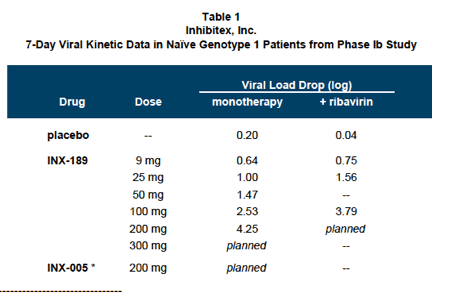
table1.gif

-------------------------------

Inhibitex jumps as company expands drug testing

Shares of Inhibitex Inc. climbed Tuesday after the company said it plans to expand studies of its experimental hepatitis C drug.

THE SPARK: The Atlanta company said it will ask the Food and Drug Administration for authorization to expand a mid-stage trial of its drug INX-189. Inhibitex wants to test larger doses of the drug and also wants to test a combination of INX-189 and ribavirin, a standard hepatitis C treatment. The regimen would exclude pegylated interferon, also a standard drug used in hepatitis C treatment.

The patients in the trial have genotype 2 or 3 hepatitis C. They are currently getting as much as 100 milligrams of INX-189 per day in the 12-week study. If the new trial design is approved, some patients will get 100 milligrams and 200 milligrams per day.

The company said it sold $20 million in stock to fund expansion of the trial.

Inhibitex also said it will expand a shorter early-stage trial of the drug to include 200-milligram and 300-milligram doses of INX-189. It will test the drug by itself, in combination with ribavirin, and combined with a second drug it is developing.

THE BIG PICTURE: Inhibitex is a development-stage company. It has no products on the market and INX-189 is its most advanced product. The drug is given by mouth and it is considered a promising treatment for hepatitis C. The chronic form of the disease can cause severe liver damage and is the primary cause of liver transplants in the U.S. The disease is expected to become a larger public health problem as baby boomers age.

Several companies are studying hepatitis C treatment regimens that don't include pegylated interferon, a drug that is administered by injection and can cause severe side effects. Inhibitex's decision to test INX-189 without interferon suggests the company thinks INX-189 will also be just as effective without interferon, matching the convenience and lower side effects of other experimental hepatitis C drugs.

SHARE ACTION: Inhibitex stock rose $1.62, or 14.2 percent, to $13.02 in morning trading. Earlier the shares reached an all-time high of $13.94. The stock doubled in value on Nov. 4 after Inhibitex said a 200-milligram dose of INX-189 reduced virus levels in patients during an early clinical trial.

------------------------------

Inhibitex Soars as Investors Chase Hepatitis Drug Developers
excerpted

http://www.minyanville.com, By Brett Chase Nov 29, 2011 1:20 pm

Gilead's $11 billion planned takeover of Pharmasset is generating investor excitement for rivals. Achillion and Idenix also rising.

The conventional wisdom after Gilead Sciences' (GILD) recently announced $11 billion takeover of hepatitis drug developer Pharmasset (VRUS) is that similar companies will be gobbled up for big prices.

The deal gave a boost to the already rising stocks of three smaller companies developing their own treatments for the liver-wasting virus hepatitis C: Inhibitex (INHX), Achillion Pharmaceuticals (ACHN) and Idenix Pharmaceuticals (IDIX).

But one only need look at the large players in various stages of developing their own hepatitis treatments to find potential suitors. Merck (MRK), for instance, beat Vertex to market with its new hepatitis treatment Victrelis by about a week but that product is being trounced by Incivek. (See Vertex Hepatitis Drug Beats Estimates.) Other big companies studying treatments include Vertex's development partner Johnson & Johnson (JNJ), Bristol-Myers Squibb (BMY), Abbott Laboratories (ABT), Novartis (NVS), Roche and Boehringer Ingelheim.

Source

November 23, 2011

New HCV Drugs at AASLD

62th Annual Meeting of the American
Association for the Study of Liver Diseases
San Francisco 2011 Nov 6-9

from Jules of NATAP: There were so many positive presentations on new HCV drugs in development that one can only conclude SVR/'cure rates' will eventually be 100% for all treatable patients, whether patients are white, black or gentotypes 1 or 2/3. The once-daily HCV nucleotide PSI-7977 captured the imagination at AASLD with studies in only 40 patients with genotype 2/3 showing 100% cure rates receiving interferon-free regimen of PSI-7977+ribavirin for only 12 weeks, in this study their are 4 different regimens studied, see the link below to read the entire details. In the genotype 1 study 95 patients received PSI-7977+peg/rbv for 12 weeks followed by 12 additional weeks of Peg/Rbv alone, with 91-98% SVR rates, there were no viral failures, 4 patients withdrew due to Peg/Rbv side effects. This drug is entering Phase 3 studies in the Spring 2012, the last phase before FDA approval, which could take until 2014. The manufacturer Pharmasset has a 2nd nucleotide PSI-938 in earlier development and has already conducted studies combining these 2, and will conduct further studies combining them. Two other major classes of drugs are in accelerated development. The potent once-daily BMS NS5A inhibitor BMS-790052 is moving quickly through development being studied currently in an interferon-free 2-drug combination in genotype 1 patients with PSI-7977, the study is ongoing and results are not ready yet. Several studies of BMS-790052 presented at AASLD are reported below. Currently in Phase 3 are 2 new HCV protease inhibitors Tibotec's once-daily TMC-435 and Boerhinger Ingelheim's once-daily BI-201355, both are potent, and study results for both drugs were presented at AASLD and are linked to below. Tibotec is also studying their protease TMC-435 in combination with PSI-7977. BI also reported study results at AASLD of their interferon-free regimen which includes their protease BI-201335 + their NNRTI BI-207127 and ribavirin, linked to below. Tibotec announced study results for the first time for a new NNRTI TMC-647055, results presented below. Roche reported study results for their potent HCV protease danoprevir, linked to below, and will present at EASL new results of low-dose ritonavir boosted danoprevir in the near future. Study results of a combination of the BMS NS5A + their HCV protease BMS-790032 was reported at AASLD, linked to below. The first-in-class cyclophillin inhibitor from Novartis potent alisporivir/DEB025 is currently in phase 3 development, study results in genotype 1 were reported last Spring at EASL and study results in genotype 2 were reported at AASLD, linked to below. Vertex reported study results of their potent QUAD therapy regimen which includes telaprevir+ their NNRTI VX-222 + Peg/Rbv, results reported below. Merck reported early study results from an 8-day monotherapy study of their potent 2nd generation HCV protease inhibitor MK-5172, which showed 5 to 5.5 log reductions, so far perhaps the most potent protease, and they presented a poster showing in vitro this protease is active against, it suppresses protease resistant viruses, suggesting patients who fail with resistance would benefit from this protease and it would also be a potent first-line protease for treatment-naive patients, these studies linked to below. Merck also reported their first study pre-clinical data for a new NS5A inhibitor MK-4882 they discovered & are developing, which appears potent showing 4-log viral load reductions in the chimp after, linked to below. GSK reported for the first time on their new potent NS5A inhibitor GSK-2336805 showing early results from a single and repeat dose study in patients, see link below to view results. Gilead is researching 2, 3 and 4 drug HCV regimens with and without interferon and without ribavirin, Gilead has drugs of their own in every class including protease, NNRTI, NS5A and nucleotide, and have studies exploring these regimens ongoing, with further results to be presented in the near future, they did present some preliminary study data at AASLD, linked to below, but the study results expected to be reported in the near future from these ongoing studies will be much more informative and are highly anticipated. Abbott as well is in the middle of conducting ongoing studies so they did not have any study results to report at AASLD, but they have a potent HCV protease, 2 NNRTIs, and other classes of drugs in development, so it is expected they will in the near future also be presenting highly anticipated results from these ongoing studies. Presidio, a small biotech, is developing a potent NS5A inhibitor PPI-461and reported results from their dose-ranging study at AASLD, linked to below. Achillion & Inhibitex, 2 small biotechs, reported very promising study data on their drugs, Achillion is developing a potent HCV protease and a promising 2nd generation NS5A inhibitor, expected to be active against, to suppress NS5A resistant virus, they reported interesting data at AASLD, linked to below. As well Inhibitex reported their first new data on a higher dose of their nucleotide INX-189 at AASLD, it looks potent, data linked to below. BMS reported study results for their new peg-lambda interferon showing it to be potent with much less side effects, linked to below. Roche is developing a nuke mericitabine, it is rather advanced stage of development, and they reported encouraging resistance data, linked to below. In sum, is there any doubt that we can eventually expect a 100% 'cure rate' in all patients who will be treatable.

AASLD: PROTON: PSI-7977 & Peg/RBV in Treatment-naïve Patients with HCV GT1: Sustained Virologic Response - (11/08/11)

AASLD: PSI-7977: ELECTRON Interferon is not required for Sustained Virologic Response in Treatment-Naïve Patients with HCV GT2 or GT3 - (11/07/11)

AASLD: High sustained virologic response (SVR24) rates with response-guided danoprevir (DNV; RG7227) plus PegIFN alfa-2a (40KD) and ribavirin (P/R) in treatment-naive HCV genotype 1 (G1) patients: results from the ATLAS study - (11/07/11)

AASLD: Treatment with the 2nd generation HCV protease inhibitor BI 201335 results in high and consistent SVR rates - results from SILEN-C1 in treatment-naïve patients across different baseline factors - (11/08/11)

AASLD: High SVR following IFN-free treatment of chronic HCV GT1 infection for 4 weeks with HCV protease inhibitor BI 201335, polymerase inhibitor BI 207127 and ribavirin, followed by BI 201335 and PegIFN/ribavirin - the SOUND-C1 study - (11/08/11)

AASLD: Virologic response to an interferon-free regimen of BI 201335 and BI 207127, with and without ribavirin, in treatment-naïve patients with chronic genotype-1 HCV infection: Week 12 interim results of the SOUND-C2 study - (11/08/11)

AASLD: SILEN-C3: treatment for 12 or 24 weeks with BI 201335 combined with peginterferon alfa-2a and ribavirin in treatment-naïve patients with chronic genotype-1 HCV infection - (11/07/11)

AASLD: Positive Interim Results from Interferon-Free Phase 2b SOUND-C2 Study with Boehringer Ingelheim's Two Investigational HCV Direct Acting Antivirals Presented at AASLD - press release - (11/08/11)

AASLD: Once-daily alisporivir interferon (IFN)-free regimens achieve high rates of early HCV clearance in previously untreated patients with HCV genotype (G) 2 or 3 - (11/09/11)

AASLD: Novartis DEB025 data showed viral clearance as early as six weeks and potential for interferon-free therapy in hepatitis C patients - (11/07/11)

AASLD: TMC435 in Combination with Peginterferon and Ribavirin in Treatment-naïve HCV Genotype 1 Patients: Final Analysis of the PILLAR Phase IIb Study (TMC435-C205) - (11/08/11)

AASLD: Human safety, pharmacokinetics and antiviral activity of TMC647055, a novel HCV non-nucleoside polymerase inhibitor - (11/07/11)

AASLD: QUAD VX-222/Telaprevir in Combination With Peginterferon-alfa-2a and Ribavirin in Treatment-naïve Genotype 1 HCV Patients Treated for 12 Weeks: ZENITH Study, SVR12 Interim Analysis - (11/09/11)

AASLD: Daclatasvir (DCV; BMS-790052), an NS5A Replication Complex Inhibitor, in Combination With Peginterferon Alfa-2b and Ribavirin in Japanese Treatment-Naïve and Nonresponder Patients With Chronic HCV Genotype 1 Infection - (11/10/11)

AASLD: Combination Therapy of Treatment-Naïve and Nonresponder Patients With HCV Genotype 1 Infection With Daclatasvir (DCV; BMS-790052), an NS5A Replication Complex Inhibitor, in Combination With Peginterferon Alfa-2a and Ribavirin - (11/10/1

AASLD: Dual Oral Combination Therapy with the NS5A Inhibitor Daclatasvir(DCV; BMS-790052) and the NS3 Protease Inhibitor Asunaprevir(ASV; BMS-650032) Achieved 90% Sustained Virologic Response (SVR12) in Japanese HCV Genotype 1b-Infected Null Responders - (11/08/11)

AASLD: Evaluation of Drug Interaction Potential of the HCV Protease Inhibitor Asunaprevir (ASV; BMS-650032) at 200 mg Twice Daily (BID) in Metabolic Cocktail and P-glycoprotein (P-gp) Probe Studies in Healthy Volunteers - (11/16/11)

AASLD: Single-Dose Pharmacokinetics of Daclatasvir (DCV; BMS-790052) in Subjects With Hepatic Impairment Compared With Healthy Subjects - (11/16/11)

AASLD: Daclatasvir (DCV; BMS-790052) Has No Clinically Significant Effect on the Pharmacokinetics of a Combined Oral Contraceptive Containing Ethinyl Estradiol and Norgestimate in Healthy Female Subjects - (11/16/11)

AASLD: GSK2336805 HCV NS5A Inhibitor Demonstrates Potent Antiviral Activity in Chronic Hepatitis C (CHC) Genotype 1 Infection: Results from a First Time in Human (FTIH) Single and Repeat Dose Study - (11/09/11)

AASLD: Dose-Ranging Trial of PPI-461, a Potent New Pan-Genotypic HCV NS5A Inhibitor, in Patients with HCV Genotype-1 Infection - (11/07/11)

AASLD: Antiviral Activity/Resistance Monitoring of HCV Patients Treated for Three Days with the NS5A Inhibitor PPI-461 Reveals Rapid Emergence of Resistant HCV Variants - (11/07/11)

Inhibitex Nucelotide INX-189 Higher Dosing Increases Viral Load Reduction - Inhibitex reports third quarter financial results and recent corporate developments - (11/07/11)

AASLD: Antiviral Activity and Safety of INX-08189, a Nucleotide Polymerase Inhibitor, Following 7-Days of Oral Therapy in Naïve Genotype-1 HCV Patients - (11/07/11)

AASLD: Safety and Efficacy of Peginterferon Lambda-1a (Lambda) Compared With Peginterferon Alfa-2a (Alfa-2a) in HCV-Infected Patients (G1/2/3) With Compensated Cirrhosis: EMERGE Phase 2B Efficacy and Safety Results Through Week 12 - (11/10/11)

AASLD: NO DETECTION OF VARIANTS BEARING NS5B S282T MERICITABINE (MCB) RESISTANCE MUTATION IN DAA TREATMENT-NAIVE HCV GENOTYPE 1-INFECTED PATIENTS USING ULTRA-DEEP PYROSEQUENCING (UDPS) - (11/16/11)

AASLD: Safety and Antiviral Activity of MK-5172, a Next Generation HCV NS3/4a Protease Inhibitor with a Broad HCV Genotypic Activity Spectrum and Potent Activity Against Known Resistance Mutants, in Genotype 1 and 3 HCV-Infected Patients - (11/07/11)

AASLD: MK-5172, a Second Generation HCV NS3/4A Protease Inhibitor is Active Against Common Resistance Associated Variants (RAVs) and Exhibits Cross-Genotype Activity - (11/07/11)

AASLD: Pharmacokinetics and Pharmacokinetic/Pharmacodynamic Relationship for MK-5172, a Novel Hepatitis C Virus (HCV) NS3/4A Protease Inhibitor, in Genotype 1 and Genotype 3 HCV-Infected Patients - (11/16/11)

AASLD: Discovery of MK-4882, a Novel Inhibitor of HCV NS5a with an Attractive Pre-clinical Profile - (11/07/11)

AASLD: The Effects of Combining Two Gilead Direct Acting Antivirals GS-9256+GS-9190, Ribavirin, and Pegylated Interferon on the Detection of Drug Resistance Mutations Early in Treatment of HCV - (11/15/11)

AASLD: Evaluation of Pre-Existing Levels of Y448H HCV NS5B Polymerase Mutant Using Viral Kinetics Monitored by Allele-Specific PCR in HCV Patients and Replicon Cells Treated with the HCV Non-Nucleoside Inhibitor Tegobuvir - (11/15/11)

AASLD: Characterization of HCV Resistance from a Multiple Dose Clinical Trial of GS-5885, a Novel HCV NS5A Inhibitor - (11/15/11)

AASLD: In Vitro Selection of Resistance to GS-9451, a Novel and Potent Inhibitor of HCV NS3 Protease - (11/15/11)

AASLD: HIGH RAPID VIROLOGIC RESPONSE (RVR) WITH ACH-1625 DAILY DOSING PLUS PEGIFN- ALPHA 2A/RBV IN A 28-DAY PHASE 2A TRIAL - (11/10/11)

AASLD: PHARMACOKINETIC MODELING OF ACH-2684, A HEPATOSELECTIVE PHASE I PAN-GENOTYPIC HCV NS3 PROTEASE INHIBITOR: PREDICTIONS AND CORRELATION WITH HUMAN PHARMACOKINETICS - (11/10/11)

AASLD: Novel Hepatitis C Virus NS5A Inhibitors with Improved Potency Against Genotype-1a Replicons and Replicons Carrying Mutations Associated With Viral Resistance to 1st Generation NS5A Inhibitors - (11/10/11)

AASLD: Once-Daily Narlaprevir (NVR; SCH 900518) and Ritonavir (RTV) in Combination With Peginterferon Alfa-2b/Ribavirin (PR) for 12 Weeks Plus 12 Weeks PR in Treatment-Naive Patients With HCV Genotype 1 (G1): SVR Results From NEXT-1, a Phase 2 Study - (11/16/11)

AASLD: Safety and Efficacy of Vaniprevir (MK-7009) in Combination with Peg-interferon a-2a (Peg-IFN)/Ribavirin (RBV) in Genotype 1 Treatment-Experienced HCV-Infected Japanese Patients - (11/16/11)

AASLD: A Phase 2b Study of MK-7009 (vaniprevir) in Patients with Genotype 1 HCV Infection Who HaveFailed Previous Pegylated Interferon and Ribavirin Treatment - (11/15/11)

HBV AASLD

AASLD: Baseline and early on-treatment characteristics in HBeAg-positive patients with chronic hepatitis B infection achieving an early on-treatment response to pegylated interferon alfa-2a (40KD): interim results from the RGT study - (11/20/11)

AASLD: Patients with HBeAg-positive chronic hepatitis B with a maintained virologic response to entecavirachieved HBsAg clearance when switched to peginterferon alfa-2a (40KD) therapy (the OSST study) - (11/16/11)

AASLD: A novel combination regimen of peginterferon alfa-2a (40KD) and entecavir results in sustained post-treatment HBsAg clearance in HBeAg-positive chronic hepatitis B - (11/16/11)

AASLD: Peginterferon alfa-2a monotherapy as a strategy for achieving sustained response in patientsswitched from long-term nucleos(t)ide analog therapy: the results of 1 year follow up - (11/16/11)

AASLD: A response-guided approach to pegylated interferon alpha-2a (40KD) therapyto improve response rates in HBeAg-negative, genotype D patients - (11/16/11)

AASLD: Response rates are similar for patients with and without advanced fibrosis/cirrhosis, and highest with peginterferon alfa-2a (40KD) 180 μg for 48 weeks in the NEPTUNE study - (11/16/11)

AASLD: Five years of Treatment with Tenofovir DF for Chronic Hepatitis B Infection is Associated with Sustained Viral Suppression and Significant Regression of Histological Fibrosis and Cirrhosis - (11/14/11)

AASLD: No Detectable Resistance to Tenofovir Disoproxil Fumarate (TDF) Following up to 240 Weeks of Treatment in Patients with HBeAg+ and HBeAg-Chronic Hepatitis B Virus Infection - (11/14/11)

AASLD: Five years of Treatment with Tenofovir DF for Chronic Hepatitis B Infection in Asian Patients is Associated with Sustained Viral Suppression and Significant Regression of Histological Fibrosis and Cirrhosis - (11/14/11)

AASLD: Gilead Announces Positive Five-Year Data Showing Effect of Viread(R) on Liver Fibrosis and Cirrhosis Caused by Chronic Hepatitis B: '88% of patients on tenofovir in studies experienced reversal of fibrosis/cirrhosis' - press release - (11/14/11)

AASLD: Entecavir (ETV) monotherapy for 96 weeks is comparable to combination therapy with ETV plus tenofovir (TDF) in nucleos(t)ide-naïve patients with chronic hepatitis B (CHB): the BE-LOW study - (11/10/11)

AASLD: Phase IIIb Comparison of BARACLUDE® (entecavir) Monotherapy Versus BARACLUDE Plus Tenofovir Combination Shows No Statistical Difference Between Study Arms - press release - (11/10/11)

April 5, 2011

Potential hepatitis C drug's step forward

April 4th, 2011 (PhysOrg.com) -- Successful initial trial for INX-189, originally synthesised in Cardiff

Inhibitex, the US biopharmaceutical company working on potential anti-viral drugs with Prof Chris McGuigan’s laboratory in the Welsh School of Pharmacy, has just announced the successful conclusion of the initial phase 1 trials of INX-189 in hepatitis C patients.

This drug, first synthesised less than three years ago in the laboratory in the Welsh School of Pharmacy, is active against Hepatitis C. This disease affects some 170 million individuals worldwide (3 per cent of the human population) and current treatment is unsatisfactory.

In the current trial, around 50 HCV patients received either a daily oral dose of INX-189, ranging from 3 mg to 100 mg, in some cases in combination with the current drug Ribavarin, for 7 days. The Company plans to present detailed results from this trial during a future scientific meeting. Preliminary data from the trial includes:

-- No serious adverse events.

-- No drug related events that increase with dose.

-- Dose-responsive increases in viral load reduction in the range 9-100mg per day, at both 3 days and 7 days.

-- Ribavirin (100mg once a day) is synergistic with INX-189 at 25mg daily.

Professor McGuigan, who is also a member of the Board of Directors of Inhibitex, warmly welcomed this news, saying: "The outcome of these multiple dose studies in patients on INX-189 are exciting and continue to show the effectiveness of the drug in patients with hepatitis C. We now need to continue with a full phase II clinical study. INX-189 has today taken a major step closer to becoming a much needed new drug for hepatitis C infection."

For recent scientific papers describing the development of INX-189 see:

Design, synthesis and evaluation of a novel double pro-drug: INX-08189. A new clinical candidate for hepatitis C virus
Christopher McGuigan, Karolina Madela, Mohamed Aljarah, et al.
Bioorganic & Medicinal Chemistry Letters 20 (2010) 4850-4854
http://dx.doi.org/10.1016/j.bmcl.2010.06.094

and

Phosphoramidate ProTides of 2’-C-Methylguanosine as highly potent inhibitors of hepatitis C virus. Study of their in vitro and in vivo properties.
C. McGuigan, A. Gilles, K. Madela, M. Aljarah, et al.
J. Med. Chem., 2010, 4949-4957.
http://dx.doi.org/10.1021/jm1003792

Provided by Cardiff University

Source

March 11, 2011

Inhibitex Reports Fourth Quarter and Calendar Year 2010 Financial Results and Corporate Highlights

March 11, 2011 07:00 AM Eastern Time

Conference Call Today at 9:00 a.m. EST

ATLANTA--(BUSINESS WIRE)--Inhibitex, Inc. (NASDAQ:INHX) today announced its financial results for the fourth quarter and year ended December 31, 2010, and provided an update on recent clinical and corporate developments.

“We are very pleased with the progress we have made over the past year in advancing our antiviral pipeline, which culminated in establishing clinical proof of concept for both FV-100, which we are developing to treat shingles, and more recently, INX-189, which we are developing to treat chronic infections caused by hepatitis C virus,” stated Russell H. Plumb, President and CEO of Inhibitex, Inc. “Looking ahead in 2011, we expect to complete our Phase 1b trial of INX-189 in the near-term and are developing plans to further evaluate its safety and antiviral activity in a Phase 2 program that we estimate could begin in the third quarter of 2011. Further, over the next several months we anticipate completing our evaluation of the potential clinical and regulatory pathways and commercial opportunities for FV-100, and look forward to determining the possible next steps in its development.”

Clinical Development Highlights

• INX-189: Earlier this quarter, the Company announced favorable interim results from a Phase 1b study of INX-189 in HCV genotype 1 patients where INX-189, its nucleotide polymerase inhibitor, demonstrated a clinically meaningful antiviral effect (>1 log10 IU/mL reduction in baseline viral load) in seven days of monotherapy at a relatively low (25mg) once-daily dose.

• FV-100: In December 2010, the Company successfully completed a first-in-patient, Phase 2 clinical trial in shingles patients where a once-daily dose of 400mg FV-100 demonstrated the potential to reduce both the sub-acute pain and the incidence of post herpetic neuralgia (PHN) associated with shingles infections.

Fourth Quarter 2010 Financial Results

As of December 31, 2010, the Company held $19.6 million in cash, cash equivalents and short-term investments.

The Company reported a net loss for the fourth quarter of 2010 of $7.0 million, as compared to a net loss of $4.7 million in the fourth quarter of 2009. The $2.3 million increase in net loss in the fourth quarter of 2010 was primarily the result of higher research and development expense, and to a lesser extent, higher general and administrative expense and lower net interest income, offset in part by an increase in other income. Basic and diluted net loss per share was $0.11 for the fourth quarter of 2010 compared to $0.08 for the fourth quarter of 2009. The increase in net loss per share in the fourth quarter of 2010, as compared to the fourth quarter of 2009, was due to the higher net loss, offset in part by an increase in the weighted average number of shares outstanding.

Research and development expense increased to $6.6 million in the fourth quarter of 2010 from $4.3 million in the fourth quarter of 2009. This $2.3 million increase was primarily due to a $1.7 million increase in direct costs incurred in connection with the initiation of a Phase 1b clinical trial of INX-189 in November of 2010 and to a lesser extent, the completion of a Phase 2 clinical trial of FV-100 in the December of 2010, as well as an increase of $0.6 million in non-direct expenses associated with higher consulting and professional fees and compensation and share-based compensation expense.

General and administrative expense increased to $1.2 million in the fourth quarter of 2010 from $0.7 million in the fourth quarter of 2009. The increase of $0.5 million was primarily the result of an increase in legal and professional fees and compensation and share-based compensation expense.

Other income increased to $0.5 million in the fourth quarter of 2010 from zero in the fourth quarter of 2009 due to the receipt of $0.5 million Therapeutic Tax Credit grant in the fourth quarter of 2010 that was not received in 2009.

Year End 2010 Financial Results

For the year ended December 31, 2010, the Company reported a net loss of $22.7 million, as compared to $17.6 million for 2009. Basic and diluted net loss per share for the year ended December 31, 2010, was $0.37, as compared to $0.38 for 2009. The $5.1 million increase in net loss in 2010 was primarily the result of higher research and development expense associated with a Phase 2 clinical trial of FV-100, the initiation of a Phase 1 clinical program for INX-189 in mid-2010 and an increase in other non-direct research and development costs, as well as higher general and administrative expense and lower net interest income, offset in part by higher revenues from a collaborative license and development agreement and net other income. The slight decrease in net loss per share in 2010 was due to an increase in the weighted average number of shares outstanding, offset by the higher net loss.

Revenue increased to $1.9 million in 2010 from $1.2 million in 2009 due to the receipt of a $0.7 million milestone payment in the first quarter of 2010 that did not occur in 2009.

Research and development expense increased to $21.0 million in 2010 from $15.4 million in 2009, primarily due to a $4.9 million increase in direct costs incurred in connection with a Phase 2 clinical trial of FV-100 that was conducted throughout 2010 and the initiation of a Phase 1 clinical program of INX-189 in mid-2010, as well as an increase of $0.7 million in non-direct expenses associated with higher consulting and professional fees and compensation and share-based compensation expense.

General and administrative expense increased to $4.1 million in 2010 from $3.6 million in 2009. The increase of $0.5 million was primarily the result of an increase in legal and professional fees and compensation and share-based compensation expense incurred in the fourth quarter of 2010.

Other income increased to $0.5 million in 2010 from zero in 2009 due to the receipt of $0.5 million Therapeutic Tax Credit grant in the fourth quarter of 2010 that was not received in 2009.

Recent Corporate Developments

INX-189 for Chronic Hepatitis C – In January 2011, the Company reported favorable preliminary interim safety and antiviral data from the first two monotherapy cohorts of its ongoing Phase 1b clinical trial of INX-189. The Company reported that INX-189, dosed once-daily at 9mg and 25mg for seven days, demonstrated potent antiviral activity with a mean HCV RNA reduction from baseline levels of -0.71 and -1.03 log10 IU/mL, respectively. In addition to the mean reductions in viral load, clinically meaningful decreases in alanine transaminase (ALT) levels were observed for patients receiving INX-189 at both dose levels, and no patients experienced viral breakthrough. There were no serious adverse events reported, no discontinuations due to an adverse event, and no adverse events related to changes in clinical laboratory evaluations. All reported adverse events were mild or moderate and were not dose dependent. In addition, the pharmacokinetics of the 9mg and 25mg doses in HCV-infected patients were comparable to those observed in healthy volunteers.

The Phase 1b trial, which is being conducted under an IND in the United States, is a double-blind, placebo-controlled, dose escalation study designed to evaluate the safety, tolerability, pharmacokinetics and antiviral activity of INX-189, administered orally once-daily for seven days in HCV genotype 1 treatment-naïve patients. Each treatment cohort in the trial is comprised of 10 patients, eight that receive INX-189 and two that receive placebo. In addition to the 9mg and 25mg dose cohorts, the Company will enroll three more INX-189 monotherapy cohorts in the trial, including a recently-added 100mg cohort, as well as two cohorts that will receive 9mg and 25mg of INX-189 once daily for seven days in combination with ribavirin. The Company anticipates completing this ongoing Phase 1b trial around the end of the first quarter of 2011.

In February 2011, the Company reported that the U.S. Food and Drug Administration (FDA) designated the investigation of INX-189 as a Fast Track development program. Fast Track programs are designed to facilitate the development and expedite the review of new drugs that are intended to treat serious or life threatening conditions and that demonstrate the potential to address unmet medical needs.

FV-100 for Shingles – In December 2010, the Company reported top-line safety and efficacy data from its Phase 2 clinical trial of FV-100, an oral antiviral compound being developed to treat shingles, including the reduction of shingles-associated pain and the incidence of PHN. The study included 350 shingles patients and compared two once-daily doses of FV-100 (200mg and 400mg) to valacyclovir, one of the most commonly-used antiviral drugs to treat shingles. Valacyclovir was administered three times per day at 1,000 mg per dose.

Numerically favorable treatment differences were observed for both doses of FV-100 as compared to valacyclovir for the primary endpoint of the study, defined as the reduction in the severity and duration of shingles-associated acute pain over the first 30 days, or the Burden of Illness (BOI30 AUC), although these treatment differences were not statistically significant. There were also numerically favorable treatment differences observed for key secondary pain endpoints, including a 14% relative reduction in the severity and duration of shingles-associated pain over 90 days (BOI90 AUC) and a 39% relative reduction in the incidence of PHN for the 400mg dose of FV-100. The trial was not powered to demonstrate statistically significant treatment differences between the arms with respect to these and other secondary endpoints. FV-100 was generally well tolerated at both dose levels, and demonstrated a similar adverse event profile as compared to valacyclovir. All three treatment arms showed a relatively low proportion of adverse and serious adverse events. The Company is currently performing various analyses of the full Phase 2 data set and an evaluation of various clinical, regulatory and commercial pathways for the potential future development of FV-100, which it anticipates concluding in the first half of 2011.

Conference Call and Webcast Information

Russell H. Plumb, President and Chief Executive Officer of Inhibitex, and other members of management will review the Company’s fourth quarter and year-end 2010 operating results and financial position, as well as provide a general update on the Company via a webcast and conference call today at 9:00 a.m. EST. To access the conference call, dial (877) 407-9210 (domestic) or (201) 689-8049 (international). A replay of the call will be available from 11:00 a.m. EST on March 11 until April 11, 2011, at midnight. To access the replay, please dial (877) 660-6853 (domestic) or (201) 612-7415 (international) and reference the account # 286 and the conference ID # 366809. A live audio webcast of the call and the archived webcast will be available under the News and Events category on the Inhibitex website at http://www.inhibitex.com/.

About HCV and INX-189

Chronic hepatitis C is a disease of the liver caused by HCV, which can result in cirrhosis and cancer, and is the leading reason for liver transplants in the United States. Inhibitex is developing a series of proprietary nucleotide inhibitors, referred to as protides, which target and inhibit the RNA-dependent RNA polymerase (NS5b) of HCV. The Company believes that, based on in vitro data, INX-189 is one of the most potent HCV nucleotide polymerase inhibitor currently in clinical development, and that results from preclinical studies and its Phase 1 trials of INX-189 to-date support its potential as a once-daily oral antiviral therapy amenable to fixed-dose combination with other antivirals for the treatment of patients with chronic hepatitis C infections.

About Shingles and FV-100

The Company is developing FV-100 to treat herpes zoster, also commonly referred to as shingles, which is an infection caused by the reactivation of varicella zoster virus (“VZV”), the same virus that causes chicken pox. Published in vitro studies have demonstrated that FV-100, an orally available bicyclic nucleoside analogue, is significantly more potent against VZV and can inhibit its replication substantially faster than any other antiviral agent currently approved for the treatment of shingles. Inhibitex believes these characteristics, a favorable pharmacokinetic profile, and the results of a recently-completed Phase 2 trial support the potential of FV-100 as a once-daily oral therapy to reduce the incidence, severity and duration of shingles-associated pain and PHN.

About Inhibitex

Inhibitex, Inc. is a biopharmaceutical company focused on developing products to treat and prevent serious infectious diseases. In addition to its two clinical-stage programs, INX-189 and FV-100, the Company’s pipeline includes other HCV nucleotide inhibitors in preclinical development. It has also licensed its proprietary MSCRAMM® protein platform to Pfizer for its use in the development of a staphylococcal vaccine, which is currently being evaluated in Phase 1 clinical trials.

For additional information about the Company, please visit http://www.inhibitex.com/

Safe Harbor Statement

This press release contains forward-looking statements within the meaning of the Private Securities Litigation Reform Act of 1995 that involve substantial risks and uncertainties. All statements, other than historical facts included in this press release, including statements regarding: the anticipated time it will take the Company to conclude its assessment of the FV-100 Phase 2 data and the compound’s potential clinical, regulatory and commercial pathways; the potential for FV-100 to be dosed once daily and reduce the incidence, severity and duration of shingles-associated pain and PHN; the Company plans to enroll additional cohorts in the ongoing Phase 1b trial of INX-189; the time frame in which a Phase 2 clinical program of INX-189 can be initiated; the Company’s belief that INX-189 is one of the most potent HCV nucleotide polymerase inhibitor currently in clinical development; the results of preclinical studies and the Phase 1 trials of INX-189 to-date supporting its potential as a once-daily oral antiviral amenable to fixed dose combination with other antivirals; and the anticipated time when the ongoing Phase 1b trial of INX-189 will be completed, are forward looking statements. These intentions, expectations, or results may not be achieved in the future and various important factors could cause actual results or events to differ materially from the forward-looking statements that the Company makes, including the risk of: the Company, the FDA, a data safety monitoring board, or an institutional review board (IRB) delaying, suspending or terminating the clinical development of FV-100 or INX-189 at any time for a lack of safety, tolerability, antiviral activity, commercial viability, or any other reason; FV-100 not demonstrating sufficient activity or potential in reducing the incidence and severity of shingles-related pain and PHN, to be clinically relevant or commercially viable; the Company or its clinical investigators not being able to enroll additional HCV patients in the Phase 1b trial on a timely basis; obtaining, maintaining and protecting the intellectual property incorporated into and supporting the commercial viability of the Company’s product candidates; and other cautionary statements contained elsewhere herein and in its Annual Report on Form 10-K for the year ended December 31, 2009, as filed with the Securities and Exchange Commission, or SEC, on March 26, 2010, and its Quarterly Reports on Form 10-Q for the quarter ended March 31, 2010, June 30, 2010, and September 30, 2010, as filed with the SEC on May 13, 2010, August 12, 2010, and November 15, 2010, respectively. Given these uncertainties, you should not place undue reliance on these forward-looking statements, which apply only as of the date of this press release.

There may be events in the future that the Company is unable to predict accurately, or over which it has no control. The Company's business, financial condition, results of operations and prospects may change. The Company may not update these forward-looking statements, even though its situation may change in the future, unless it has obligations under the Federal securities laws to update and disclose material developments related to previously disclosed information. The Company qualifies all of the information contained in this press release, and particularly its forward-looking statements, by these cautionary statements.

Inhibitex® and MSCRAMM® are registered trademarks of Inhibitex, Inc.

Source

February 13, 2011

Inhibitex Receives Fast Track Designation for INX-189 for the Treatment of Chronic Hepatitis C Infections

Posted on: Fri, 11 Feb 2011 07:00:01 EST

ATLANTA, Feb 11, 2011 (BUSINESS WIRE) --

Inhibitex, Inc. (Nasdaq: INHX
PowerRating) today reported that the U.S. Food and Drug Administration ("FDA") has designated the investigation of INX-08189 ("INX-189"), a potent guanosine nucleotide polymerase inhibitor for the treatment of chronic hepatitis C viral infection, as a Fast Track development program. Under the FDA Modernization Act of 1997, Fast Track programs are designed to facilitate the development and expedite the review of new drugs that are intended to treat serious or life threatening conditions and that demonstrate the potential to address unmet medical needs. The characteristics of INX-189 that contributed to it being granted Fast Track status include a high genetic barrier to resistance, its pan-genotypic activity, and once-daily oral dosing.

"The FDA's fast track designation for INX-189 is reflective of its unique features and the need for novel antiviral drugs that demonstrate the potential to provide better clinical outcomes and improved tolerability for the millions of individuals suffering from chronic hepatitis C infection," commented Dr. Joseph Patti, Inhibitex's Chief Scientific Officer and Senior Vice President of Research and Development.

The Company reported interim data from the first two cohorts of its ongoing Phase 1b clinical trial of INX-189 on January 9, 2011 and anticipates completing this trial by the end of the first quarter of 2011.

About HCV and INX-189

Hepatitis C is a disease of the liver caused by HCV. It is estimated that over 4 million Americans and 170 million individuals worldwide are infected with HCV, the majority of which represent chronic infections that can cause liver disease, cirrhosis and cancer. Chronic hepatitis C is the leading cause of liver transplants in the United States.

Inhibitex is developing a series of proprietary nucleotide inhibitors that target the RNA-dependent RNA polymerase (NS5b) of HCV. INX-189 is a protide of a 2'-C-methylguanosine analogue. The Company believes that preclinical and clinical studies of INX-189 completed to-date support its potential as a potent, once-daily, low dose oral therapy amenable to combination with other antivirals for the treatment of patients with all known genotypes of HCV.

About Inhibitex

Inhibitex, Inc. is a biopharmaceutical company focused on developing products to prevent and treat serious infectious diseases. In addition to INX-189, the Company's clinical stage antiviral pipeline includes FV-100, a bicyclic nucleoside inhibitor in Phase II development for the prevention and reduction of shingles-associated pain. The Company also has additional HCV nucleotide polymerase inhibitors in various stages of preclinical development and has licensed the use of its proprietary MSCRAMM(R) protein platform to Pfizer for the development of active staphylococcal vaccines. For additional information about the Company, please visit www.inhibitex.com.

Safe Harbor Statement

This press release contains forward-looking statements within the meaning of the Private Securities Litigation Reform Act of 1995 that involve substantial risks and uncertainties. All statements, other than historical facts included in this press release, including statements regarding the Company's belief that the results of preclinical and clinical studies of INX-189 to-date support its potential as a highly potent, once-daily, oral therapy amenable to combination with other anti-virals for the treatment of patients with all known genotypes of HCV, are forward looking statements. These intentions, expectations, or results may not be achieved in the future and various important factors could cause actual results or events to differ materially from the forward-looking statements that the Company makes, including the risk that; the results of ongoing or future preclinical or clinical studies of INX-189 alone or in combination with other anti-viral compounds not supporting its further development for lack of safety, tolerability, anti-viral activity, or any other reason; either the Company, the FDA, a data safety monitoring board or an investigational review board suspending or terminating the clinical development of INX-189 at any time for lack of safety, tolerability, anti-viral activity, or any other reason; obtaining, maintaining and protecting the intellectual property incorporated into and supporting the commercial viability of the Company's product candidates; and other cautionary statements contained elsewhere herein and in its Annual Report on Form 10-K for the year ended December 31, 2009, as filed with the Securities and Exchange Commission, or SEC, on March 26, 2010, and its Quarterly Report on Form 10-Q for the quarter ended September 30, 2010, as filed with the SEC on November 15, 2010. Given these uncertainties, you should not place undue reliance on these forward-looking statements, which apply only as of the date of this press release.

There may be events in the future that the Company is unable to predict accurately, or over which it has no control. The Company's business, financial condition, results of operations and prospects may change. The Company may not update these forward-looking statements, even though its situation may change in the future, unless it has obligations under the Federal securities laws to update and disclose material developments related to previously disclosed information. The Company qualifies all of the information contained in this press release, and particularly its forward-looking statements, by these cautionary statements.

Inhibitex(R) and MSCRAMM(R) are registered trademarks of Inhibitex, Inc.

SOURCE: Inhibitex, Inc.

Inhibitex, Inc.
Russell H. Plumb, Chief Executive Officer, 678-746-1136
rplumb@inhibitex.com
or
The Trout Group
Lee M. Stern, CFA, 646-378-2922
lstern@troutgroup.com

Source

January 11, 2011

Inhibitex Reports Positive Interim Safety and Antiviral Data from Ongoing Phase 1b Study of HCV Nucleotide Inhibitor INX-189

January 09, 2011 06:00 PM Eastern Time

-9mg and 25mg QD Doses Demonstrate Significant Reductions in HCV RNA Levels-

ATLANTA--(BUSINESS WIRE)--Inhibitex, Inc. (Nasdaq: INHX) today reported positive preliminary interim safety and antiviral data from the first two monotherapy cohorts of its ongoing Phase 1b clinical trial of INX-189, an oral NS5b nucleotide inhibitor being developed to treat chronic infections caused by hepatitis C virus (HCV).

The trial, which is being conducted under an IND in the United States, is a double-blind, placebo-controlled, dose escalation study designed to evaluate the safety, tolerability, pharmacokinetics and antiviral activity of INX-189, administered orally once-daily for seven days, for the treatment of HCV genotype 1 treatment naïve patients. Each treatment cohort in the study is comprised of 10 patients, eight that receive INX-189 and two that receive placebo. In addition to the 9 mg and 25 mg dose cohorts, the Company plans to enroll up to three more INX-189 monotherapy cohorts in the study, as well as two cohorts that will receive different doses of INX-189 once daily for seven days in combination with ribavirin.

INX-189, dosed once-daily at 9mg and 25mg for seven days, demonstrated potent antiviral activity with a mean HCV RNA reduction from baseline levels of -0.71 and -1.03 log10 IU/mL, respectively. The mean HCV RNA decline from baseline levels observed in patients that received placebo was -0.06 log10 IU/mL. The HCV RNA declines from baseline were statistically significant from placebo, with p-values of 0.0156 and 0.0006 in the 9 mg and 25 mg cohorts, respectively. In addition to the mean reductions in viral load, clinically meaningful decreases in alanine transaminase (ALT) levels were observed for patients receiving INX-189 at both dose levels and no patients experienced viral breakthrough.

See Table

Preliminary assessments of the data available from the first two cohorts in the Phase 1b study indicate that INX-189 was well tolerated. There were no serious adverse events reported, no discontinuations due to an adverse event, and no adverse events related to changes in clinical laboratory evaluations. All reported adverse events were mild or moderate and were not dose dependent. In addition, the pharmacokinetics of the 9mg and 25mg doses in HCV-infected patients were comparable to those observed in healthy volunteers, and continue to support the evaluation of INX-189 as a once-daily therapy.

“We are pleased with the interim results of the trial to-date and the rapid and potent antiviral activity demonstrated at these low doses of INX-189,” commented Joseph M. Patti, Ph.D., Inhibitex’s CSO and Senior Vice-President of Research. “We look forward to completing the remaining monotherapy cohorts and evaluating the potential antiviral synergies of INX-189 in combination with ribavirin in this ongoing study, and anticipate reporting additional safety, antiviral and pharmacokinetic data from the study upon its completion later this quarter.”

About HCV and INX-189

Hepatitis C is a disease of the liver caused by HCV. It is estimated that over 4 million Americans and 170 million individuals worldwide are infected with HCV, the majority of which represent chronic infections that can cause liver disease, cirrhosis and cancer, and is the leading cause of liver transplants in the United States.

Inhibitex is developing a series of proprietary nucleotide inhibitors that target the RNA-dependent RNA polymerase (NS5b) of HCV. INX-189 is a protide of a 2’-C-methylguanosine analogue. The Company believes that preclinical and clinical studies of INX-189 completed to-date support its potential as a potent, once-daily oral therapy amenable to combination with other antivirals for the treatment of patients with all known genotypes of HCV.

In a Phase 1a study, 42 healthy volunteers received either a single oral dose of INX-189, ranging from 3 mg to 100 mg, or placebo. The Company plans to present detailed results from this trial during a future scientific meeting. Preliminary data from the trial demonstrated the following:

• INX-189 was well tolerated at all dose levels;
• No drug-related serious adverse events;
• No dose-related trends in frequency or type of adverse events; adverse events occurring in more than one subject were headache, nasal congestion, ecchymosis, and presyncope;
• No grade II or higher laboratory abnormality adverse events; and
• Pharmacokinetic data supported INX-189’s potential for once-daily dosing.

About Inhibitex

Inhibitex, Inc. is a clinical stage biopharmaceutical company focused on developing products to prevent and treat serious infectious diseases. In addition to INX-189, the Company’s clinical stage pipeline includes FV-100, a bicyclic nucleoside inhibitor in Phase II development for the treatment of shingles. The Company also has additional HCV nucleotide polymerase inhibitors in various stages of preclinical development, and has licensed the use of its proprietary MSCRAMM® protein platform to Pfizer for the development of active staphylococcal vaccines.

For additional information about the Company, please visit http://www.inhibitex.com/.

Safe Harbor Statement

This press release contains forward-looking statements within the meaning of the Private Securities Litigation Reform Act of 1995 that involve substantial risks and uncertainties. All statements, other than historical facts included in this press release, including statements regarding: the Company completing the remaining monotherapy cohorts and evaluating the potential antiviral synergies of INX-189 in combination with ribavirin in the ongoing Phase 1b study; the Company reporting additional safety, antiviral and pharmacokinetic data later this quarter; and the potential of INX-189 as a potent, once-daily oral therapy amenable to combination with other antivirals for the treatment of patients with all known genotypes of HCV, are forward looking statements. These intentions, expectations, or results may not be achieved in the future and various important factors could cause actual results or events to differ materially from the forward-looking statements that the Company makes, including the risk of ongoing or future preclinical or clinical studies of INX-189 not supporting its further development for lack of safety, tolerability, antiviral activity, or any other reason; INX-189 not demonstrating sufficient anti-viral activity as monotherapy or any anti-viral synergies with ribavirin in the Phase 1b trial as a once-daily dose; either the Company, the FDA, a safety review board or an investigational review board suspending or terminating the clinical development of INX-189 at any time for lack of safety, tolerability, anti-viral activity, or any other reason; obtaining, maintaining and protecting the intellectual property incorporated into and supporting the commercial viability of the Company’s product candidates; and other cautionary statements contained elsewhere herein and in its Annual Report on Form 10-K for the year ended December 31, 2009, as filed with the Securities and Exchange Commission, or SEC, on March 26, 2010, and its Quarterly Report on Form 10-Q for the quarter ended September 30, 2010, as filed with the SEC on November 15, 2010. Given these uncertainties, you should not place undue reliance on these forward-looking statements, which apply only as of the date of this press release.

There may be events in the future that the Company is unable to predict accurately, or over which it has no control. The Company's business, financial condition, results of operations and prospects may change. The Company may not update these forward-looking statements, even though its situation may change in the future, unless it has obligations under the Federal securities laws to update and disclose material developments related to previously disclosed information. The Company qualifies all of the information contained in this press release, and particularly its forward-looking statements, by these cautionary statements.

Inhibitex® and MSCRAMM® are registered trademarks of Inhibitex, Inc.

Contacts
Inhibitex, Inc.
Russell H. Plumb, 646-378-2922
Chief Executive Officer
rplumb@inhibitex.com
or
The Trout Group
Lee M. Stern, CFA, 678-746-1136
lstern@troutgroup.com

Source

November 2, 2010

Inhibitex Announces Data Presentations at the 61st Annual Meeting of the American Association for the Study of Liver Diseases (AASLD)

Nov. 2, 2010, 7:00 a.m. EDT

ATLANTA, Nov 02, 2010 (BUSINESS WIRE) -- Inhibitex, Inc. /quotes/comstock/15*!inhx/quotes/nls/inhx (INHX 1.87, -0.12, -6.03%) announced today that three posters describing preclinical data on INX-189, the Company's nucleotide polymerase inhibitor in clinical development for the treatment of chronic hepatitis C (HCV) infections, will be presented by various scientists from the Company at the 61st Annual Meeting of the American Association for the Study of Liver Diseases (AASLD) in Boston, MA. The full abstracts can be viewed at the AASLD website at http://www.aasld.org/.

The three posters will be presented during the HCV Therapy: Preclinical and Early Clinical Development Poster Session, today, November 2, 2010, from 7:00 am - 12:00 pm. The posters are as follows:

#1888; Kolykhalov et al., "Characterization of in vitro selected Hepatitis C Virus Replicon Mutants Resistant to the Phosphoramidate Analog of 2'-C-Methylguanosine, INX-189"

#1874; Hall et al., "Metabolite Characterization of INX-189, a Potent HCV Inhibitor, in Fresh Human Primary Hepatocytes and Human Liver and Kidney Cell Lines"

#1889; Vernachio, et al. "In Vitro and In Vivo Metabolism of INX-189, a Potent HCV Inhibitor, in Rat and Cynomolgus Monkey Hepatocytes"

About Inhibitex

Inhibitex, Inc., a biopharmaceutical company focused on developing products to prevent and treat serious infectious diseases. The Company's pipeline includes FV-100, which is in Phase II clinical development for the treatment of shingles, and INX-189, a nucleotide polymerase inhibitor in development for the treatment of chronic hepatitis C infections. The Company also has additional HCV nucleotide polymerase inhibitors in preclinical development and has licensed the use of its proprietary MSCRAMM(R) protein platform to Pfizer for the development of staphylococcal vaccines. For additional information about the Company, please visit http://www.inhibitex.com/.

Inhibitex(R) and MSCRAMM(R) are registered trademarks of Inhibitex, Inc.

SOURCE: Inhibitex, Inc.

Inhibitex, Inc.
Russell H. Plumb, 678-746-1136
Chief Executive Officer
rplumb@inhibitex.com
or
The Trout Group
Lee M. Stern, CFA, 646-378-2922
lstern@troutgroup.com

Source

November 1, 2010

Inhibitex Initiates Phase 1b Multiple Ascending Dose Trial of INX-189 in Patients with Chronic Hepatitis C

Nov. 1, 2010, 7:00 a.m. EDT

Proof of Concept Study to Evaluate INX-189 as Monotherapy and in Combination with Ribavirin
 
ATLANTA, Nov 01, 2010 (BUSINESS WIRE) -- Inhibitex, Inc. /quotes/comstock/15*!inhx/quotes/nls/inhx (INHX 1.99, 0.00, 0.00%) , announced today that it has initiated a Phase 1b, multiple ascending dose (MAD) clinical trial of INX-189, its nucleotide polymerase inhibitor in development for the treatment of chronic infections caused by hepatitis C virus (HCV). The trial, which is being conducted under an IND in the United States, is a double-blind, placebo-controlled, dose escalation study designed to evaluate the safety, tolerability, pharmacokinetics and anti-viral activity of INX-189 administered orally once daily for seven days in treatment naive patients with HCV genotype 1. Each treatment cohort will include 10 patients, eight of which will receive INX-189 and two of which will receive placebo. The first cohort in the Phase 1b study will receive 9 mg of INX-189 once daily. In addition to evaluating INX-189 as monotherapy, the Company plans to evaluate two dose levels of INX-189 administered once daily for seven days in combination with ribavirin, which is one of the drugs currently approved for the treatment of HCV. The dose levels of INX-189 to be evaluated in combination with ribavirin will be determined based upon the results of the monotherapy cohorts.

"The initiation of this proof of concept study in patients with chronic hepatitis C marks an important milestone in the clinical development of INX-189," stated Dr. Joseph Patti, Senior Vice President and Chief Scientific Officer of Inhibitex, Inc. "We believe that dosing INX-189 both as monotherapy and in combination with ribavirin in this study will enhance our ability to assess the anticipated anti-viral synergies of the two agents and allow us to better define the most appropriate doses of INX-189 to evaluate in future clinical trials."

About HCV and INX-189

Hepatitis C is a disease of the liver caused by HCV. It is estimated that over 4 million Americans and 170 million individuals worldwide are infected with HCV, the majority of which represent chronic infections that can cause liver disease, cirrhosis and cancer, and is the leading cause of liver transplants in the United States.

Inhibitex is developing a series of proprietary nucleotide inhibitors that target the RNA-dependent RNA polymerase (NS5b) of HCV. The Company believes that its nucleotides possess several pharmacological advantages over other HCV nucleosides or nucleotides in clinical development, including a more efficient conversion into their active anti-viral form, a more favorable resistance profile, and anti-viral synergy when used in combination with ribavirin. INX-189 is a protide of a 2'-C-methylguanosine analogue, which, based on in vitro data, the Company believes is the most potent HCV nucleotide polymerase inhibitor currently in clinical development. The Company believes that preclinical and clinical studies of INX-189 completed to-date support its potential as a potent, once-daily oral therapy amenable to combination with other anti-virals for the treatment of patients with all known genotypes of HCV.

About Inhibitex

Inhibitex, Inc. is a biopharmaceutical company focused on developing products to prevent and treat serious infectious diseases. The Company's clinical stage pipeline includes FV-100, a bicyclic nucleoside inhibitor in Phase II development for the treatment of shingles, and INX-189, a nucleotide polymerase inhibitor in development for the treatment of chronic infections caused by hepatitis C virus (HCV). The Company also has additional HCV nucleotide polymerase inhibitors in various stages of preclinical development and has licensed the use of its proprietary MSCRAMM(R) protein platform to Pfizer for the development of active staphylococcal vaccines. For additional information about the Company, please visit http://www.inhibitex.com/.

Safe Harbor Statement

This press release contains forward-looking statements within the meaning of the Private Securities Litigation Reform Act of 1995 that involve substantial risks and uncertainties. All statements, other than historical facts included in this press release, including statements regarding: the Company's plans to evaluate INX-189 as monotherapy for seven days and in combination with ribavirin in the Phase 1b study; that dosing INX-189 in combination with ribavirin will enhance the Company's ability to assess the anticipated anti-viral synergies of the two agents and better define the most appropriate doses of INX-189 to evaluate in future clinical trials; the Company's belief that INX-189 is the most potent HCV nucleotide polymerase inhibitor in clinical development; the Company's belief that its nucleotides possess several pharmacological advantages over other nucleosides or nucleotides in clinical development; and the results of preclinical studies of INX-189 supporting its potential as a highly potent, once-daily oral therapy amenable to combination with other anti-virals for the treatment of patients with all known genotypes of HCV, are forward looking statements. These intentions, expectations, or results may not be achieved in the future and various important factors could cause actual results or events to differ materially from the forward-looking statements that the Company makes, including the risk that; the results of ongoing or future preclinical or clinical studies of INX-189 not supporting its further development for lack of safety, tolerability, anti-viral activity, or any other reason, or not demonstrating any significant benefits over nucleosides alone or other nucleotide prodrugs; INX-189 not demonstrating anti-viral activity as monotherapy or any anti-viral synergies with ribavirin in the Phase 1b trial; either the Company, the FDA, a data safety monitoring board or an investigational review board suspending or terminating the clinical development of INX-189 at any time for lack of safety, tolerability, anti-viral activity, or any other reason; obtaining, maintaining and protecting the intellectual property incorporated into and supporting the commercial viability of the Company's product candidates; and other cautionary statements contained elsewhere herein and in its Annual Report on Form 10-K for the year ended December 31, 2009, as filed with the Securities and Exchange Commission, or SEC, on March 26, 2010, and its Quarterly Report on Form 10-Q for the quarter ended June 30, 2010, as filed with the SEC on August 12, 2010. Given these uncertainties, you should not place undue reliance on these forward-looking statements, which apply only as of the date of this press release.

There may be events in the future that the Company is unable to predict accurately, or over which it has no control. The Company's business, financial condition, results of operations and prospects may change. The Company may not update these forward-looking statements, even though its situation may change in the future, unless it has obligations under the Federal securities laws to update and disclose material developments related to previously disclosed information. The Company qualifies all of the information contained in this press release, and particularly its forward-looking statements, by these cautionary statements.

Inhibitex(R) and MSCRAMM(R) are registered trademarks of Inhibitex, Inc.

SOURCE: Inhibitex, Inc.

Inhibitex, Inc.
Russell H. Plumb, Chief Executive Officer, 678-746-1136
rplumb@inhibitex.com
or
The Trout Group
Lee M. Stern, CFA, 646-378-2922
lstern@troutgroup.com

Source

October 23, 2010

Potent New Hepatitis C Drug: First Clinical Trials Successfully Completed

3-D structure of INX-189 anti-hepatitis C drug.
(Credit: Image courtesy of Cardiff University)

ScienceDaily (Oct. 18, 2010) — The first clinical trials on a new investigational drug being developed to treat infections caused by Hepatitis C virus have been successfully completed.

Completion of the initial phase (phase 1a) of trials of INX-189, discovered and first prepared by researchers at Cardiff University's Welsh School of Pharmacy in 2008, means the chances of it becoming an approved medicine have significantly improved.

Approximately 170 million people worldwide are affected with Hepatitis C, which can lead to liver cancer, cirrhosis and death. It is the leading cause of liver transplantation in western countries. The current treatment involves two drugs -- ribavirin and interferon, which has to be given as an injection. Side effects are often severe and lead to patients failing to complete the treatment.

Professor Chris McGuigan of the Welsh School of Pharmacy, academic lead on the project, said: "This is still a very early stage of the trials process but none the less a significant development. Successfully completing phase 1a demonstrates that the drug is safe, with no drug-related side effects at all in a single dose of 100mg.

"The efficiency of drug release in this study has also confirmed that one single dose a day is most likely enough in treating the virus.

"We believe that INX-189 offers the possibility of more potency against Hepatitis, more rapid action in the liver, and fewer side effects than existing treatments."

In 2008, laboratory tests showed INX-189 killed 90 per cent of the virus at very low (nanomolar) concentration, making it the most potent compound of its kind developed to date.

US pharmaceutical company Inhibitex, which owns the licence to INX-189 and has been working with the Cardiff team, has announced it is looking forward to a second trial (phase 1b), which would evaluate the compound's effectiveness in Hepatitis C patients.

Cardiff University and Inhibitex filed a patent on INX-189 earlier this year. It has been cleared for human clinical trials by the Food and Drug Administration in the US.

Editor's Note: This article is not intended to provide medical advice, diagnosis or treatment.

Source