Showing posts with label IDX719. Show all posts

August 3, 2013

Janssen HCV Drug Research & Development

Provided by NATAP

Reported by Jules Levin

In the Spring Janssen & Gilead submitted New Drug Applications to the FDA requesting approval. The FDA hearing appears to be scheduled for Oct 24-25.

A Study of the Safety, Tolerability, Pharmacokinetics, and Antiviral Activity of JNJ-47910382 at Different Doses and Dose Regimens in Asian Genotype-1, Chronic, HCV-Infected Patients

Study in HCV-Infected Patients to Determine the Safety, Tolerability, Pharmacokinetics and Antiviral Activity of JNJ-47910382

A Study in Healthy Participants Investigating the Safety, Tolerability and Plasma Pharmacokinetics (PK) of Single Oral Doses of JNJ-47910382

IDX719 in Combination With Simeprevir and Ribavirin for 12 Weeks in Subjects With Chronic Hepatitis C Infection
http://www.clinicaltrials.gov/ct2/show/NCT01852604?term=Janssen+AND+Hepatitis+C&recr=Open&no_unk=Y&rank=9

Antiviral Drugs Advisory Committee .........October 24-25
http://www.fda.gov/AdvisoryCommittees/Calendar/ucm153468.htm

Simeprevir (TMC435) with peginterferon/ribavirin for chronic hCV genotype 1 infection in treatment-naïve patients: results from QUEST-1, a Phase III trial
http://www.natap.org/2013/EASL/EASL_10.htm

Simeprevir (TMC435) with peginterferon-α2a or -α2b and ribavirin in treatment-naïve HCV genotype 1 patients: QUEST-2, a randomised Phase III trial
http://www.natap.org/2013/EASL/EASL_18.htm

Simeprevir with Peginterferon/ribavirin for Treatment of Chronic HCV Genotype 1 Infection in Patients Who Relapsed After Previous Interferon-based Therapy: Results from PROMISE, a Phase III Trial
http://www.natap.org/2013/DDW/DDW_06.htm

COSMOS Study: SVR4 results of a once daily regimen of simeprevir (TMC435) plus sofosbuvir (GS-7977) with or without ribavirin in HCV genotype 1 null responders
http://www.natap.org/2013/CROI/croi_34.htm

Medivir Press Release: New Drug Application has been filed with FDA for Simeprevir (TMC435) for combination treatment of adult patients with genotype 1 chronic hepatitis C
http://www.natap.org/2013/HCV/040213_01.htm

Idenix Pharmaceuticals Announces Initiation of Phase II All-Oral Combination Study of Samatasvir (IDX719) and Simeprevir (TMC435) for the Treatment of Hepatitis C Virus (HCV) Infection
http://www.natap.org/2013/HCV/060213_04.htm

Combination Therapy of TMC647055 With Simeprevir (TMC435) in Genotype 1 HCV Patients
http://www.natap.org/2013/EASL/EASL_41.htm

TMC055 Monotherapy data:
Human safety, pharmacokinetics and antiviral activity of TMC647055, a novel HCV non-nucleoside polymerase inhibitor.......
http://www.natap.org/2011/AASLD/AASLD_04.htm

Here is the link to the study on clinical trials.gov where you can see low dose 30mg RTV is used:
A Study to Evaluate the Safety, Tolerability, and Effectiveness of a 12-Week Combination Therapy of TMC647055 and TMC435 With a Pharmacokinetic Enhancer With and Without Ribavirin in Chronic Genotype-1 Hepatitis C Infected Patients.......http://clinicaltrials.gov/ct2/show/NCT01724086?term=tmc647055&rank=3

EASL: Combination Therapy of TMC647055 With Simeprevir (TMC435) in Genotype 1 HCV Patients - (04/30/13)

2nd generation NS5As

In Vitro Resistance Analysis of Merck's HCV NS5a Inhibitor MK-8742 Demonstrates Increased Potency AgainstClinical Resistance Variants and Improved Resistance Profile
http://www.natap.org/2012/EASL/EASL_46.htm

GS-5816, a Second-Generation HCV NS5A Inhibitor With Potent Antiviral Activity, Broad Genotypic Coverage, and a High Resistance Barrier
http://www.natap.org/2013/EASL/EASL_34.htm

Healthy Volunteer First-in-Human Evaluation of GS-5816, a Novel Second Generation Broad-Genotypic NS5A Inhibitor With Potential for Once-Daily Dosing - (04/29/13)

ACH-3102, A Second Generation NS5A Inhibitor, Demonstrates Potent Antiviral Activity in Patients with Genotype 1A HCV Infection Despite the Presence of Baseline NS5A-Resistant Variants - (05/09/13)

FINDINGS FROM CLINICAL VIROLOGY STUDIES ON ACH-3102 ARE CONSISTENT WITH PRECLINICAL OBSERVATIONS ON ITS IMPROVED POTENCY AGAINST GENOTYPE-1A HCV AND RESISTANT VARIANTS - (05/09/13)

No Clinically Significant Pharmacokinetic Interaction Between Sovaprevir and ACH-3102 in Healthy Volunteers - (05/09/13)

Synergistic Interactions of HCV NS5A Replication Complex Inhibitors Sensitize Resistant Variants and Enhance the Efficacy of Daclatasvir (DCV, BMS-790052) In Vitro and In Vivo - (04/27/13)

PRECLINICAL CHARACTERISTICS OF ACH-3102: A NOVEL HCV NS5A INHIBITOR WITH IMPROVED POTENCY AGAINST GENOTYPE-1A VIRUS AND VARIANTS RESISTANT TO 1ST GENERATION NS5A INHIBITORS
http://www.natap.org/2012/EASL/EASL_79.htm

Clinical

Source

July 4, 2013

NS5A inhibitors in the treatment of hepatitis C

Journal of Hepatology

Article in Press

Jean-Michel Pawlotsky

Received 28 February 2013; received in revised form 22 March 2013; accepted 27 March 2013. published online 08 April 2013.
Corrected Proof

Summary 

Hepatitis C virus infection is a major health problem worldwide and no vaccine has yet been developed against this virus. In addition, currently approved pharmacotherapies achieve suboptimal cure rates and have side effects that result in non-compliance and premature treatment discontinuation. Significant research has been devoted to developing direct-acting antiviral agents that inhibit key viral functions. In particular, several novel drug candidates that inhibit the viral non-structural protein 5A (NS5A) have been demonstrated to possess high potency, pan-genotypic activity, and a high barrier to resistance. Clinical trials using combination therapies containing NS5A inhibitors have reported results that promise high cure rates and raise the possibility of developing interferon-free, all-oral regimens.

Abbreviations: HCV, hepatitis C virus, DAA, direct acting antiviral, NS, nonstructural, RdRp, RNA-dependent RNA polymerase, IFN, interferon, UTR, untranslated region, IRES, internal ribosome entry site, SVR, sustained virological response, RVR, rapid virologic response, cEVR, complete early virologic response

Keywords: Hepatitis C virus, NS5A inhibitor, Daclatasvir, Resistance

Introduction

Recent estimates indicate that there are more than 120–130million chronic hepatitis C virus (HCV) carriers worldwide [1], who are at risk of developing cirrhosis and/or hepatocellular carcinoma (primary liver cancer). As many as 4million persons are thought to be chronically infected in the US [2], 5–10million in Europe [2], 12million in India [2], and 1.2million in Japan (2004 figure) [3]. Most of these individuals are not aware of their infection. The incidence of acute infection in the US has declined from 7.4/100,000 in 1982 to 0.7/100,000 in recent years, primarily due to screening of blood in transfusion centres and improved safety of intravenous drug use [4]. It is estimated that approximately 150,000 new cases occur annually in the United States and in Western Europe, and about 350,000 in Japan. Only 25% of acute cases are symptomatic, but up to 80% of these acute cases progress to chronic infection and liver disease, and up to 20% of chronic infections progress to cirrhosis [2]. Every year, 4–5% of cirrhotic patients develop hepatocellular carcinoma [5]. Despite the decrease in HCV incidence, the number of patients with chronic HCV-related complications is increasing in those aging patients who have been infected for many years, and chronic hepatitis C infection will continue to be a significant cause of premature mortality, causing at least 200,000–300,000 deaths per year worldwide [4].

A number of direct-acting antiviral agents (DAAs) are under development for the treatment of chronic HCV infection. These agents block viral production by directly inhibiting one of several steps of the HCV lifecycle. As shown in Fig. 1, the genomic organization of HCV has been elucidated, and several viral proteins involved in the HCV lifecycle, such as the non-structural (NS) 3/4A serine protease, the NS5B RNA-dependent RNA polymerase (RdRp), and the NS5A protein, have been targeted for drug development [4]. Two NS3/4A protease inhibitors, telaprevir and boceprevir, which inhibit post-translational processing of the HCV polyprotein into individual non-structural proteins, have been approved by the US Food and Drug Administration, the European Medicines Agency, and several other regulatory agencies for the treatment of chronic HCV genotype 1 infection in combination with pegylated interferon (IFN)-α and ribavirin [6], [7].
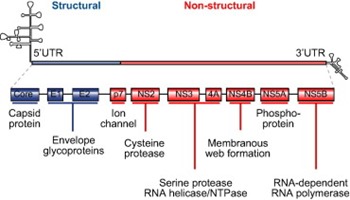
PIIS0168827813002092_gr1_lrgFig,1. Structural organization of HCV RNA and viral proteins. NS, non-structural; UTR, untranslated region.

HCV structure and lifecycle, and physiological role of the NS5A protein 

HCV is an enveloped virus with a single-stranded positive RNA genome of approximately 9.6kb. At the flanking ends of the genome are 2 highly conserved untranslated regions (UTRs). The 5′ UTR is highly structured and contains the internal ribosome entry site (IRES), which is important for the initiation of the cap-independent translation of the polyprotein [8]. The 3′ UTR consists of a short genotype-specific variable region, a tract consisting solely of pyrimidine residues (predominantly uridine) and a conserved 98-nucleotide sequence, known as X region, containing 3 stem-loops [9], [10]. The HCV open reading frame is situated between the two UTRs.

After entering the bloodstream, HCV binds to a receptor complex at the surface of its target cells, the hepatocytes. The envelope glycoproteins E1 and E2 are essential for target cell recognition, binding, and internalization [11]. The bound virus then undergoes clathrin-mediated endocytosis [12]. Acidification of the endocytosis vesicle frees the genomic RNA from the nucleocapsid for release into the cytoplasm. Along with host RNA molecules, the viral RNA migrates to the endoplasmic reticulum (ER). Binding of the 40S ribosomal subunit to the HCV IRES produces a stable pre-initiation complex that begins translation of the viral open reading frame to generate an approximately 3000 amino acid polyprotein. Following translation, the polyprotein is cleaved by both cellular and viral proteases to produce at least 10 viral proteins, including structural proteins (core, E1 and E2) and non-structural proteins (p7, NS2, NS3, NS4A, NS4B, NS5A, and NS5B) [13], [14].

Viral replication (i.e., the synthesis of new positive RNA genomes that may also serve as messenger RNAs for viral protein synthesis) is catalyzed by the viral RdRp, or NS5B protein. A negative-strand intermediate of replication is initially produced, which then serves as a template for the synthesis of numerous positive strands. The NS5A viral protein has been shown to play an important role in the regulation of replication. In addition, host cell proteins, such as cyclophilin A, act as necessary co-factors of HCV replication through their interactions with both NS5A and the RdRp in the replication complex [15], [16].

The non-structural NS5A protein bears pleiotropic functions, including roles in viral replication and assembly, and complex interactions with cellular functions. The latter include inhibition of apoptosis and promotion of tumorigenesis, both of which may play a role in the triggering of the hepatocarcinogenic process [17], [18], [19], [20]. The protein is comprised of approximately 447 amino acids and localizes to ER-derived membranes. It basally exists in phosphorylated (p56) and hyperphosphorylated (p58) forms that are implicated in different functions [21], [22], [23]. Its cytoplasmic moiety contains 3 domains, of which Domain I is the most conserved [24]. The mechanism by which NS5A regulates replication regardless of the HCV genotype is still unclear [25]. Considerable information has been gathered on its molecular interactions and role in the viral lifecycle. NS5A and the RdRp directly interact, both in vivo and in vitro [26]. In vitro, this interaction stimulates RdRp-catalyzed synthesis of the negative RNA strand [27]. It was shown that all 3 domains of NS5A bind to RNA [9]. The interactions of Domain I with the polypyrimidine tract of 3′ UTR suggest it may affect the efficiency of RNA replication by the RdRp; however, these results also suggested the binding of RdRp and NS5A to RNA are mutually exclusive. In addition, Domain II of NS5A interacts with cyclophilin A, a host cell protein required for replication, and this interaction is vital for RNA binding [28]. NS5A also plays a role in viral packaging and assembly. Domain III appears to be essential for this function [29], [30]. This may be due, at least in part, to NS5A recruiting apolipoprotein E, a component of the HCV production process [29], [31]. Indeed, inhibiting apolipoprotein E expression results in marked reduction of infectious particle production without affecting viral entry and replication [31].

NS5A inhibitor mechanism of action 

Several viral proteins have generated interest as potential targets for specific inhibitory drugs. In addition to the two NS3/4A protease inhibitors already approved for clinical use, numerous other protease inhibitors are being developed as well as inhibitors of viral replication, including nucleoside/nucleotide analogue inhibitors of HCV RdRp, non-nucleoside inhibitors of RdRp, cyclophilin inhibitors, and NS5A inhibitors.

Because of its critical involvement in viral replication and assembly [32], NS5A has been identified as a target for viral inhibition, leading to development of therapeutic agents. In HCV replicon-containing cells, inhibition of NS5A, but not other HCV proteins, resulted in redistribution of NS5A from the ER to lipid droplets. NS5A-targeting agents did not cause similar alterations in the localization of other HCV-encoded proteins, and the transfer of NS5A to lipid droplets coincided with the onset of inhibition of replication [33]. Inhibition of NS5A at picomolar concentrations has been associated with significant reductions in HCV RNA levels in cell culture-based models, which makes these agents among the most potent antiviral molecules yet developed [34], [35], [36]. NS5A inhibitors have pan-genotypic activity, i.e., they suppress replication of all HCV genotypes, but their antiviral effectiveness against genotypes other than 1 may vary from one molecule to another [35]. Use of multiple DAAs including an NS5A inhibitor in replicon systems in cell culture has resulted in additive/synergistic inhibition of viral production and an increased barrier to resistance [37].

The exact mechanism of antiviral action of NS5A inhibitors is unknown. Available evidence suggests that they have multiple effects, which contribute to their potency [32]. One putative mechanism is the inhibition of hyperphosphorylation. Phosphorylation of NS5A seems required for viral production [38], but the relative roles of the phosphorylated and hyperphosphorylated forms are unclear, and conflicting results have been reported suggesting that reduced hyperphosphorylation may either enhance or reduce replication [21], [39]. It is thought that a tightly regulated control of phosphorylation vs. hyperphosphorylation is required for efficient viral function. It was also shown that NS5A acts in two different pathways in RNA replication, and one of them likely requires hyperphosphorylation [23]. However, other mechanisms may also play a role. For instance, NS5A inhibitors alter the subcellular localization of NS5A, which may cause faulty viral assembly [33], [40].

Resistance to NS5A inhibitors 

HCV displays a large degree of genomic variability, resulting in its quasispecies distribution [41]. Variants that confer resistance to NS5A inhibitors pre-exist within HCV quasispecies populations in the absence of any previous exposure to these drugs. These variants generally replicate at low levels and are thus undetectable by currently available techniques. However, they can be selected if an NS5A inhibitor is administered and may be grown to high levels. Clinically significant resistance is usually associated with an escape pattern whereby viral replication returns to pretreatment levels and the dominant virus harbours amino acid substitutions that confer high levels of drug resistance without impairing fitness of the virus. Very high levels of the drug may be required to suppress highly resistant viruses, which may not be achievable without compromising safety [42].

At present, only genotype 1, the most prevalent HCV genotype, has been studied in detail for resistant variants. Table 1, adapted from Fridell et al. [43], describes the resistance profile of the NS5A inhibitor daclatasvir in genotype 1a and 1b replicons. The barrier to resistance is lower for genotype 1a than for genotype 1b. Substitutions at positions L31 and Y93 have the greatest ability to confer resistance to daclatasvir, and double mutations may increase the EC50 to a far greater extent (Table 1). These substitutions also confer resistance to other first-generation NS5A inhibitors. In addition, studies with daclatasvir have shown that double and triple inhibitor combinations in replicon systems can generate resistance pathways that differ from those observed during NS5A inhibitor monotherapy [37]. Agents without cross-resistance with NS5A inhibitors should thus be used in combination with this class of drugs.

Table 1. Resistance profile of daclatasvir in the in vitro genotype 1a and 1b replicon systems. Adapted from Fridell et al. [43].

PIIS0168827813002092_fx1_lrg

NS5A inhibitors undergoing clinical trials 

Although no NS5A inhibitor has yet been approved for therapeutic use, these agents are viewed with optimism due to their favourable characteristics, including the requirement for low dosing to inhibit HCV replication; pan-genotypic activity; once-daily dosing; resistance profiles that do not overlap with those of other DAAs in development; and successful suppression of HCV replication with an acceptable safety profile in early clinical trials [34].

Daclatasvir (BMS790052) 

Daclatasvir is an oral, once-daily, highly selective NS5A inhibitor with broad coverage of HCV genotypes in vitro developed by Bristol-Myers Squibb. Daclatasvir currently is in Phase III clinical trials. Its inhibitory target maps to Domain I, and it has been shown to block hyperphosphorylation of NS5A [23], as well as alter the subcellular localization of the viral protein [33], [40]. Daclatasvir has an EC50 of 50pM against genotype 1a, 9pM against genotype 1b, and 28pM against genotype 2a [35]. Daclatasvir has been tested in Phase II clinical trials in combination with pegylated IFN-α and ribavirin; in quadruple combination with asunaprevir, an NS3/4A protease inhibitor, and pegylated IFN-α/ribavirin; and with asunaprevir, the nucleotide analogue sofosbuvir and the non-nucleoside inhibitor of HCV RdRp BMS-791325 in IFN-free regimens.

In a randomized, parallel-group, double-blind, placebo-controlled, dose-finding Phase IIa trial of treatment-naïve patients infected with HCV genotype 1, 5 of 12 patients who received 3mg daclatasvir with pegylated IFN-α and ribavirin for 48weeks achieved extended rapid virologic response (eRVR), compared with 10 of 12 who received 10mg daclatasvir, 9 of 12 who received 60mg daclatasvir, and 1 of 12 who received placebo. Adverse events and discontinuations as a result of adverse events occurred with similar frequency across treatment groups [44]. In another Phase IIa trial in genotype 1-infected patients who were non-responders to a prior course of pegylated IFN-α and ribavirin, all 10 patients who received quadruple therapy with daclatasvir, asunaprevir, and pegylated IFN-α/ribavirin showed a sustained virologic response (SVR) after 12weeks, as opposed to 4 of 11 who received daclatasvir and asunaprevir only [45]. A higher incidence of viral breakthrough due to resistance was observed in genotype 1a patients who were given only the 2 DAAs without pegylated IFN-α/ribavirin vs. genotype 1b patients receiving the same treatment regimen, as a result of the lower barrier to resistance in genotype 1a [45]. Among patients who experienced virologic failure, the most common variants harboured Y93H and L31M, two substitutions well known for conferring resistance to daclatasvir.

In a 24-week dual-oral Phase II trial with daclatasvir and asunaprevir in genotype 1b-infected patients, 90.5% of null responders and 63.6% of patients ineligible for or intolerant to pegylated IFN-α/ribavirin achieved SVR 24weeks after the end of treatment (SVR24) [46]. Interestingly, many patients in this study with pre-existing resistance-associated NS5A polymorphisms were cured of their chronic HCV infection.

In a Phase IIb study with daclatasvir, pegylated IFN-α, and ribavirin, 100% of genotype 4-infected patients achieved SVR at 12weeks post-treatment (SVR12) [47]. A combination of daclatasvir and sofosbuvir (formerly GS-7977), a nucleotide analogue inhibitor of HCV RdRp developed by Gilead Sciences, given for 24weeks achieved SVR in 100% (44/44) of treatment-naïve patients infected with HCV genotype 1, and in 91% (40/44) of patients infected with HCV genotypes 2 and 3 at 4weeks post-treatment. Addition of ribavirin had no effect on SVR rates [48]. Finally, the triple combination of daclatasvir, asunaprevir and BMS-791325, a non-nucleoside inhibitor of HCV RdRp, resulted in an SVR12 in 15 of 16 patients (94%) treated for 12weeks (data missing in the remaining patient) [49].

ABT-267 

This drug candidate, developed by AbbVie, is in Phase II clinical trials. It is an oral, once-daily NS5A inhibitor that significantly reduces HCV RNA levels in vitro and in vivo. In a study of treatment-naïve genotype 1-infected patients, ABT-267 in combination with pegylated IFN-α and ribavirin produced a rapid virologic response (RVR) at 4weeks in 22 of 28 patients as compared with 2 of 22 who received placebo; after 12weeks, 25 of 28 patients receiving the NS5A inhibitor in combination with pegylated IFN-α and ribavirin showed complete early virologic response (cEVR) compared with 6 of 9 patients in the placebo group. A recently presented Phase IIb clinical trial, which used a 4-drug combination of ABT-267, ritonavir-boosted ABT-450 (a protease inhibitor), ABT-333 (a non-nucleoside inhibitor of HCV RdRp), and ribavirin achieved SVR12 in 97.5% of treatment-naïve patients and in 93.3% of prior null-responders infected with genotype 1 [50], [51]. In treatment-naïve patients, the SVR rates were 87.5% when the three drugs and ribavirin were administered for 8weeks, 89.9% when ABT-267 was administered with ABT-450 and ribavirin for 12weeks, and 87.3% when the three DAAs were administered without ribavirin for 12weeks. In null responders, the SVR rate was 88.9% with the combination of ABT-450, ABT-267, and ribavirin. Based on these results, Phase III trials with the 3 DAAs with and without ribavirin are planned [51].

Ledispasvir (GS-5885) 

This oral, once-daily drug candidate, developed by Gilead Sciences, is a potent NS5A inhibitor against genotypes 1a, 1b, 4a, and 5a in vitro, but has lower activity against genotypes 2a and 3a [52]. In a randomized, placebo-controlled study of 14days of ledipasvir monotherapy in genotype 1-infected patients, significant HCV RNA reductions (up to 1000-fold) were observed. Several resistance-associated substitutions were selected, including the aforementioned Y93H and L31M. In patients infected with HCV genotype 1b, daclatasvir has been reported to be more active than ledipasvir, whereas ledipasvir has been found to be 4–5times more active than daclatasvir for the M28T and Q30H substitutions in HCV genotype 1a infection. In addition, daclatasvir has been demonstrated to be 2-fold more active against the L31M substitution as compared with ledipasvir [53]. Ledipasvir is now in a Phase II trial as a component of a 4-drug regimen with tegobuvir (a non-nucleoside inhibitor of HCV RdRp), GS-9451 (an NS3/4A protease inhibitor), and ribavirin [52]. Recent results from the ELECTRON Phase II trial have shown SVR rates 12weeks after the end of treatment of 100% in 25 treatment-naïve and 10 null responder patients infected with HCV genotype 1 with the combination of sofosbuvir, ledipasvir and ribavirin [54]. A Phase III trial with a fixed-dose combination of sofosbuvir and ledipasvir, with or without ribavirin, is in progress in treatment-naïve patients infected with HCV genotype 1 [55]. A recent presentation also showed that ledipasvir, in combination with GS-9451, pegylated IFN-α, and ribavirin achieved SVR at 4weeks post-treatment in 100% of CC IL28B patients infected with HCV genotype 1 [56].

GSK-2336805 

This oral, once-daily drug candidate is being developed by GlaxoSmithKline. Preliminary studies show that GSK-2336805 is particularly effective against HCV genotype 1b, and has potent antiviral activity against other genotypes as well. A placebo-controlled Phase I study of treatment-naïve patients with chronic genotype 1 infection found a reduction in HCV RNA level of up to 1000-fold following 14days of monotherapy. This NS5A inhibitor is currently in Phase II clinical trials in treatment-naïve patients infected with HCV genotype 1 in combination with pegylated IFN-α, ribavirin, and telaprevir [57]. Resistance to GSK-2336805 maps to NS5A [58].

ACH-2928 

This oral, once-daily drug candidate, developed by Achillion Pharmaceuticals, displays highly potent activity in vitro against genotype 1a replicons as well as chimeric replicons of genotypes 2–6. ACH-2928 has demonstrated in vitro synergistic activity in combination with sovaprevir (formerly ACH-1625), an HCV NS3/4A protease inhibitor, which is further enhanced by ribavirin [59]. In Phase I trials, ACH-2928 monotherapy for 3days produced up to a 3.7log10 reduction in HCV RNA levels in patients with chronic HCV genotype 1 infection [60].

BMS824393

This NS5A inhibitor is being developed by Bristol-Myers Squibb. It has shown strong in vitro potency against genotypes 1a and 1b. In a Phase I study in which this agent was used as a monotherapy for 3days in genotype 1-infected patients, a decline of up to 3.9log10 was observed [61].

IDX719

This drug candidate, developed by Idenix Pharmaceuticals, has shown greater potency in vitro than daclatasvir against HCV genotypes 1a, 1b, 2a, 3a, 4a, and 5a [62]. In Phase I studies, HCV RNA levels declined by more than 3 log10 in single-dose trials for all genotype 1, 2, and 3 patients after 24hours. Similar reductions in HCV RNA levels (over 3log10) were observed for genotype 1, 3, and 4 patients, and reductions of 2log10 for genotype 2, in 3-day monotherapy studies [63], [64]. However, evidence indicates that the Y93H substitution confers resistance to this NS5A inhibitor [62]. A Phase II clinical trial using IDX719, simeprevir (a protease inhibitor developed by Janssen and Medivir), and TMC647055, a non-nucleoside polymerase inhibitor developed by Janssen, has been announced [65].

PPI461

This oral drug candidate is under development by Presidio Pharmaceuticals. A Phase Ib trial of monotherapy for 3days in patients with HCV genotype 1 infection showed a decrease of HCV RNA level of up to 3.6log10. However, widespread resistance emerged rapidly, mapping to amino acids 28, 30, 31, and 93 [66].

PPI668

Also under development by Presidio Pharmaceuticals, this NS5A inhibitor has been shown to possess high efficacy against HCV genotype 1, with up to 3.7log10 mean HCV RNA reductions, in a Phase Ib clinical trial [67], [68]. Activity was demonstrated against variants harbouring the L31M substitution. In an added genotype-2/3 cohort, the first 2 patients achieved mean 3.0log10 RNA level reductions [68]. PPI668 will be studied in combination with two DAAs developed by Boehringer-Ingelheim, faldaprevir, an NS3/4A protease inhibitor, and BI207127, a non-nucleoside inhibitor of HCV RdRp.

ACH-3102 

This NS5A inhibitor, developed by Achillion Pharmaceuticals, has a modified structure designed to have a higher pharmacologic barrier to resistance. Pharmacokinetic studies support once-daily oral dosing with this agent. ACH-3102 has shown potent antiviral activity against all genotypes in preclinical studies. In replicon studies, ACH-3102 has shown the smallest difference in potency between genotype 1a and 1b replicons, compared with daclatasvir and ACH-2928 [69]. ACH-3102 is potent against mutants harbouring substitutions that confer resistance to first-generation NS5A inhibitors (Fig. 2), such as those at positions Y93 and L31 [69]. Antiviral efficacy is also strong against double mutants that are highly resistant to other NS5A inhibitors (unpublished data). In addition, this inhibitor has shown very low potential for emergence of resistant variants in genotype 1b replicons (unpublished data). For these reasons, ACH-3102 is considered a “second-generation” NS5A inhibitor.

Fig. 2. Antiviral efficacy of ACH-3102 (second-generation NS5A inhibitor) compared with ACH-2928 and daclatasvir (first-generation NS5A inhibitors) on wild-type (parent) and mutated HCV replicons [69].

PIIS0168827813002092_gr2_lrg

A recently reported preclinical study using ACH-3102 and ACH-2684 (an NS3/4A protease inhibitor) has shown an additive to synergistic antiviral effect against genotypes 1a and 1b without the emergence of resistance variants [70]. Recently announced results from a Phase Ia trial in patients infected with HCV genotype 1 show that a single dose of ACH-3102 produces a mean HCV RNA level reduction of up to 3.9log10, with an upper range of 4.6log10, with inhibition lasting for 4days after dosing. Moreover, ACH-3102 has a half-life of approximately 250hours (unpublished data), compared with 13–15hours for daclatasvir [71], 22–50hours for ledipasvir [53], and 25–32hours for ABT-267 [72]. A single Phase II trial has been initiated in genotype 1b patients using ACH-3102 in combination with ribavirin [73].

Progress toward all-oral combination therapies for HCV and the role of NS5A inhibitors 

Currently, the standard of care for chronic HCV genotype 1 infection is a combination of pegylated IFN-α, ribavirin, and an NS3/4A protease inhibitor (i.e., boceprevir or telaprevir), whereas patients infected with other HCV genotypes continue to be treated with pegylated IFN-α and ribavirin. The SVR rates observed with the triple combination in patients infected with HCV genotype 1 range from 67% to 75% in clinical trials [74], [75]. They are probably lower in the real-life setting, indicating that a significant proportion of patients will still experience virologic failure and that improved therapeutic regimens are needed. In addition, patients receiving pegylated IFN-α and ribavirin experience a plethora of adverse effects, some of which are aggravated by the protease inhibitor [6], [7], [76]. Clinical trials of NS5A inhibitors in combination with pegylated IFN-α and ribavirin have shown promising results. However, the trials conducted thus far have included only small numbers of patients, and more studies are needed before the efficacy of such 3-drug combinations can be fully ascertained. In this respect, the results of a Phase III trial with daclatasvir, pegylated IFN-α, and ribavirin are awaited. Quadruple therapies including an NS5A inhibitor, pegylated IFN-α, ribavirin, and another DAA also appear promising. However, recent reports of very high SVR rates, over 90%, in patients treated with all-oral, IFN-free regimens with or without ribavirin clearly indicate that the IFN era is coming to an end. It is also noteworthy that NS5A inhibitors developed by one company have been used with different classes of DAAs developed by other companies [48]; as such, a highly potent NS5A inhibitor may find uses in combinations with various other DAAs to achieve high cure rates.

Due to their specificity, potency, and low EC50, NS5A inhibitors will likely be a critical component of future all-oral, IFN-free combinations. It is interesting to note that the most attractive all-oral combinations presented at the last annual meetings of the American and European liver societies all contained an NS5A inhibitor, combined either with a nucleotide analogue or a protease inhibitor and a non-nucleoside inhibitor of HCV RdRp, with or without ribavirin. Fixed-dose combinations (i.e., 2-drug combinations in 1 pill) including an NS5A inhibitor are already available in Phase II and III clinical trials. The advent of second-generation NS5A inhibitors, with a modified structure and near-equal efficacy against variants known to resist first-generation NS5A inhibitors, is also promising.

PIIS0168827813002092_fx2_lrg

Conclusions 

Although blood screening and other preventive measures have reduced the incidence of HCV in some parts of the world, infection with this virus remains a significant worldwide health concern. The multiple genotypes of HCV, as well as rapid development of mutations, have complicated the development of effective drugs. Until recently, a non-specific antiviral combination, pegylated IFN-α and ribavirin, was the mainstay of HCV therapy. The approval of two NS3/4A protease inhibitors has allowed the addition of a DAA to this treatment regimen. Although the first-generation protease inhibitors, telaprevir and boceprevir, in combination with pegylated IFN-α and ribavirin, have improved treatment of chronic HCV genotype 1 infection, response rates remain suboptimal. In addition, many patients are unable to tolerate this therapy and, among those who can, adverse events associated with the drugs can compromise patient compliance and lead to premature treatment discontinuations. Thus, there has been a strong desire to develop all-oral, IFN-free therapies with high efficacy. The discovery of the multiple roles of the NS5A protein in viral replication has been paralleled by the development of specific NS5A inhibitors. Evidence gathered thus far indicates that these agents are potent and possess antiviral activity against multiple HCV genotypes with acceptable safety profiles. In addition, clinical trial data support the efficacy of NS5A inhibitors with and without pegylated IFN-α and ribavirin, suggesting an important role for these agents as a component of all-oral therapeutic regimens for the treatment of HCV.

Financial support 

Editorial assistance from ACCESS Medical was funded by Achillion Pharmaceuticals.

Conflict of interest 

The author has received research grants from Gilead. He has served as an advisor for Abbott, Abbvie, Achillion, Boehringer-Ingelheim, Bristol-Myers Squibb, Gilead, Idenix, Janssen-Cilag, Madaus-Rottapharm, Merck, Novartis, and Roche.

Acknowledgments

The author would like to thank Amlan RayChaudhury, PhD, of ACCESS Medical, LLC, for editorial assistance in preparing the manuscript.

References

Source

June 6, 2013

Idenix Pharmaceuticals Announces Samatasvir (IDX719) Poster Presentations at the Asian Pacific Association for the Study of the Liver (APASL) Conference

Idenix

CAMBRIDGE, Mass., June 6, 2013 (GLOBE NEWSWIRE) -- Idenix Pharmaceuticals, Inc. (Nasdaq:IDIX), a biopharmaceutical company engaged in the discovery and development of drugs for the treatment of human viral diseases, today announced three poster presentations featuring clinical and preclinical data for samatasvir (IDX719), Idenix's once-daily pan-genotypic NS5A inhibitor for the treatment of hepatitis C virus (HCV) infection, at the Asian Pacific Association for the Study of the Liver (APASL) Liver Week 2013, taking place in Singapore, June 6-10, 2013. Idenix recently initiated a phase II clinical trial (HELIX-1) evaluating an all-oral, direct-acting antiviral (DAA) HCV combination regimen of samatasvir and simeprevir (TMC435), a once-daily protease inhibitor jointly developed by Janssen R&D Ireland and Medivir AB.

The following abstracts will be presented in poster sessions during APASL Liver Week 2013 in the Conference Exhibition Hall on Friday, June 7, 2013, 8:30am - 5:30pm SGT:

  • Abstract No. 2110: "Pharmacokinetics and Pharmacodynamics of IDX719, a Pan-Genotypic HCV NS5A Inhibitor, in Genotype 1, 2, 3 or 4 HCV-Infected Subjects."
  • Abstract No. 2121: "Hepatitis C Virus NS5A Inhibitor IDX719 Demonstrates Potent, Pan-genotypic Activity in Preclinical and Clinical Studies."
  • Abstract No. 2127: "IDX719, a Pan-genotypic HCV NS5A Replication Complex Inhibitor, Is a Promising Candidate for HCV Combination DAA Treatment."

ABOUT SAMATASVIR (IDX719)

Samatasvir is an NS5A inhibitor with low picomolar, pan-genotypic antiviral activity in vitro. To date, samatasvir has been safe and well-tolerated after single and multiple doses of up to 150 mg in healthy volunteers for up to 14 days' duration and up to 100 mg in HCV-infected patients up to 3 days' duration. There have been no treatment-emergent serious adverse events reported in the program. Samatasvir has demonstrated potent pan-genotypic antiviral activity in HCV-infected patients with mean maximal viral load reductions up to approximately 4.0 log10 IU/mL across HCV genotypes 1-4 in a proof-of-concept, three-day monotherapy study.

The HELIX-1 trial is a 12-week, randomized, double-blind, parallel group study evaluating the safety and tolerability of samatasvir and simeprevir in addition to antiviral activity endpoints, with a target enrollment of 90 treatment-naïve, non-cirrhotic, genotype 1b or 4 HCV-infected patients. The HELIX-1 trial is the first study in HCV-infected patients to commence under a non-exclusive collaboration agreement signed with Janssen in January 2013. A second trial (HELIX-2) of samatasvir, simeprevir and TMC647055, a once-daily non-nucleoside polymerase inhibitor boosted with low-dose ritonavir being developed by Janssen, is expected to initiate in the second half of 2013.

ABOUT HEPATITIS C

Hepatitis C virus is a common blood-borne pathogen infecting three to four million people worldwide annually. The World Health Organization (WHO) estimates that more than 170 million people worldwide are chronically infected with HCV, representing a nearly 5-fold greater prevalence than human immunodeficiency virus.

ABOUT IDENIX

Idenix Pharmaceuticals, Inc., headquartered in Cambridge, Massachusetts, is a biopharmaceutical company engaged in the discovery and development of drugs for the treatment of human viral diseases.  Idenix's current focus is on the treatment of patients with hepatitis C virus (HCV) infection. For further information about Idenix, please refer to www.idenix.com.

FORWARD-LOOKING STATEMENTS

This press release contains "forward-looking statements" for purposes of the safe harbor provisions of The Private Securities Litigation Reform Act of 1995, including but not limited to the statements regarding the Company's future business and financial performance.  For this purpose, any statements contained herein that are not statements of historical fact may be deemed forward-looking statements.  Without limiting the foregoing, the words "expect," "plans," "anticipates," "intends," "will," and similar expressions are also intended to identify forward-looking statements, as are expressed or implied statements with respect to the Company's potential pipeline candidates, including any expressed or implied statements regarding the efficacy and safety of IDX719 or any other drug candidate; the successful development of novel combinations of direct-acting antivirals for the treatment of HCV; the likelihood and success of any future clinical trials involving IDX719 or our other drug candidates; and expectations with respect to funding of operations and future cash balances.  Actual results may differ materially from those indicated by such forward-looking statements as a result of risks and uncertainties, including but not limited to the following: there can be no guarantees that the Company will advance any clinical product candidate or other component of its potential pipeline to the clinic, to the regulatory process or to commercialization; management's expectations could be affected by unexpected regulatory actions or delays; uncertainties relating to, or unsuccessful results of, clinical trials, including additional data relating to the ongoing clinical trials evaluating its product candidates; the Company's ability to obtain additional funding required to conduct its research, development and commercialization activities; changes in the Company's business plan or objectives; the ability of the Company to attract and retain qualified personnel; competition in general; and the Company's ability to obtain, maintain and enforce patent and other intellectual property protection for its product candidates and its discoveries.  Such forward-looking statements involve known and unknown risks, uncertainties and other factors that may cause actual results to be materially different from any future results, performance or achievements expressed or implied by such statements.  These and other risks which may impact management's expectations are described in greater detail under the heading "Risk Factors" in the Company's quarterly report on Form 10-Q for the quarter ended March 31, 2013 as filed with the Securities and Exchange Commission (SEC) and in any subsequent periodic or current report that the Company files with the SEC.

All forward-looking statements reflect the Company's estimates only as of the date of this release (unless another date is indicated) and should not be relied upon as reflecting the Company's views, expectations or beliefs at any date subsequent to the date of this release.  While Idenix may elect to update these forward-looking statements at some point in the future, it specifically disclaims any obligation to do so, even if the Company's estimates change.

CONTACT: Idenix Pharmaceuticals Contact:
Teri Dahlman, (617) 995-9807


Idenix Pharmaceuticals


Source

May 30, 2013

Idenix Pharmaceuticals Announces Initiation of Phase II All-Oral Combination Study of Samatasvir (IDX719) and Simeprevir (TMC435) for the Treatment of Hepatitis C Virus (HCV) Infection

Idenix

May 30, 2013


Phase II HELIX-1 Trial is First HCV Clinical Study to Commence Through Collaboration Agreement With Janssen Pharmaceuticals, Inc.

CAMBRIDGE, Mass., May 30, 2013 (GLOBE NEWSWIRE) -- Idenix Pharmaceuticals, Inc. (Nasdaq:IDIX), a biopharmaceutical company engaged in the discovery and development of drugs for the treatment of human viral diseases, today announced the initiation of the phase II HELIX-1 clinical trial evaluating an all-oral, direct-acting antiviral (DAA) HCV combination regimen of samatasvir (IDX719), Idenix's once-daily pan-genotypic NS5A inhibitor, and simeprevir (TMC435), a once-daily protease inhibitor jointly developed by Janssen R&D Ireland and Medivir AB.

The HELIX-1 trial is a 12-week, randomized, double-blind, parallel group study evaluating the safety and tolerability of samatasvir and simeprevir in addition to antiviral activity endpoints, with a target enrollment of 90 treatment-naïve, non-cirrhotic, genotype 1b or 4 HCV-infected patients. Patients will be randomized equally across three treatment arms, receiving either 50, 100, or 150 mg samatasvir once-daily for 12 weeks in combination with simeprevir plus ribavirin. The HELIX-1 trial is the first study in HCV-infected patients to commence under a non-exclusive collaboration agreement signed with Janssen in January 2013. A second trial (HELIX-2) of samatasvir, simeprevir and TMC647055, a once-daily non-nucleoside polymerase inhibitor boosted with low-dose ritonavir being developed by Janssen, is expected to initiate in the second half of 2013.

"We are pleased with the progress of our samatasvir program and its advancement into phase II following successful completion of a drug-drug interaction study with simeprevir earlier this year," said Ron Renaud, Idenix's President and Chief Executive Officer. "Our goal is to initiate multiple two- and three-DAA trials of samatasvir through the Janssen collaboration. Additionally, we look forward to advancing our own internal combination of samatasvir with our lead uridine nucleotide analog by the end of this year."

ABOUT THE IDENIX/JANSSEN COLLABORATION

In January 2013, Idenix entered into a non-exclusive collaboration with Janssen Pharmaceuticals, Inc. for the clinical development of all-oral direct-acting antiviral (DAA) HCV combination therapies. The collaboration will evaluate combinations including samatasvir, simeprevir, and TMC647055. In addition to the HELIX-1 phase II trial, the companies also plan to initiate HELIX-2 which will evaluate a three-DAA combination of samatasvir, simeprevir and TMC647055/r, with and without ribavirin. The clinical trials will be conducted by Idenix. Both Idenix and Janssen retain all rights to their respective compounds under the agreement.

ABOUT SAMATASVIR (IDX719)

Samatasvir is an NS5A inhibitor with low picomolar, pan-genotypic antiviral activity in vitro. To date, samatasvir has been safe and well-tolerated after single and multiple doses of up to 150 mg in healthy volunteers for up to 14 days duration and up to 100 mg in HCV-infected patients up to 3 days duration. There have been no treatment-emergent serious adverse events reported in the program. Samatasvir has demonstrated potent pan-genotypic antiviral activity in HCV-infected patients with mean maximal viral load reductions up to approximately 4.0 log10 IU/mL across HCV genotypes 1-4 in a proof-of-concept, three-day monotherapy study.

ABOUT SIMEPREVIR (TMC435)

Simeprevir is a once-daily potent investigational hepatitis C protease inhibitor in late phase III clinical development being jointly developed by Janssen R&D Ireland and Medivir AB to treat chronic hepatitis C virus infections. Simeprevir is being investigated in combination with PegIFN/RBV in phase III trials and is also being evaluated with direct-acting antiviral (DAA) agents in three other phase II interferon-free combinations both with and without ribavirin (RBV). For further details please visit http://www.medivir.com.

ABOUT HEPATITIS C

Hepatitis C virus is a common blood-borne pathogen infecting three to four million people worldwide annually. The World Health Organization (WHO) estimates that more than 170 million people worldwide are chronically infected with HCV, representing a nearly 5-fold greater prevalence than human immunodeficiency virus.

ABOUT IDENIX

Idenix Pharmaceuticals, Inc., headquartered in Cambridge, Massachusetts, is a biopharmaceutical Company engaged in the discovery and development of drugs for the treatment of human viral diseases. Idenix's current focus is on the treatment of patients with hepatitis C virus (HCV) infection. For further information about Idenix, please refer to www.idenix.com.

FORWARD-LOOKING STATEMENTS

This press release contains "forward-looking statements" for purposes of the safe harbor provisions of The Private Securities Litigation Reform Act of 1995, including but not limited to the statements regarding the Company's future business and financial performance. For this purpose, any statements contained herein that are not statements of historical fact may be deemed forward-looking statements. Without limiting the foregoing, the words "expect," "plans," "anticipates," "intends," "will," and similar expressions are also intended to identify forward-looking statements, as are expressed or implied statements with respect to the Company's potential pipeline candidates, including any expressed or implied statements regarding the efficacy and safety of IDX719 or any other drug candidate; the successful development of novel combinations of direct-acting antivirals for the treatment of HCV; the likelihood and success of any future clinical trials involving IDX719 or our other drug candidates; and expectations with respect to funding of operations and future cash balances. Actual results may differ materially from those indicated by such forward-looking statements as a result of risks and uncertainties, including but not limited to the following: there can be no guarantees that the Company will advance any clinical product candidate or other component of its potential pipeline to the clinic, to the regulatory process or to commercialization; management's expectations could be affected by unexpected regulatory actions or delays; uncertainties relating to, or unsuccessful results of, clinical trials, including additional data relating to the ongoing clinical trials evaluating its product candidates; the Company's ability to obtain additional funding required to conduct its research, development and commercialization activities; changes in the Company's business plan or objectives; the ability of the Company to attract and retain qualified personnel; competition in general; and the Company's ability to obtain, maintain and enforce patent and other intellectual property protection for its product candidates and its discoveries. Such forward-looking statements involve known and unknown risks, uncertainties and other factors that may cause actual results to be materially different from any future results, performance or achievements expressed or implied by such statements. These and other risks which may impact management's expectations are described in greater detail under the heading "Risk Factors" in the Company's quarterly report on Form 10-Q for the quarter ended March 31, 2013 as filed with the Securities and Exchange Commission (SEC) and in any subsequent periodic or current report that the Company files with the SEC.

All forward-looking statements reflect the Company's estimates only as of the date of this release (unless another date is indicated) and should not be relied upon as reflecting the Company's views, expectations or beliefs at any date subsequent to the date of this release. While Idenix may elect to update these forward-looking statements at some point in the future, it specifically disclaims any obligation to do so, even if the Company's estimates change.

Source: Idenix Pharmaceuticals

News Provided by Acquire Media

Source

April 24, 2013

Idenix Reports Favorable Resistance Profile for IDX719, a Potent, Pan-Genotypic HCV NS5A Inhibitor, at EASL Meeting

Idenix

CAMBRIDGE, Mass., April 24, 2013 (GLOBE NEWSWIRE) -- Idenix Pharmaceuticals, Inc. (Nasdaq:IDIX), a biopharmaceutical company engaged in the discovery and development of drugs for the treatment of human viral diseases, today reported detailed resistance data from in vitro studies and from a three-day monotherapy clinical trial of IDX719, the Company's once-daily, potent, pan-genotypic NS5A inhibitor for the treatment of hepatitis C virus (HCV) infection. These data are being presented on Saturday, April 27, in a poster session at the 48th Annual Meeting of the European Association for the Study of the Liver (EASL), which is being held April 24 - 28, 2013 in Amsterdam, The Netherlands.

Data from the three-day proof-of-concept study demonstrated that IDX719 was well-tolerated at daily doses up to 100 mg and showed potent antiviral activity across HCV genotypes 1-4, with mean maximal viral load reductions up to approximately 4.0 log10 IU/mL. These data were supported by earlier in vitro findings. Clinical plasma samples at baseline, at end of treatment and at one week post-treatment were sequenced for mutations in NS5A at known IDX719 resistance-associated locations.

  • The most common treatment-emergent resistant mutations were detected at NS5A positions 28, 31 and 93. The profile of these mutations varied among genotypes.
  • The only resistance mutation present at baseline found to negatively affect IDX719 response was M31 in GT2-infected patients. In contrast, all GT4-infected patients had virus with M31 at baseline and responded favorably to IDX719 treatment.
  • A GT1b-infected patient with a baseline Y93H mutation, which confers in vitro resistance to IDX719, achieved a 2.79 log10 IU/mL viral load reduction after three days of once-daily 25 mg IDX719, indicating that IDX719 can retain activity against virus with known resistance mutations.

The poster presentation is titled, "Treatment-Emergent Variants Following 3 Days of Monotherapy with IDX719, a Potent, Pan-Genotypic NS5A Inhibitor, in Subjects Infected with HCV Genotypes 1-4" (Abstract No. 1209).

"These additional resistance data support the promising profile of IDX719 as a potent, pan-genotypic component of future HCV combination treatment regimens," commented Douglas Mayers, M.D., Chief Medical Officer of Idenix. "We look forward to evaluating IDX719 as part of all-oral combination therapies through our collaboration with Janssen, beginning with the initiation of a phase II clinical trial of IDX719 and simeprevir in the first half of this year."

ABOUT IDX719

IDX719 is an NS5A inhibitor with low picomolar, pan-genotypic antiviral activity in vitro. To date, IDX719 has been safe and well tolerated after single and multiple doses of up to 100 mg in healthy volunteers (n=36; up to 7 days duration) and HCV-infected patients (n=69; up to 3 days duration). There have been no treatment-emergent serious adverse events reported in the program. IDX719 has demonstrated potent pan-genotypic antiviral activity in HCV-infected patients with mean maximal viral load reductions up to approximately 4.0 log10 IU/mL across HCV genotypes 1-4 in a proof-of-concept, three-day monotherapy study.

ABOUT HEPATITIS C

Hepatitis C virus is a common blood-borne pathogen infecting three to four million people worldwide annually. The World Health Organization (WHO) estimates that more than 170 million people worldwide are chronically infected with HCV, representing a nearly 5-fold greater prevalence than human immunodeficiency virus.

ABOUT IDENIX

Idenix Pharmaceuticals, Inc., headquartered in Cambridge, Massachusetts, is a biopharmaceutical Company engaged in the discovery and development of drugs for the treatment of human viral diseases. Idenix's current focus is on the treatment of patients with HCV. For further information about Idenix, please refer to www.idenix.com.

FORWARD-LOOKING STATEMENTS

This press release contains "forward-looking statements" for purposes of the safe harbor provisions of The Private Securities Litigation Reform Act of 1995. For this purpose, any statements contained herein that are not statements of historical fact may be deemed forward-looking statements. Without limiting the foregoing, the words "expect," "plans," "anticipates," "intends," "will," and similar expressions are also intended to identify forward-looking statements, as are any expressed or implied statements with respect to: the Company's plans to continue to developing nucleotide polymerase inhibitors for HCV; its clinical development plans for its uridine nucleotide analog drug candidate and IDX719; its plans to advance other preclinical nucleotides; and statements regarding the efficacy and safety of its clinical compounds. Actual results may differ materially from those indicated by such forward-looking statements as a result of risks and uncertainties, including but not limited to the following: there can be no guarantees that the Company will advance any clinical product candidate or other component of its potential pipeline to the clinic, to the regulatory process or to commercialization due to numerous risks inherent in pharmaceutical research and development; management's expectations could be affected by unexpected regulatory actions or delays; uncertainties relating to, or unsuccessful results of, preclinical and clinical trials, including additional data relating to the ongoing clinical trials evaluating its product candidates; the Company's ability to obtain additional funding required to conduct its research, development and commercialization activities; competition; and the Company's ability to obtain, maintain and enforce patent and other intellectual property protection for its product candidates and its discoveries. Such forward-looking statements involve known and unknown risks, uncertainties and other important factors that may cause actual results to be materially different from any future results, performance or achievements expressed or implied by such statements. These and other risks which may impact management's expectations are described in greater detail under the heading "Risk Factors" in the Company's annual report on Form 10-K for the year ended December 31, 2012, as filed with the Securities and Exchange Commission (SEC) and in any subsequent periodic or current report that the Company files with the SEC.

All forward-looking statements reflect the Company's estimates only as of the date of this release (unless another date is indicated) and should not be relied upon as reflecting the Company's views, expectations or beliefs at any date subsequent to the date of this release. While Idenix may elect to update these forward-looking statements at some point in the future, it specifically disclaims any obligation to do so, even if the Company's estimates change.

CONTACT: Idenix Pharmaceuticals Contact:

Teri Dahlman (617) 218-7987

Source

April 13, 2013

Idenix Announces Data Presentation at the 48th Annual Meeting of the European Association for the Study of the Liver (EASL)

Idenix

Idenix Announces Data Presentation at the 48th Annual Meeting of the European Association for the Study of the Liver (EASL)

CAMBRIDGE, Mass., April 8, 2013 (GLOBE NEWSWIRE) -- Idenix Pharmaceuticals, Inc. (Nasdaq:IDIX), a biopharmaceutical company engaged in the discovery and development of drugs for the treatment of human viral diseases, today announced that it will present data on IDX719, the Company's pan-genotypic HCV NS5A inhibitor, at the 48th Annual Meeting of the European Association for the Study of the Liver (EASL) which is being held April 24 – 28, 2013 in Amsterdam, the Netherlands. Full abstracts can now be viewed at the EASL website at www.easl.eu.

McCarville, et al, "Treatment-Emergent Variants Following 3 Days of Monotherapy with IDX719, a Potent, Pan-Genotypic NS5A Inhibitor, in Subjects Infected with HCV Genotypes 1-4", will be presented in a poster session on Saturday, April 27.

About Idenix

Idenix Pharmaceuticals, Inc., headquartered in Cambridge, Massachusetts, is a biopharmaceutical company engaged in the discovery and development of drugs for the treatment of human viral diseases. Idenix's current focus is on the treatment of infections caused by hepatitis C virus. For further information about Idenix, please refer to www.idenix.com.

Forward-looking Statements

This press release contains "forward-looking statements" for purposes of the safe harbor provisions of The Private Securities Litigation Reform Act of 1995. For this purpose, any statements contained herein that are not statements of historical fact may be deemed forward-looking statements. Without limiting the foregoing, the words "expect," "plans," "anticipates," "intends," "will," and similar expressions are also intended to identify forward-looking statements, as are any expressed or implied statements with respect to: the Company's plans to continue to developing nucleotide polymerase inhibitors for HCV; its clinical development plans for its uridine nucleotide analog drug candidate and IDX719; its plans to advance other preclinical nucleotides; and statements regarding the efficacy and safety of its clinical compounds. Actual results may differ materially from those indicated by such forward-looking statements as a result of risks and uncertainties, including but not limited to the following: there can be no guarantees that the Company will advance any clinical product candidate or other component of its potential pipeline to the clinic, to the regulatory process or to commercialization due to numerous risks inherent in pharmaceutical research and development; management's expectations could be affected by unexpected regulatory actions or delays; uncertainties relating to, or unsuccessful results of, preclinical and clinical trials, including additional data relating to the ongoing clinical trials evaluating its product candidates; the Company's ability to obtain additional funding required to conduct its research, development and commercialization activities; competition; and the Company's ability to obtain, maintain and enforce patent and other intellectual property protection for its product candidates and its discoveries. Such forward-looking statements involve known and unknown risks, uncertainties and other important factors that may cause actual results to be materially different from any future results, performance or achievements expressed or implied by such statements. These and other risks which may impact management's expectations are described in greater detail under the heading "Risk Factors" in the Company's annual report on Form 10-K for the year ended December 31, 2012, as filed with the Securities and Exchange Commission (SEC) and in any subsequent periodic or current report that the Company files with the SEC.

All forward-looking statements reflect the Company's estimates only as of the date of this release (unless another date is indicated) and should not be relied upon as reflecting the Company's views, expectations or beliefs at any date subsequent to the date of this release. While Idenix may elect to update these forward-looking statements at some point in the future, it specifically disclaims any obligation to do so, even if the Company's estimates change.

CONTACT: Idenix Pharmaceuticals Contacts:
         Kelly Barry (617) 995-9033 (media)
         Teri Dahlman (617) 995-9807 (investors)

Idenix Pharmaceuticals

Source

June 28, 2012

Idenix Announces Positive Clinical Data for HCV Drug Candidates IDX184 and IDX719

Idenix

June 19, 2012

In an Interim Analysis From an Ongoing Phase IIb Clinical Trial of IDX184, an HCV Nucleotide Inhibitor, 89% of Patients Who Completed an Additional 12 Weeks of Pegylated Interferon Plus Ribavirin Treatment Achieved SVR4; 100% (4/4) in 100 mg Arm and 80% (4/5) in 50 mg Arm

IDX719, an HCV NS5A Inhibitor, Achieves Potent Pan-Genotypic Activity in Three-Day Proof-of-Concept Clinical Trial

CAMBRIDGE, Mass., June 19, 2012 (GLOBE NEWSWIRE) -- Idenix Pharmaceuticals, Inc. (Nasdaq:IDIX), a biopharmaceutical company engaged in the discovery and development of drugs for the treatment of human viral diseases, today announced results from an ongoing phase IIb study of IDX184 in combination with pegylated interferon and ribavirin (PegIFN/RBV). Of the first cohort of 31 patients enrolled in the study, those who achieved an eRVR (n=18), defined as having undetectable levels of virus at 4 weeks and 12 weeks, were randomized to stop treatment after either an additional 12 weeks (n=9) or 36 weeks (n=9) of PegIFN/RBV. Of the nine patients who completed their 12-week PegIFN/RBV extended treatment phase, 100% of patients (4/4) in the 100 mg arm and 80% of patients (4/5) in the 50 mg arm achieved a sustained virologic response four weeks after the completion of treatment (SVR4). Patients who did not achieve an eRVR automatically entered the 36-week PegIFN/RBV extended treatment phase which is ongoing. To date, the side effect profile of IDX184 combined with PegIFN/RBV is consistent with that of PegIFN/RBV alone.

"We are encouraged by the initial SVR results from the phase IIb program, which have confirmed previous data showing that IDX184 is a potent nucleotide inhibitor with a profile supporting its potential role as a key component of all-oral direct-acting antiviral (DAA) combination regimens for HCV," stated Ron Renaud, President and Chief Executive Officer of Idenix. "We look forward to initiating interferon-free DAA combination studies in the near term."

IDX184 Phase IIb Study Design

In July 2011, the company initiated enrollment of treatment-naive genotype 1 HCV-infected patients into a randomized, double-blind, parallel group phase IIb clinical trial of IDX184. The study features two treatment arms, either 50 mg or 100 mg of IDX184 administered once-daily for 12 weeks, each arm in combination with PegIFN/RBV. Response-guided therapy was used to complete an additional 12 or 36 weeks of PegIFN/RBV treatment. Study objectives include safety and tolerability, and antiviral activity endpoints.

IDX719 Proof-of-Concept Clinical Trial Data and Study Design

Idenix also announced today positive data from a three-day proof-of-concept study evaluating IDX719, an NS5A inhibitor, in 64 treatment-naïve, genotype 1, 2, 3 or 4 HCV-infected patients. Genotype 1 patients were randomized to receive placebo, 25 mg QD (once-daily), 50 mg QD, 50 mg BID (twice-daily) or 100 mg QD for three days. Genotype 2, 3 or 4 patients were randomized to receive placebo, 50 mg BID or 100 mg QD for three days.

IDX719 was well tolerated with no serious adverse events reported. Treatment with IDX719 exhibited potent pan-genotypic activity across genotypes:

  • In genotype 1 patients (n=28), mean maximal viral load reductions were 3.2 log10 IU/mL in the 25 mg QD arm, 3.7 log10 IU/mL in the 50 mg QD arm, 3.2 log10 IU/mL in the 50 mg BID arm and 3.5 log10 IU/mL in the 100 mg QD arm.
  • In genotype 2 patients (n=8), the mean maximal viral load reduction was 2.0 log10 IU/mL in both the 50 mg BID and 100 mg QD dose arms with a greater variability in responses among these patients (range: 0.3 — 4.1 log10 IU/mL). The company is currently conducting pharmacokinetic and sequencing analyses to further characterize these results.
  • In genotype 3 patients (n=8), mean maximal viral load reductions were 3.3 log10 IU/mL in the 50 mg BID arm and 3.4 log10 IU/mL in the 100 mg QD arm.
  • In genotype 4 patients (n=7), mean maximal viral load reductions were 3.9 log10 IU/mL in the 50 mg BID dose arm and 3.4 log10 IU/mL in the 100 mg QD dose arm.

More detailed findings are expected to be presented at a scientific meeting in the second half of 2012.

"We are pleased to demonstrate the first clinical validation of IDX719 in patients in a multiple-dose study with robust activity across multiple HCV genotypes," commented Douglas Mayers, M.D., Chief Medical Officer of Idenix. "Given these promising findings, we look forward to initiating a phase II combination study of IDX719 with IDX184 by the end of this year."

ABOUT IDX184

IDX184 is an unpartnered, novel, liver-targeted nucleotide prodrug of 2'-methyl guanosine, which includes Idenix's proprietary liver-targeting technology. This technology enables the delivery of nucleoside monophosphate to the liver, leading to the formation of high levels of nucleoside triphosphate, potentially maximizing drug efficacy and limiting systemic side effects with low, once-daily dosing. In the ongoing phase IIb clinical trial, IDX184 has been well tolerated with a side effect profile similar to that of PegIFN/RBV. In the first cohort of 31 patients, at 12 weeks in an intent-to-treat analysis, the complete early virologic response ( < 25 IU/mL at 12 weeks) was 93% for the 100 mg IDX184 arm (n=15) and 81% for the 50 mg IDX184 arm (n=16) of the study. The company completed enrollment of a second cohort of 36 additional patients in May 2012.

ABOUT IDX719

IDX719 is an NS5A inhibitor with low picomolar, pan-genotypic antiviral activity in vitro. In 36 healthy volunteers, IDX719 was safe and well tolerated at single doses of 5-100 mg as well as multiple doses of 100 mg for 7 days. Single doses of IDX719 demonstrated potent pan-genotypic antiviral activity in 18 genotype 1, 2 or 3 HCV-infected patients, with greater than 3 log10 viral load reductions achieved in the 100 mg dose arm.

ABOUT HEPATITIS C

Hepatitis C virus is a common blood-borne pathogen infecting three to four million people worldwide annually. The World Health Organization (WHO) estimates that more than 170 million people worldwide are chronically infected with HCV, representing a nearly 5-fold greater prevalence than human immunodeficiency virus.

ABOUT IDENIX

Idenix Pharmaceuticals, Inc., headquartered in Cambridge, Massachusetts, is a biopharmaceutical Company engaged in the discovery and development of drugs for the treatment of human viral diseases. Idenix's current focus is on the treatment of patients with HCV. For further information about Idenix, please refer to www.idenix.com.

FORWARD-LOOKING STATEMENTS

This press release contains "forward-looking statements" for purposes of the safe harbor provisions of The Private Securities Litigation Reform Act of 1995, including but not limited to the statements regarding the Company's future business and financial performance. For this purpose, any statements contained herein that are not statements of historical fact may be deemed forward-looking statements. Without limiting the foregoing, the words "expect," "plans," "anticipates," "intends," "will," and similar expressions are also intended to identify forward-looking statements, as are expressed or implied statements with respect to the Company's potential pipeline candidates, including any expressed or implied statements regarding the efficacy and safety of IDX184 or IDX719 or any other drug candidate; the successful development of novel combinations of direct-acting antivirals for the treatment of HCV; the likelihood and success of any future clinical trials involving our drug candidates; and expectations with respect to future milestone or royalty payments, funding of operations and future cash balances. Actual results may differ materially from those indicated by such forward-looking statements as a result of risks and uncertainties, including but not limited to the following: there can be no guarantees that the Company will advance any clinical product candidate or other component of its potential pipeline to the clinic, to the regulatory process or to commercialization; management's expectations could be affected by unexpected regulatory actions or delays; uncertainties relating to, or unsuccessful results of, clinical trials, including additional data relating to the ongoing clinical trials evaluating its product candidates; the Company's ability to obtain additional funding required to conduct its research, development and commercialization activities; the Company's dependence on its collaboration with Novartis; changes in the Company's business plan or objectives; the ability of the Company to attract and retain qualified personnel; competition in general; and the Company's ability to obtain, maintain and enforce patent and other intellectual property protection for its product candidates and its discoveries. Such forward-looking statements involve known and unknown risks, uncertainties and other factors that may cause actual results to be materially different from any future results, performance or achievements expressed or implied by such statements. These and other risks which may impact management's expectations are described in greater detail under the heading "Risk Factors" in the Company's annual report on Form 10-K for the year ended December 31, 2011 and quarterly report on Form 10-Q for the quarter ended March 31, 2012, each as filed with the Securities and Exchange Commission (SEC) and in any subsequent periodic or current report that the Company files with the SEC.

All forward-looking statements reflect the Company's estimates only as of the date of this release (unless another date is indicated) and should not be relied upon as reflecting the Company's views, expectations or beliefs at any date subsequent to the date of this release. While Idenix may elect to update these forward-looking statements at some point in the future, it specifically disclaims any obligation to do so, even if the Company's estimates change.

Source: Idenix Pharmaceuticals

Source