Showing posts with label Genotype 3. Show all posts

April 25, 2015

Merck Announces Presentation of Phase 2 Clinical Trial Results of Investigational Chronic Hepatitis C Therapy Grazoprevir/Elbasvir at the International Liver Congress™ 2015

Results of C-SALVAGE Study Showed High Sustained Virologic Response Rates in Patients Who Failed Prior Combination Therapy with Certain Direct Acting Antiviral (DAA) Agents

Results of C-SWIFT Study Provide Proof-of-Concept for Shorter Than Twelve Weeks Duration of Treatment with Triple-DAA Regimen in Patients with Chronic Hepatitis C Virus (HCV) Genotypes 1 and 3 Infection

Saturday, April 25, 2015 9:00 am EDT

VIENNA – April 25, 2015 – Merck (NYSE:MRK), known as MSD outside the United States and Canada, today announced the presentation of results from two Phase 2 clinical trials evaluating the safety and efficacy of the company’s investigational once-daily treatment regimen of grazoprevir (100mg) and elbasvir (50mg)[1] in adult patients with chronic hepatitis C virus (HCV) infection. Treatment with grazoprevir and elbasvir in combination with ribavirin (RBV) (C-SALVAGE trial) showed high rates of sustained virologic response 12 weeks after the completion of treatment (SVR12) in patients with chronic HCV genotype 1 (GT1) infection with or without liver cirrhosis who previously failed combination therapy with a DAA agent. In addition, final results from the C-SWIFT study evaluating grazoprevir/elbasvir in combination with sofosbuvir 400mg in treatment-naïve patients with or without liver cirrhosis chronically infected with HCV GT1 or GT3 were presented as proof-of-concept for potentially shortening HCV treatment duration below 12 weeks. Data from these studies were presented at The International Liver CongressTM 2015 – the 50th annual congress of the European Association for the Study of the Liver.

“We continue to advance our Phase 3 clinical program for grazoprevir/elbasvir evaluating diverse patient populations with chronic HCV infection, including those widely considered among the most difficult to treat,” said Dr. Eliav Barr, vice president, infectious diseases, Merck Research Laboratories. “Findings from these Phase 2 studies formed part of the basis for our decision to rapidly advance our large and comprehensive clinical development program that incorporates studies dedicated to patient populations with specific unmet medical needs.”

C-SALVAGE Overview and Findings

C-SALVAGE (Abstract #O001) is a Phase 2, single arm, open label clinical trial conducted to evaluate the efficacy and safety of 12 weeks of treatment with grazoprevir and elbasvir plus RBV in patients with chronic HCV GT1 infection who have previously failed treatment with peginterferon and RBV combined with a DAA (boceprevir, simeprevir or telaprevir). Of the 79 patients who received one or more doses of grazoprevir and elbasvir, 43 percent had liver cirrhosis. 

Following 12 weeks of treatment with a combination of grazoprevir and elbasvir plus RBV, 96 percent of the patients (76/79) with chronic HCV GT1 infection who had failed prior treatment with specified DAA-based regimens achieved SVR12. Ninety four percent (32/34) of patients with compensated cirrhosis achieved SVR12. Virologic failure was reported for three patients in the trial. All three patients had resistance associated variants at baseline and relapsed after completion of study treatment.

The most common adverse events included fatigue (28%), headache (19%), asthenia (15%) and nausea (12%). Five serious adverse events were reported, none of which were considered related to study drug. One patient discontinued treatment due to an adverse event that was not considered to be drug-related. Detailed findings of the study were recently posted online in the “Articles in Press” section of the Journal of Hepatology, the official journal of the European Association for the Study of the Liver.

C-SWIFT Overview and Findings

C-SWIFT (Abstract #O006) is a proof-of-concept Phase 2 open label clinical trial conducted to evaluate the efficacy and safety of grazoprevir/elbasvir plus sofosbuvir over shorter treatment durations. Specifically, treatment-naïve patients with or without liver cirrhosis chronically infected with HCV GT1 were treated for 4, 6 or 8 weeks and treatment-naïve patients with or without liver cirrhosis chronically infected with HCV GT3 were treated for 8 or 12 weeks. Interim findings were previously presented at the 65th American Association for the Study of Liver Diseases in November 2014.

Capture

SVR12 results by treatment arm in the modified intent to treat population are shown above (table 1).  Among GT1 patients, virologic relapse occurred in 20 non-cirrhotic patients receiving four weeks of treatment, in four non-cirrhotic and four cirrhotic patients receiving six weeks of treatment, and in one cirrhotic patient receiving eight weeks of treatment. Among GT3 patients, virologic relapse occurred in one non-cirrhotic patient receiving eight weeks of treatment, and in one cirrhotic patient receiving 12 weeks of treatment. There were no reported cases of virologic breakthrough.

No patients discontinued due to treatment-related adverse events. The most common adverse events reported across all treatment groups and genotypes were headache (4% overall, range 2-8% across treatment arms), fatigue (2% overall, range 0-8% across treatment arms) and nausea (2% overall, range 2-8% across treatment arms). Two serious adverse events – pyelonephritis and B-cell lymphoma – were reported but were not considered to be related to study medicine.

About Grazoprevir/Elbasvir

Grazoprevir/elbasvir is an investigational, once-daily single tablet regimen consisting of grazoprevir (NS3/4A protease inhibitor) and elbasvir (NS5A replication complex inhibitor). As part of Merck’s broad clinical trials program, grazoprevir/elbasvir is being studied in multiple HCV genotypes and in patients with difficult-to-treat conditions such as HIV/HCV co-infection, advanced chronic kidney disease, inherited blood disorders, liver cirrhosis and those on opiate substitution therapy.

Merck’s Commitment to HCV

For nearly 30 years, Merck has been at the forefront of the response to the HCV epidemic. Merck employees are dedicated to applying their scientific expertise, resources and global reach to deliver innovative health care solutions that support people living with HCV worldwide.

About Merck

Today’s Merck is a global health care leader working to help the world be well. Merck is known as MSD outside the United States and Canada. Through our prescription medicines, vaccines, biologic therapies and animal health products, we work with customers and operate in more than 140 countries to deliver innovative health solutions. We also demonstrate our commitment to increasing access to health care through far-reaching policies, programs and partnerships. For more information, visit www.merck.com and connect with us on Twitter, Facebook and YouTube.

Forward-Looking Statement

This news release includes “forward-looking statements” within the meaning of the safe harbor provisions of the U.S. Private Securities Litigation Reform Act of 1995. These statements are based upon the current beliefs and expectations of Merck’s management and are subject to significant risks and uncertainties. There can be no guarantees with respect to pipeline products that the products will receive the necessary regulatory approvals or that they will prove to be commercially successful. If underlying assumptions prove inaccurate or risks or uncertainties materialize, actual results may differ materially from those set forth in the forward-looking statements.

Risks and uncertainties include but are not limited to, general industry conditions and competition; general economic factors, including interest rate and currency exchange rate fluctuations; the impact of pharmaceutical industry regulation and health care legislation in the United States and internationally; global trends toward health care cost containment; technological advances, new products and patents attained by competitors; challenges inherent in new product development, including obtaining regulatory approval; Merck’s ability to accurately predict future market conditions; manufacturing difficulties or delays; financial instability of international economies and sovereign risk; dependence on the effectiveness of Merck patents and other protections for innovative products; and the exposure to litigation, including patent litigation, and/or regulatory actions.

Merck undertakes no obligation to publicly update any forward-looking statement, whether as a result of new information, future events or otherwise except as required by applicable law. Additional factors that could cause results to differ materially from those described in the forward-looking statements can be found in Merck’s 2014 Annual Report on Form 10-K and the company’s other filings with the Securities and Exchange Commission (SEC) available at the SEC’s Internet site (www.sec.gov).

[1] Grazoprevir is a HCV NS3/4A protease inhibitor and elbasvir is a HCV NS5A replication complex inhibitor

CONTACTS:

Merck Media: Doris Li (908) 246-5701

or

Sarra Herzog (201) 669-6570

Investor: Joe Romanelli (908) 740-1986

or

Justin Holko (908) 740-1879

Source

ALLY-1 Trial Results Show Investigational Daclatasvir-Based Regimen Cures 94% of Post-Liver Transplant Patients with Hepatitis C and Up to 94% of Hepatitis C Patients with Cirrhosis (Child-Pugh Class A or B)

bms_logo

97% of post-transplant patients with HCV genotype 1a achieved cure

91% of post-transplant patients with HCV genotype 3 achieved cure 

No need seen to alter existing transplantation medication regimens

Saturday, April 25, 2015 10:00 am EDT

Dateline:

PRINCETON, N.J., APRIL 25, 2015

EmailPDFPrintRSS

(PRINCETON, N.J., APRIL 25, 2015)Bristol-Myers Squibb Company (NYSE:BMY) today announced that primary endpoints were successfully met in ALLY-1, a Phase III clinical trial evaluating a 12-week regimen of daclatasvir and sofosbuvir once-daily with ribavirin for the treatment of patients with chronic hepatitis C virus (HCV) with either advanced cirrhosis or post-liver transplant recurrence of HCV. The data was presented as a late-breaker at The International Liver Congress™ 2015, the 50th annual meeting of the European Association for the Study of the Liver (EASL) in Vienna, Austria from April 22-26.

“The results of the ALLY-1 trial point to the potential of this investigational daclatasvir-based regimen in a patient population with high unmet needs despite recent advances in hepatitis C treatment,” said Fred Poordad, M.D., ALLY-1 Lead Investigator and Clinical Professor of Medicine at The University of Texas Health Science Center at San Antonio. “Transplant patients take a variety of immunosuppressive medications to prevent organ rejection; that complicates the treatment of hepatitis C. In ALLY-1, we saw no drug-drug interactions between transplant and hepatitis C therapies and no need to make dose adjustments to patients’ transplant-related drugs while they received the daclatasvir-based regimen that resulted in high SVR12 rates.”

The study’s primary endpoints were reached, with 95% of post-transplant genotype 1 patients and 82% of genotype 1 patients with advanced cirrhosis achieving SVR12. Among all ALLY-1 patients, 94% of those with post-transplant HCV recurrence and 83% of all participants with advanced cirrhosis achieved cure (sustained virologic response 12 weeks after treatment; SVR12).

The Child-Pugh scoring system is commonly used to assess the severity and prognosis of chronic liver disease and cirrhosis, and uses an A through C classification (C being the most advanced) to categorize disease progression. Patients with class C cirrhosis are decompensated, often with later-stage conditions such as ascites (the build-up of fluid in the abdomen), hepatic encephalopathy (confusion or altered level of consciousness due to the liver’s inability to remove toxins from the blood), and abnormal liver function, which can complicate treatment. The ALLY-1 trial included 16 patients with decompensated cirrhosis Child-Pugh class C; nine (56%) achieved SVR12.

Over the course of the study, four advanced cirrhotic patients received a liver transplant during treatment; 3 of 4 extended treatment post-transplant (see study design below), and all 4 achieved SVR12.

In the study, there were no serious adverse events related to study medications throughout the treatment phase. The most common adverse events (≥10%) were headache (15%, 36%), fatigue (18%, 28%), anemia (20%, 19%), diarrhea (8%, 19%), nausea (17%, 6%), and arthralgia (2%, 13%) in the advanced cirrhotic and post-transplant cohorts, respectively. One patient discontinued therapy after 31 days due to headache, but still achieved SVR12. Nine patients in the cirrhosis cohort relapsed post-treatment, and one had detectable HCV RNA at the end of treatment; there were no on-treatment virologic breakthroughs. Three patients (genotypes 1a, 1b, 3) in the post-transplantation cohort relapsed. All 12 patients with relapse are being retreated with daclatasvir and sofosbuvir with ribavirin for 24 weeks.

HCV is the leading indication for liver transplantation worldwide. Without treatment, HCV infection of the new liver after transplant is inevitable, and is associated with rapid progression to cirrhosis and death in up to 30% of patients within 5 years. The ALLY-1 study is the third study to report out of the Phase III ALLY program, which evaluates daclatasvir in combination with sofosbuvir in multiple high-unmet need patient populations and is at the center of Bristol-Myers Squibb’s HCV research focus. The ALLY-2 and ALLY-3 studies have previously been presented at the 2015 Conference for Retroviral and Opportunistic Infections and the 2014 American Association for the Study of the Liver’s The Liver Meeting, respectively, and subanalyses from each study with the ribavirin-free regimen of daclatasvir and sofosbuvir were presented as posters during EASL 2015.

Additionally, EASL issued 2015 Hepatitis C treatment guidelines that include a regimen of daclatasvir+sofosbuvir as the first 12-week treatment for patients with genotype-3 virus. The EASL guidelines now list daclatasvir+sofosbuvir regimens as options for treating all HCV genotypes and for use with patients coinfected with HCV/HIV. (Guidelines available here.)

Other Bristol-Myers Squibb presentations at The International Liver Congress included data from compassionate use programs in the EU that add to the real-world clinical evidence informing the use of daclatasvir-based regimens to treat patients with HCV conditions posing high unmet medical needs.

“The ALLY-1 trial results build off the ALLY-2 and ALLY-3 studies by demonstrating the versatility of the daclatasvir-based regimen to provide HCV cure in multiple patient populations that have been historically hard to manage, such as HCV genotype 3 patients, HIV/HCV coinfected patients, and patients with decompensated cirrhosis,” said Douglas Manion, M.D., Head of Specialty Development, Bristol-Myers Squibb. “Post-liver transplant and cirrhotic patients represent a still-unmet need and continue to present challenges to currently available regimens.” 

About ALLY-1: Study Design

This Phase III open-label clinical trial enrolled treatment-naïve and treatment-experienced patients with HCV infection of any genotype in 2 cohorts: advanced cirrhosis (n=60) and post-liver transplant with HCV recurrence (n=53). All patients received daclatasvir 60 mg plus sofosbuvir 400 mg once-daily with ribavirin initially dosed at 600 mg/d (with potential for adjustment based on hemoglobin levels and creatinine clearance) for 12 weeks. Patients receiving a variety of immunosuppressive agents were permitted. In the cirrhosis cohort, patients transplanted during treatment could receive 12 weeks of extended treatment immediately post-transplant, regardless of treatment duration before transplant. The primary endpoint was the SVR12 rate (defined as HCV RNA <LLOQ (25 IU/mL) at post-treatment week 12) among genotype 1 patients in each cohort.

About Hepatitis C

Hepatitis C is a virus that infects the liver and is transmitted through direct contact with infected blood and blood products. Approximately 170 million people worldwide are infected with hepatitis C. Up to 90 percent of those infected with hepatitis C will not spontaneously clear the virus and will become chronically infected. According to the World Health Organization, up to 20 percent of people with chronic hepatitis C will develop cirrhosis; of those, up to 20 percent may progress to liver cancer.

About Bristol-Myers Squibb’s HCV Portfolio

Bristol-Myers Squibb’s research efforts are focused on advancing late-stage compounds to deliver the most value to patients with hepatitis C. At the core of our pipeline is daclatasvir, a NS5A complex inhibitor which continues to be investigated in multiple treatment regimens and in patients with co-morbidities.

Daclatasvir was approved in Europe in August 2014 for use in combination with other medicinal products across genotypes 1, 2, 3 and 4 for the treatment of chronic hepatitis C virus (HCV) infection in adults. Beyond Europe, it is approved in Japan, as well as multiple countries in Latin and South America, the Middle East and Asia Pacific. Additionally, the U.S. FDA currently is reviewing a New Drug Application (NDA) for the use of daclatasvir and sofosbuvir to treat patients with HCV genotype 3.

About Bristol-Myers Squibb

Bristol-Myers Squibb is a global biopharmaceutical company whose mission is to discover, develop and deliver innovative medicines that help patients prevail over serious diseases. For more information, please visit http://www.bms.com or follow us on Twitter at http://twitter.com/bmsnews.

Bristol-Myers Squibb Forward Looking Statement

This press release contains "forward-looking statements" as that term is defined in the Private Securities Litigation Reform Act of 1995 regarding the research, development and commercialization of pharmaceutical products. Such forward-looking statements are based on current expectations and involve inherent risks and uncertainties, including factors that could delay, divert or change any of them, and could cause actual outcomes and results to differ materially from current expectations. No forward-looking statement can be guaranteed. Among other risks, there can be no guarantee that daclatasvir will receive regulatory approval in the United States, or if approved, that it will become a commercially successful product. Forward-looking statements in this press release should be evaluated together with the many uncertainties that affect Bristol-Myers Squibb's business, particularly those identified in the cautionary factors discussion in Bristol-Myers Squibb's Annual Report on Form 10-K for the year ended December 31, 2014, in our Quarterly Reports on Form 10-Q and our Current Reports on Form 8-K. Bristol-Myers Squibb undertakes no obligation to publicly update any forward-looking statement, whether as a result of new information, future events or otherwise.

Contact:

Media:
Robert Perry, Office: 609-419-5378, Cell: 407-492-4616, rob.perry@bms.com

Investors:
Ranya Dajani, 609-252-5330, ranya.dajani@bms.com

Source

Gilead Announces Results From Studies Evaluating Sofosbuvir-Based Regimens in Chronic Hepatitis C Patients With Genotypes 2-5

Gilead

-- High Cure Rates Observed Across a Range of Genotypes --

VIENNA, Austria--(BUSINESS WIRE)--Apr. 25, 2015-- Gilead Sciences, Inc. (Nasdaq: GILD) today announced results from two studies evaluating the safety and efficacy of investigational uses of sofosbuvir-based regimens in chronic hepatitis C virus (HCV)-infected patients with genotypes 2, 3, 4 and 5. Results from the BOSON study of Sovaldi® (sofosbuvir 400 mg) in combination with ribavirin (RBV) or with pegylated interferon (PEG)/RBV demonstrated high cure rates across all patients with genotypes 2 and 3. Separately, results from a Phase 2 study demonstrate the safety and efficacy of Harvoni® (ledipasvir 90 mg/sofosbuvir 400 mg) in patients with genotypes 4 or 5 infection. Data from both studies will be presented in oral sessions at the 50th Annual Meeting of the European Association for the Study of the Liver (The International Liver Congress™ 2015) in Vienna, Austria.

Sovaldi and Harvoni are each approved in the United States for the treatment of chronic HCV infection. Sovaldi is used in combination with other agents and its efficacy has been established in patients with genotypes 1-4; Harvoni is indicated for patients with genotype 1.

BOSON (Study GS-US-334-0153, #LB05), a randomized Phase 3 study of 592 patients, evaluated the safety and efficacy of Sovaldi plus RBV for 16 or 24 weeks compared with Sovaldi plus PEG/RBV for 12 weeks among treatment-naïve or treatment-experienced genotype 3 patients with and without cirrhosis and treatment-experienced genotype 2 patients with cirrhosis. Thirty-seven percent of study participants had cirrhosis.

Among genotype 3 patients, rates of sustained virologic response 12 weeks after treatment (SVR12) were highest among those receiving Sovaldi plus PEG/RBV for 12 weeks (93 percent, n=168/181), compared to those receiving Sovaldi plus RBV for 24 weeks (84 percent, n=153/182) or for 16 weeks (71 percent, n=128/181). Treatment-experienced genotype 3 patients with cirrhosis receiving Sovaldi plus PEG/RBV demonstrated SVR12 rates of 86 percent (30/35).

Genotype 2 patients also demonstrated high SVR12 rates across all treatment arms. SVR12 rates among patients receiving Sovaldi plus PEG/RBV were 94 percent (15/16), and 100 percent (17/17) and 87 percent (13/15) for those receiving Sovaldi plus RBV for 24 and 16 weeks, respectively.

Sovaldi plus PEG/RBV and Sovaldi plus RBV were well tolerated. The most common adverse events in the study were fatigue, headache, insomnia and nausea. Overall, six patients (1 percent) discontinued treatment due to adverse events, one of whom was treated with Sovaldi plus PEG/RBV.

“It remains difficult to achieve a virological response in genotype 3, which is one of the most prevalent genotypes in the world, with higher prevalence in Europe and Asia,” said Graham R. Foster, FRCP, PhD, Professor of Hepatology, The Liver Unit, Queen Mary's University of London, Barts Health, London, United Kingdom. “These results are compelling because they represent the highest cure rates observed among treatment-experienced, cirrhotic genotype 3 patients in any Phase 3 clinical trial to date.”

In a separate open-label Phase 2 study of Harvoni conducted in France (Study GS-US-337-1119, O056), results demonstrated high SVR rates in both treatment-naïve and treatment-experienced patients with chronic HCV genotypes 4 or 5 infection, 50 percent of whom had cirrhosis.

Ninety-three percent of patients with genotype 4 (41/44) and 95 percent of patients with genotype 5 (39/41) achieved SVR12. Response rates were similar among both treatment-naïve and -experienced patients and regardless of cirrhosis.

The most common adverse events (affecting more than 10 percent of patients) were asthenia, headache and fatigue. Most adverse events were mild or moderate in severity and none resulted in treatment discontinuation. There were no grade 3 or 4 clinical laboratory abnormalities.

“HCV genotype 4 and 5 are less prevalent than other genotypes and therefore, have traditionally not been closely studied,” said Armand Abergel, MD, PhD, Department of Hepatology and Gastroenterology, Centre Hospitalier Universitaire-Estaing, Université d'Auvergne, Clermont-Ferrand, France. “These data provide important evidence that the all-oral, ribavirin-free Harvoni regimen is both safe and effective for many patients with genotype 4 or 5, regardless of prior treatment experience.”

The safety and efficacy of these investigational uses of Harvoni and Sovaldi have not been established.

Important Safety Information About Sovaldi

Contraindications

Sovaldi combination treatment with ribavirin or with peginterferon alfa plus ribavirin is contraindicated in women who are pregnant or may become pregnant and men whose female partners are pregnant because of the risk for birth defects and fetal death associated with ribavirin. Contraindications to peginterferon alfa and ribavirin also apply to Sovaldi combination treatment. Refer to the prescribing information of peginterferon alfa and ribavirin for a list of their contraindications.

Warnings and Precautions

Serious Symptomatic Bradycardia When Coadministered with Amiodarone and Another HCV Direct Acting Antiviral (DAA): Amiodarone is not recommended for use with Sovaldi in combination with another DAA due to the risk of symptomatic bradycardia, particularly in patients also taking beta blockers or with underlying cardiac comorbidities and/or with advanced liver disease. In patients without alternative, viable treatment options, cardiac monitoring is recommended. Patients should seek immediate medical evaluation if they develop signs or symptoms of bradycardia.

Pregnancy: Use with ribavirin or peginterferon alfa/ribavirin: Ribavirin therapy should not be started unless a report of a negative pregnancy test has been obtained immediately prior to initiation of therapy. Female patients of childbearing potential and their male partners must use two forms of non-hormonal contraception during treatment and for at least 6 months after treatment has concluded. Routine monthly pregnancy tests must be performed during this time. Refer to the prescribing information for ribavirin.

Use with Potent P-gp Inducers: Rifampin and St. John’s wort should not be used with Sovaldi as they may significantly decrease sofosbuvir plasma concentration, reducing its therapeutic effect.

Adverse Reactions

Most common (≥20 percent, all grades) adverse reactions for:

Sovaldi + peginterferon alfa + ribavirin combination therapy were fatigue, headache, nausea, insomnia, and anemia

Sovaldi + ribavirin combination therapy were fatigue, and headache

Drug Interactions

In addition to rifampin and St. John’s wort, coadministration of Sovaldi is not recommended with carbamazepine, oxcarbazepine, phenobarbital, phenytoin, rifabutin, rifapentine, and tipranavir/ritonavir. Such coadministration is expected to decrease the concentration of sofosbuvir, reducing its therapeutic effect.

Important Safety Information About Harvoni

Warnings and Precautions

Risk of Serious Symptomatic Bradycardia When Coadministered with Amiodarone: Amiodarone is not recommended for use with Harvoni due to the risk of symptomatic bradycardia, particularly in patients also taking beta blockers or with underlying cardiac comorbidities and/or with advanced liver disease. In patients without alternative, viable treatment options, cardiac monitoring is recommended. Patients should seek immediate medical evaluation if they develop signs or symptoms of bradycardia.

Risk of Reduced Therapeutic Effect of Harvoni Due to P-gp Inducers: Rifampin and St. John’s wort are not recommended for use with Harvoni as they may significantly decrease ledipasvir and sofosbuvir plasma concentrations.

Related Products Not Recommended: Harvoni is not recommended for use with other products containing sofosbuvir (Sovaldi).

Adverse Reactions

Most common (≥10 percent, all grades) adverse reactions were fatigue and headache.

Drug Interactions

In addition to rifampin and St. John’s wort, coadministration of Harvoni is also not recommended with carbamazepine, oxcarbazepine, phenobarbital, phenytoin, rifabutin, rifapentine, and tipranavir/ritonavir. Such coadministration is expected to decrease the concentration of ledipasvir and sofosbuvir, reducing the therapeutic effect of Harvoni.

Coadministration of Harvoni is not recommended with simeprevir due to increased concentrations of ledipasvir and simeprevir. Coadministration is also not recommended with rosuvastatin or co-formulated elvitegravir/cobicistat/emtricitabine/tenofovir disoproxil fumarate due to increased concentrations of rosuvastatin and tenofovir, respectively.

Consult the full Prescribing Information for Harvoni for more information on potentially significant drug interactions, including clinical comments.

About Gilead

Gilead Sciences is a biopharmaceutical company that discovers, develops and commercializes innovative therapeutics in areas of unmet medical need. The company’s mission is to advance the care of patients suffering from life-threatening diseases. Gilead has operations in more than 30 countries worldwide, with headquarters in Foster City, California.

Forward-Looking Statement

This press release includes forward-looking statements within the meaning of the Private Securities Litigation Reform Act of 1995 that are subject to risks, uncertainties and other factors, including the risk that Gilead may observe unfavorable results from additional clinical trials involving Sovaldi and Harvoni for various patient populations, including those with genotype 2, 3, 4 and 5 HCV. These risks, uncertainties and other factors could cause actual results to differ materially from those referred to in the forward-looking statements. The reader is cautioned not to rely on these forward-looking statements. These and other risks are described in detail in Gilead’s Annual Report on Form 10-K for the year ended December 31, 2014, as filed with the U.S. Securities and Exchange Commission. All forward-looking statements are based on information currently available to Gilead, and Gilead assumes no obligation to update any such forward-looking statements.

U.S. full Prescribing Information for Sovaldi and Harvoni is available at www.gilead.com.

Sovaldi and Harvoni are registered trademarks of Gilead Sciences, Inc., or its related companies.

For more information on Gilead Sciences, please visit the company’s website at www.gilead.com, follow Gilead on Twitter (@GileadSciences) or call Gilead Public Affairs at 1-800-GILEAD-5 or 1-650-574-3000.

Source: Gilead Sciences, Inc.

Gilead Sciences, Inc.
Sung Lee, +1 650-524-7792 (Investors)
Nathan Kaiser, +1 650-522-1853 (Media)
Michele Rest, +1 650-577-6935 (Media)

Source

April 23, 2015

All-oral 12-week treatment with daclatasvir plus sofosbuvir in patients with hepatitis C virus genotype 3 infection: ALLY-3 phase III study

Hepatology

Volume 61, Issue 4
April 2015
Pages 1127–1135

David R. Nelson, James N. Cooper, Jacob P. Lalezari, Eric Lawitz, Paul J. Pockros, Norman Gitlin, Bradley F. Freilich, Ziad H. Younes, William Harlan, Reem Ghalib, Godson Oguchi, Paul J. Thuluvath, Grisell Ortiz-Lasanta, Mordechai Rabinovitz, David Bernstein, Michael Bennett, Trevor Hawkins, Natarajan Ravendhran, Aasim M. Sheikh, Peter Varunok, Kris V. Kowdley, Delphine Hennicken, Fiona McPhee, Khurram Rana, Eric A. Hughes, on behalf of the ALLY-3 Study Team

First published: 10 March 2015

DOI: 10.1002/hep.27726

Potential conflict of interest: Dr. Nelson received grants from Bristol-Myers Squibb, Gilead, and Merck. Dr. Lawitz consults, advises, is on the speakers' bureau for, and received grants from AbbVie, Gilead, Janssen, Merck, and Vertex. He consults, advises, and received grants from Achillion, Bristol-Myers Squibb, Idenix, Novartis, Santaris, and Theravance. He consults and advises BioCryst, Biotica, and Regulus. He is on the speakers' bureau for Kadmon. He received grants from Boehringer Ingelheim, GlaxoSmithKline, Presidio, and Roche. Dr. Pockros consults, advises, is on the speakers' bureau for, and received grants from Bristol-Myers Squibb, Gilead, and Janssen. Dr. Gitlin is on the speakers' bureau for and received grants from Bristol-Myers Squibb and Gilead. Dr. Freilich received grants from Bristol-Myers Squibb. Dr. Younes is on the speakers' bureau for and received grants from Vertex, Gilead, and AbbVie. He received grants from Bristol-Myers Squibb, Idenix, and Merck. Dr. Ghalib received grants from Gilead, AbbVie, Bristol-Myers Squibb, Merck, Pfizer, Salix, Pharmasset, Boehringer Ingelheim, Anadys, Janssen, Evoke, Idenix, Takeda, Vertex, Virochem, Achillion, and Debio. Dr. Thuluvath is on the speakers' bureau and received grants from Gilead and AbbVie. He is on the speakers' bureau for Onyx. He received grants from Salix and Bristol-Myers Squibb. Dr. Bernstein consults, advises, is on the speakers' bureau for, and received grants from Gilead and AbbVie. He consults and received grants from Bristol-Myers Squibb. Dr. Hawkins consults, advises, is on the speakers' bureau for, and received grants from Gilead, AbbVie, and Janssen. He is on the speakers' bureau and received grants from ViiV. He received grants from Bristol-Myers Squibb. Dr. Ravendhran advises, is on the speakers' bureau for, and received grants from Gilead and AbbVie. He is on the speakers' bureau for Salix and Onyx. He received grants from Bristol-Myers Squibb and Merck. Dr. Sheikh advises, is on the speakers' bureau for, and received grants from Gilead. He advises and is on the speakers' bureau for AbbVie. He received grants from Bristol-Myers Squibb, Idenix, Merck, Achillion, Vertex, Genentech, and Hologic. Dr. Kowdley advises and received grants from AbbVie, Gilead, Merck, and Bristol-Myers Squibb. He advises Achillion and Trio Health. He received grants from Beckman, Boehringer Ingelheim, Ikaria, Intercept, Janssen, Mochida, Novartis, and Vertex. Dr. Hennicken is employed by Bristol-Myers Squibb. Dr. McPhee is employed by and owns stock in Bristol-Myers Squibb. Dr. Rana is employed by Bristol-Myers Squibb. Dr. Hughes is employed by Bristol-Myers Squibb.

This study was funded by Bristol-Myers Squibb.

Abstract

Treatment options for patients with hepatitis C virus (HCV) genotype 3 infection are limited, with the currently approved all-oral regimens requiring 24-week treatment and the addition of ribavirin (RBV). This phase III study (ALLY-3; ClinicalTrials.gov: NCT02032901) evaluated the 12-week regimen of daclatasvir (DCV; pangenotypic nonstructural protein [NS]5A inhibitor) plus sofosbuvir (SOF; pangenotypic NS5B inhibitor) in patients infected with genotype 3. Patients were either treatment naïve (n = 101) or treatment experienced (n = 51) and received DCV 60 mg plus SOF 400 mg once-daily for 12 weeks. Coprimary endpoints were the proportions of treatment-naïve and treatment-experienced patients achieving a sustained virological response (SVR) at post-treatment week 12 (SVR12). SVR12 rates were 90% (91 of 101) and 86% (44 of 51) in treatment-naïve and treatment-experienced patients, respectively; no virological breakthrough was observed, and ≥99% of patients had a virological response (VR) at the end of treatment. SVR12 rates were higher in patients without cirrhosis (96%; 105 of 109) than in those with cirrhosis (63%; 20 of 32). Five of seven patients who previously failed treatment with an SOF-containing regimen and 2 of 2 who previously failed treatment with an alisporivir-containing regimen achieved SVR12. Baseline characteristics, including gender, age, HCV-RNA levels, and interleukin-28B genotype, did not impact virological outcome. DCV plus SOF was well tolerated; there were no adverse events (AEs) leading to discontinuation and only 1 serious AE on-treatment, which was unrelated to study medications. The few treatment-emergent grade 3/4 laboratory abnormalities that were observed were transient. Conclusion: A 12-week regimen of DCV plus SOF achieved SVR12 in 96% of patients with genotype 3 infection without cirrhosis and was well tolerated. Additional evaluation to optimize efficacy in genotype 3–infected patients with cirrhosis is underway. (Hepatology 2015;61:1127–1135)

Chronic infection with hepatitis C virus (HCV) genotype 3 is common throughout the world and remains a significant disease burden for many patients.[1, 2] Infection with HCV genotype 3 has been associated with an increased risk of progression to cirrhosis, as well as development of steatosis or hepatocellular carcinoma (HCC), compared with other HCV genotypes.[3-5] In an observational cohort study, analysis of real-world data from the Veterans Affairs HCV clinical registry found that the risks of cirrhosis, HCC, liver-related hospitalization, and death were significantly higher in genotype 3–infected patients, compared with genotype 1–infected patients,[6] underscoring the medical need for safe, effective treatment options for patients with genotype 3 infection. Recent advances have led to the approval of interferon (IFN)-free and/or ribavirin (RBV)-free therapies for chronic infection with HCV genotypes 1, 2, 3, and 4. However, for both treatment-naïve and treatment-experienced patients with genotype 3 infection, IFN- and RBV-free therapy options are currently limited.

Therapies approved in the United States and Europe for treatment of genotype 3 infection include a 24-week, all-oral regimen of sofosbuvir (SOF; a pangenotypic nonstructural protein [NS]5B inhibitor) in combination with RBV[7, 8] and a 24-week regimen of pegylated IFN (Peg-IFN) plus RBV.[9, 10] In addition, a 12-week, IFN-based regimen of SOF plus Peg-IFN and RBV[8] is approved in Europe for treating genotype 3 infection, as are all-oral, 24-week regimens of daclatasvir (DCV; a potent, pangenotypic NS5A inhibitor) plus SOF with RBV[11] and ledipasvir (LDV; an NS5A inhibitor) plus SOF with RBV[12] for patients with compensated cirrhosis and/or previous treatment experience. The all-oral combination of SOF plus RBV requires 24 weeks of treatment because 12- and 16-week treatment durations were associated with lower response rates (30%-61% and 62%, respectively) in genotype 3–infected patients.[7, 13, 14] With 24-week treatment, lower response rates were observed in genotype 3–infected patients who were treatment experienced (77%), particularly those with cirrhosis (60%), compared with those who were treatment naïve (93%).[7, 15] In addition, there was an increased incidence of anemia, which is consistent with the hemolytic anemia known to occur with RBV treatment.[15, 16] Thus, patients with genotype 3 infection have a need for improved treatment options, preferably with therapies of shorter duration and without the addition of Peg-IFN or RBV.

DCV was evaluated in combination with SOF in a phase II study.[17] Treatment for 24 weeks with DCV plus SOF, with or without the addition of RBV, resulted in an 89% rate of sustained virological response (SVR) at post-treatment week 12 (SVR12) among 18 treatment-naïve patients with genotype 3 infection.[11, 17] Of 5 genotype 3–infected patients who had ≥F3 fibrosis (based on FibroTest scores), all 5 achieved SVR12.11 In this phase III study, the efficacy and safety of 12-week, RBV-free treatment with DCV plus SOF were evaluated in treatment-naïve and treatment-experienced patients chronically infected with HCV genotype 3.

Patients and Methods

Study Design and Patients

This was an open-label, two-cohort phase III study (ClinicalTrials.gov: NCT02032901) of a 12-week regimen of DCV plus SOF in genotype 3 infection. Eligible patients were males and females ≥18 years of age with chronic genotype 3 infection who were either treatment naïve or treatment-experienced and had HCV-RNA levels ≥10,000 IU/mL at screening. Treatment-naïve patients had no previous exposure to any IFN formulation, RBV, or any HCV direct-acting antiviral (DAA) agent, whereas treatment-experienced patients received previous therapy with IFN-α (with or without RBV), SOF plus RBV, or other anti-HCV agents, such as inhibitors of cyclophilin or microRNA. Patients who received previous therapy with NS5A inhibitors and those who previously discontinued treatment with SOF plus RBV prematurely because of intolerance (other than exacerbation of anemia) were excluded. All permitted previous anti-HCV therapies must have been completed or discontinued at least 12 weeks before screening.

Patients with compensated cirrhosis were eligible (up to 50% in each cohort), with cirrhosis determined by liver biopsy (Metavir F4) at any time before screening, FibroScan (>14.6 kilopascals [kPa]) within 1 year of baseline (day 1), or a FibroTest score ≥0.75 coupled with an aspartate aminotransferase (AST) to platelet ratio index (APRI) >2. Per the study protocol, FibroTest assessments (scores determined by BioPredictive) were performed during screening; a FibroTest score ≤0.74 corresponded to a fibrosis stage of F0-F3, and a score >0.74 corresponded to a fibrosis stage of F4. Key patient exclusion criteria included chronic liver disease other than that related to HCV infection, infection with HCV genotypes other than genotype 3 or with mixed genotypes, coinfection with human immunodeficiency virus (HIV) or hepatitis B virus, documented or suspected HCC, or evidence of hepatic decompensation.

All patients received open-label treatment with DCV 60 mg plus SOF 400 mg once-daily for 12 weeks, with a subsequent 24-week follow-up. The study was conducted in accord with the ethical principles that originated in the Declaration of Helsinki, and the study protocol was approved by the institutional review board or independent ethics committee at each study site. All patients provided written informed consent before participation in the study.

Study Assessments

Adherence to study treatment was assessed at each study visit based on tablet counts and dosing information recorded in patient diaries. HCV-RNA levels were determined at baseline; on-treatment weeks 1, 2, 4, 6, 8, and 12; and post-treatment weeks 4, 12, and 24 using the COBAS TaqMan HCV test (version 2.0; Roche Molecular Systems, Pleasanton, CA), with a lower limit of quantitation (LLOQ) of 25 IU/mL. HCV genotype or subtype was determined using the RealTime HCV genotype II assay (Abbott Molecular, Abbott Park, IL) and confirmed by viral sequence analysis. Interleukin-28B (IL28B) genotype (rs12979860 single-nucleotide polymorphism) was determined by polymerase chain reaction amplification and sequencing. Resistance testing was performed by population-based sequencing of plasma samples from all patients at baseline and from patients with virological failure (VF) who had HCV-RNA levels of ≥1,000 IU/mL. VFs included virological breakthrough (VBT), defined as a confirmed, on-treatment HCV-RNA increase of ≥1 log10 IU/mL from nadir or a confirmed HCV-RNA measurement of ≥LLOQ following a previous measurement of <LLOQ; relapse, defined as a confirmed HCV-RNA measurement of ≥LLOQ post-treatment following an undetectable HCV-RNA measurement at the end of treatment; and HCV-RNA measurement of ≥LLOQ at any time point not meeting the definition of VBT or relapse. Safety and tolerability were assessed based on adverse event (AE) reporting, clinical laboratory tests, vital signs, and physical examinations.

Statistical Analyses

The coprimary endpoints were the proportions of treatment-naïve and treatment-experienced patients achieving SVR12 (defined as HCV-RNA levels <LLOQ, either detectable or undetectable). Target sample sizes of 100 treatment-naïve and 50 treatment-experienced patients would provide 95% confidence intervals (CI) for the observed SVR12 rates of within 9.7% and 14.2%, respectively, when the observed SVR12 rates were ≥75%. In the treatment-naïve cohort, a target sample size of 100 patients would provide a 95% CI lower bound of >76% with an observed SVR12 rate of 85%. In the treatment-experienced cohort, a target sample size of 50 patients would provide a 95% CI lower bound of >73% with an observed SVR12 rate of 86%.

Secondary efficacy endpoints included the proportion of patients achieving HCV-RNA levels <LLOQ, detectable or undetectable, at on-treatment weeks 1, 2, 4, 6, and 8, the end of treatment, and post-treatment weeks 4 and 24; the proportion achieving HCV-RNA levels <LLOQ, undetectable, at on-treatment weeks 1, 2, 4, 6, and 8 and the end of treatment; and SVR12 rates by baseline cirrhosis status and IL28B genotype. Efficacy analyses included all patients who received ≥1 dose of study medications, and response rates and two-sided 95% exact binomial CI were estimated by cohort for efficacy endpoints.

Results

Patients

A total of 152 patients received ≥1 dose of study medications; of these, 101 (66%) were treatment naïve and 51 (34%) were treatment experienced. Treatment-experienced patients included those who had previously failed treatment with IFN-based therapies or other anti-HCV therapies, including SOF- and alisporivir (ALV)-containing regimens (Table 1). One hundred (99%) treatment-naïve patients and all 51 (100%) treatment-experienced patients completed 12 weeks of treatment; 1 treatment-naïve patient discontinued treatment after week 8 because of pregnancy, but achieved SVR12.

Table 1. Demographic and Baseline Disease Characteristics

Capture

Capture2

Capture3

Overall, patients were 90% white and 59% male, with a median age of 55 years; the majority of patients had baseline HCV-RNA levels of ≥800,000 IU/mL (71%) and a non-CC IL28B genotype (61%; Table 1). All patients were chronically infected with HCV genotype 3. Cirrhosis, as determined by liver biopsy, FibroScan, or FibroTest/APRI per protocol, was present in 21% of patients overall (treatment naïve, 19%; treatment experienced, 25%). Fibrosis stage was also determined using FibroTest scores, based on which, 119 (78%) patients had a fibrosis stage of F0-F3 and 30 (20%) had a fibrosis stage of F4; FibroTest scores were not reported for 3 patients (all 3 achieved SVR12). Baseline albumin levels were similar in patients with cirrhosis (median, 41 g/L; range, 33-47) and without cirrhosis (median, 44 g/L; range, 36-53); baseline platelet (PLT) counts were lower in patients with cirrhosis (median, 124.5 × 10⁹/L; range, 62-382) than in those without cirrhosis (median, 200 × 109/L; range, 89-334).

Virological Response

DCV plus SOF for 12 weeks achieved SVR12 rates of 90% in treatment-naïve patients and 86% in treatment-experienced patients with genotype 3 infection, with an overall SVR12 rate of 89% (Table 2). Rapid and sustained reductions from baseline in HCV-RNA levels were observed, with mean decreases of 4.3-4.5 log10 IU/mL at on-treatment week 1 and 4.7-4.9 log10 IU/mL at on-treatment week 2. The proportion of patients achieving HCV-RNA levels <LLOQ, detectable or undetectable, at early on-treatment time points in the treatment-naïve and treatment-experienced cohorts, respectively, was 40% and 24% for week 1, 77% and 69% for week 2, and 94% and 98% for week 4. HCV-RNA levels were undetectable at end of treatment in ≥99% of patients.

Table 2. Virological Response

Capture

Capture2

The relationship between virological response (VR) at early on-treatment time points and achievement of SVR12 was assessed. SVR12 was achieved by 94% of patients with HCV-RNA levels <LLOQ, detectable or undetectable, and 86% of patients with HCV-RNA levels ≥LLOQ, at week 1; 92% and 79% of patients with HCV-RNA levels <LLOQ, detectable or undetectable, or ≥LLOQ, respectively, at week 2 achieved SVR12. Among patients with HCV-RNA levels <LLOQ, detectable or undetectable, at week 4, 90% achieved SVR12, compared with 71% of patients with HCV-RNA levels ≥LLOQ. When VR at week 4 was assessed based on undetectable HCV-RNA levels, the proportion of patients with a week 4 response who achieved SVR12 was 91%.

Analysis of SVR12 in patient subgroups based on baseline characteristics showed no notable differences by gender, age, HCV-RNA levels, or IL28B genotype (Fig. 1). Among treatment-experienced patients, SVR12 was achieved by 25 of 31 patients with previous relapse and by all 7 null responders, 2 partial responders, and 2 patients who experienced VBT with past treatment. In addition, all 6 patients who were intolerant of past treatment achieved SVR12, as did 2 of 3 patients with other types of past treatment failure (HCV-RNA never undetectable on treatment or indeterminate). SVR12 was achieved in 5 of 7 patients who previously failed treatment with an SOF-containing regimen and in both patients who previously failed treatment with an ALV-containing regimen.
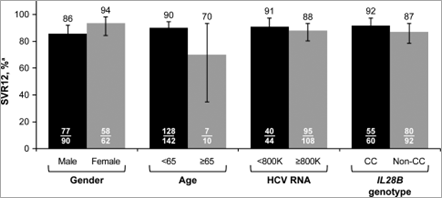
hep27726-fig-0001

Figure 1. VR by baseline characteristics. aHCV RNA <LLOQ (25 IU/mL), detectable or undetectable; error bars reflect 95% CI.

SVR12 rates were higher in patients without cirrhosis (96%) than in patients with cirrhosis (63%; Fig. 2A), although high response rates at end of treatment were noted both in patients with and without cirrhosis (97% and 100%, respectively). A similar trend was observed when SVR12 was analyzed by fibrosis stage, based on FibroTest scores, of F0-F3 (93%) and F4 (70%; Fig. 2B). Overall, results by cirrhosis status or by fibrosis stage based on FibroTest scores were generally consistent between the treatment-naïve and treatment-experienced cohorts. VR at early on-treatment time points did not appear to impact SVR12 rates in patients with cirrhosis, given that the proportion of patients with cirrhosis who achieved SVR12 was the same among those who did or did not have undetectable HCV-RNA levels at on-treatment week 4 (10 of 16 patients with undetectable HCV-RNA levels at week 4 and 10 of 16 patients without undetectable HCV-RNA levels at week 4 achieved SVR12).

hep27726-fig-0002

Figure 2. VR in patients with (A) cirrhosis or (B) fibrosis stage of F4 (FibroTest). aHCV RNA <LLOQ (25 IU/mL), detectable or undetectable; error bars reflect 95% CI. bAmong 32 patients with cirrhosis, 11 (34%) had baseline PLT counts ≤100 × 109 cells/mL. cCirrhosis status determined in 141 patients by liver biopsy (Metavir F4), FibroScan (>14.6 kPa), or FibroTest score ≥0.75 and APRI >2; for 11 patients, cirrhosis status was missing or inconclusive (FibroTest score >0.48 to <0.75 or APRI >1 to ≤2). dPer the study protocol, FibroTest assessments were performed during screening (FibroTest scores not available for 3 treatment-naïve patients); F0-F3 defined as FibroTest score of ≤0.74 and F4 defined as FibroTest score of >0.74.

The relationship between resistance-associated variants (RAVs) at NS5A amino acid positions M28, A30, L31, and Y93 at baseline and SVR12 was assessed. No patients had L31 polymorphisms at baseline; 1 patient without cirrhosis had M28V at baseline and achieved SVR12. NS5A-A30 polymorphisms were detected in 14 of 147 patients at baseline. Of the 14 patients with A30 polymorphisms, 9 of 9 without cirrhosis and 1 of 5 with cirrhosis achieved SVR12. Among the 4 patients with cirrhosis with baseline A30 polymorphisms who did not achieve SVR12, 2 also had Y93H at baseline, 1 had A30T, which has no effect on DCV potency in vitro, and 1 had A30K, which was associated with SVR12 in the 5 remaining patients with this polymorphism.[18] NS5A-Y93H was detected in 13 of 147 patients who had NS5A sequence at baseline; of these 13 patients, 6 of 9 without cirrhosis and 1 of 4 with cirrhosis achieved SVR12. No NS5B RAVs were detected at amino acid positions associated with resistance to SOF (159, 282, or 321) at baseline.

Virologic Failure

Occurrence of VF was low, with no VBTs observed (Table 2). One treatment-naïve patient with cirrhosis had a quantifiable HCV-RNA level of 53 IU/mL at end of treatment; this event did not meet the protocol definition of VBT, which required on-treatment confirmation of the HCV-RNA measurement. The patient was a slow responder through week 4 and had a low baseline PLT count (83 × 109 cells/L), reflecting advanced cirrhosis. Sixteen patients (9 treatment naïve and 7 treatment experienced) had post-treatment relapse, of whom 11 (7 treatment naïve and 4 treatment experienced) had cirrhosis at baseline. All of the relapses occurred by post-treatment week 4 except for 1, which occurred between post-treatment week 4 and post-treatment week 12 in a treatment-naïve patient without cirrhosis. Factors that may have contributed to treatment failure in this patient included a very high baseline HCV-RNA level (27.5 × 10⁶ IU/mL), presence of the NS5A-Y93H RAV at baseline, and incomplete treatment adherence (93% adherent), although no relapses occurred among the other 4 patients who were not completely adherent to treatment (3 with 90%-95% adherence and 1, who discontinued after week 8 because of pregnancy, with 66% adherence). The NS5A-Y93H RAV emerged in 9 of 16 patients with relapse; of the remaining 7 patients with relapse, 6 had NS5A-Y93H at baseline and 1 had emergent NS5A-L31I. NS5B RAVs at amino acid positions associated with resistance to SOF (159, 282, or 321) were not detected at relapse.

Safety and Tolerability

DCV plus SOF was well tolerated, with no AEs leading to discontinuation of treatment (Table 3). There were no deaths and only 1 serious AE (SAE) was reported on-treatment: an event of gastrointestinal hemorrhage that was considered not related to study medications. The most common AEs (in >10% of patients) were headache, fatigue, and nausea, and the incidence of grade 3 AEs was low (2%), with no grade 4 AEs reported.

Table 3. Safety and Tolerability

Capture

Capture2

Capture3

Few treatment-emergent grade 3/4 laboratory abnormalities were observed with DCV plus SOF, with such events reported only for absolute lymphocytes, PLTs, international normalized ratio (INR), and lipase. Incidences of these grade 3/4 laboratory abnormalities were low (≤2% each), and none led to clinically significant bleeding or pancreatitis or to treatment discontinuation. Moreover, these abnormalities were primarily transient increases or decreases that were not present for prolonged periods during treatment. No treatment-emergent grade 3/4 abnormalities were observed in hemoglobin (Hgb) or liver-related parameters, including alanine aminotransferase (ALT) and AST and total bilirubin.

Discussion

In patients chronically infected with HCV genotype 3, the all-oral, 12-week regimen of DCV plus SOF achieved SVR12 rates of 90% in treatment-naïve patients and 86% in treatment-experienced patients; SVR12 was achieved in 96% of patients without cirrhosis and in 63% of patients with cirrhosis. No VBTs were observed, and all but 1 patient achieved a VR at end of treatment. The combination of DCV plus SOF was well tolerated, with a low incidence of SAEs, no deaths or AEs leading to discontinuation, and few treatment-emergent grade 3/4 laboratory abnormalities. These results are generally consistent with those from a phase II study demonstrating the efficacy and tolerability of DCV plus SOF, with or without RBV, in patients with genotype 3 infection.[17] Overall, findings from the present study show that in genotype 3–infected patients without cirrhosis, a 12-week treatment with DCV plus SOF is efficacious, compared with the current 24-week, all-oral regimens containing RBV.

SVR12 rates were comparable across subgroups based on gender, age, baseline HCV-RNA levels, and IL28B genotype. Notably, this study included patients who previously failed treatment with SOF- or ALV-containing regimens, of whom 71% and 100%, respectively, achieved SVR12. A limitation of the study is that the impact of race on SVR12 rates could not be fully assessed owing to the high proportion of white patents enrolled (90% overall); however, all 6 of the black patients enrolled in the study achieved SVR12.

SVR12 rates with DCV plus SOF were higher in patients without cirrhosis than in those with cirrhosis, and in patients with a fibrosis stage (based on FibroTest scores) of F0-F3 than in those with F4. However, the 63% SVR12 rate in patients with cirrhosis is comparable to that achieved with 16 (61%) or 24 weeks (67%) of SOF plus RBV, with the advantages of an IFN-free and shorter-duration regimen.[7] On-treatment and end-of-treatment response rates were similar in patients with or without cirrhosis, with relapse accounting for all but one of the treatment failures: among the 16 patients with relapse, 11 had cirrhosis. Relapse was more frequent in the 4 patients with cirrhosis who had Y93H RAVs at baseline, although these RAVs did not measurably affect on-treatment response. Other possible reasons for the higher relapse rate in genotype 3–infected patients with cirrhosis remain uncertain. Given that high relapse rates have also been observed with other all-oral regimens after treatment of genotype 3 infection,[14, 18] this HCV genotype may be more difficult than others to eradicate with DAAs, particularly in patients with cirrhosis. Multiple factors may contribute to this effect and require further study.

The robust on-treatment VR with DCV plus SOF, with nearly all VFs the result of post-treatment relapse, suggests that optimizing treatment outcomes in patients with cirrhosis could include the addition of RBV or a longer treatment duration. A randomized study has been initiated (clinicaltrials.gov: NCT02319031)[19] in which patients with genotype 3 infection and compensated advanced cirrhosis are receiving DCV in combination with SOF and RBV for 12 or 16 weeks, with the objective of determining whether adding RBV and extending treatment will improve the durability of response post-treatment. This strategy has been successful with other all-oral regimens. A recent report regarding a phase II study of SOF plus GS-5816, with or without RBV, suggests that the addition of RBV improves response rates in genotype 3–infected patients with cirrhosis. In treatment-experienced patients with cirrhosis treated for 12 weeks, SVR12 rates were higher with SOF plus GS-5816 with the addition of RBV (85%-96%) than with sofosbuvir plus GS-5816 alone (58%-88%).[20] The combination of LDV plus SOF with RBV for 12 weeks has been reported to provide SVR12 rates of 89% in genotype 3–infected, treatment-experienced patients without cirrhosis and a lower rate of 77% in those with cirrhosis.[21] Because DCV has shown greater potency in vitro against genotype 3, compared with LDV,[11, 22-24] the combination of DCV plus SOF, with the addition of RBV, may be expected to provide improved response rates relative to the current results in patients with cirrhosis. DCV plus SOF, with or without RBV, is also being evaluated in additional patient populations with high unmet medical needs in other studies of the ALLY phase 3 program. These include patients who have cirrhosis or who are post–liver transplant (ALLY-1; ClinicalTrials.gov: NCT02032875) and patients who are coinfected with HIV (ALLY-2; ClinicalTrials.gov: NCT02032888). DCV has been approved in combination with other anti-HCV agents in Europe and Japan.

DCV plus SOF was associated with a favorable safety profile. Incidences of SAEs and grade 3/4 AEs were low, and no deaths or AEs leading to discontinuation were reported. Few grade 3/4 laboratory abnormalities were reported, and the events that were observed were primarily transient changes and did not lead to treatment discontinuation. No grade 3/4 abnormalities in Hgb emerged during treatment, whereas previous studies have reported reductions in Hgb levels with the combination of SOF plus RBV.[14, 15] Overall, no notable safety concerns were observed with the combination of DCV plus SOF.

In summary, a 12-week regimen of DCV plus SOF achieved SVR12 in 96% of treatment-naïve and treatment-experienced patients with genotype 3 infection without cirrhosis and was well tolerated. This regimen, without the addition of RBV and with a shorter treatment duration relative to currently approved all-oral regimens, demonstrated high SVR12 rates across patient subgroups, except in patients with cirrhosis and regardless of past treatment response. These findings support the 12-week regimen of DCV plus SOF as an efficacious, well-tolerated treatment option. Additional evaluation to optimize efficacy in genotype 3–infected patients with cirrhosis is underway.[19]

References

Source

April 10, 2015

All-oral 12-week treatment with daclatasvir plus sofosbuvir in patients with hepatitis C virus genotype 3 infection: ALLY-3 phase III study

Hepatology. 2015 Apr;61(4):1127-35. doi: 10.1002/hep.27726. Epub 2015 Mar 10

Nelson DR1, Cooper JN, Lalezari JP, Lawitz E, Pockros PJ, Gitlin N, Freilich BF, Younes ZH, Harlan W, Ghalib R, Oguchi G, Thuluvath PJ, Ortiz-Lasanta G, Rabinovitz M, Bernstein D, Bennett M, Hawkins T, Ravendhran N, Sheikh AM, Varunok P, Kowdley KV, Hennicken D, McPhee F, Rana K, Hughes EA; ALLY-3 Study Team.

Author information

1University of Florida, Gainesville, FL.

Abstract

Treatment options for patients with hepatitis C virus (HCV) genotype 3 infection are limited, with the currently approved all-oral regimens requiring 24-week treatment and the addition of ribavirin (RBV). This phase III study (ALLY-3; ClinicalTrials.gov: NCT02032901) evaluated the 12-week regimen of daclatasvir (DCV; pangenotypic nonstructural protein [NS]5A inhibitor) plus sofosbuvir (SOF; pangenotypic NS5B inhibitor) in patients infected with genotype 3. Patients were either treatment naïve (n = 101) or treatment experienced (n = 51) and received DCV 60 mg plus SOF 400 mg once-daily for 12 weeks. Coprimary endpoints were the proportions of treatment-naïve and treatment-experienced patients achieving a sustained virological response (SVR) at post-treatment week 12 (SVR12). SVR12 rates were 90% (91 of 101) and 86% (44 of 51) in treatment-naïve and treatment-experienced patients, respectively; no virological breakthrough was observed, and ≥99% of patients had a virological response (VR) at the end of treatment. SVR12 rates were higher in patients without cirrhosis (96%; 105 of 109) than in those with cirrhosis (63%; 20 of 32). Five of seven patients who previously failed treatment with an SOF-containing regimen and 2 of 2 who previously failed treatment with an alisporivir-containing regimen achieved SVR12. Baseline characteristics, including gender, age, HCV-RNA levels, and interleukin-28B genotype, did not impact virological outcome. DCV plus SOF was well tolerated; there were no adverse events (AEs) leading to discontinuation and only 1 serious AE on-treatment, which was unrelated to study medications. The few treatment-emergent grade 3/4 laboratory abnormalities that were observed were transient.

CONCLUSION: A 12-week regimen of DCV plus SOF achieved SVR12 in 96% of patients with genotype 3 infection without cirrhosis and was well tolerated. Additional evaluation to optimize efficacy in genotype 3-infected patients with cirrhosis is underway. (Hepatology 2015;61:1127-1135).

© 2015 The Authors. Hepatology published by Wiley Periodicals, Inc., on behalf of the American Association for the Study of Liver Diseases.

PMID: 25614962 [PubMed - in process]

Source

March 19, 2015

Bristol-Myers Squibb Announces Acceptance of New Drug Application for Investigational Daclatasvir for FDA Review for the Treatment of Hepatitis C Genotype 3

BMS-logo

The NDA contains data to support approval for daclatasvir in combination with sofosbuvir; would be the first 12-week regimen specifically for the treatment of hepatitis C genotype 3

The application is based on a Phase III clinical trial which tested a 12-week, ribavirin-free regimen and resulted in sustained virologic response (SVR12) in 90% of treatment-naïve and 86% of treatment-experienced genotype 3 HCV patients

Thursday, March 12, 2015 3:00 pm EDT

"We also are continuing clinical trials to determine the potential of daclatasvir-based regimens in treating a range of other high unmet-need patients, including those coinfected with HIV, HCV patients with decompensated cirrhosis, and HCV recurrence in post-transplant patients."

PRINCETON, N.J.--(BUSINESS WIRE)--Bristol-Myers Squibb Company (NYSE:BMY) announced today that the resubmitted new drug application (NDA) for daclatasvir, an investigational NS5A replication complex inhibitor, has been accepted for review by the U.S. Food and Drug Administration (FDA) for use in combination with sofosbuvir for the treatment of chronic hepatitis C (HCV) genotype 3. The original NDA has been amended to include data from the Phase III ALLY-3 trial, which showed high cure rates for the combination, with sustained virologic response 12 weeks after treatment (SVR12) in 90% of treatment-naïve and 86% of treatment-experienced genotype 3 HCV patients. SVR12 rates were higher (96%) in non-cirrhotic genotype 3 patients, regardless of treatment history. The FDA will now review the submission within a six-month timeframe.

“The daclatasvir-based NDA seeks to address a high-unmet patient need that still exists despite recent hepatitis C treatment advances. Approximately 9-12% of HCV patients in the U.S. have genotype 3. That’s thousands of individuals in the U.S. who historically have had limited treatment options requiring at least 24 weeks of treatment,” said Douglas Manion, M.D., head of Specialty Development, Bristol-Myers Squibb. “We also are continuing clinical trials to determine the potential of daclatasvir-based regimens in treating a range of other high unmet-need patients, including those coinfected with HIV, HCV patients with decompensated cirrhosis, and HCV recurrence in post-transplant patients.”

Genotype 3 is estimated to affect 54.3 million people worldwide, and is the second most common hepatitis C genotype after genotype 1 (83.4 million). The more aggressive nature of genotype 3 lies in the damage it causes to the liver, as it is associated with progressive disease, increased rates of steatosis and a disproportionately increased risk of hepatocellular carcinoma.

In the ALLY-3 study, the daclatasvir and sofosbuvir combination regimen was well tolerated, with no deaths, treatment-related serious adverse events, or discontinuations due to adverse events. The most frequent side effects (≥5%) were headache (19.7%), fatigue (19.1%), nausea (11.8%), diarrhea (8.6%), insomnia (5.9%), abdominal pain and arthralgia (both 5.3%). Additionally, there were 17 (11.2%) treatment failures, with 16 relapses post-treatment and 1 rebound at the end of treatment. There were no viral breakthroughs in this ribavirin-free regimen.

About ALLY-3: Study Design

This Phase III open-label clinical trial enrolled 152 genotype 3 HCV patients; 101 treatment-naïve patients and 51 treatment-experienced patients in 2 cohorts each received daclatasvir 60 mg and sofosbuvir 400 mg once daily for 12 weeks, with 24 weeks of follow-up. The primary endpoint was SVR12 rates, defined as HCV RNA < LLOQ target detected or not detected at follow-up week 12 in treatment-naïve and treatment-experienced patients.

About Hepatitis C

Hepatitis C is a virus that infects the liver and is transmitted through direct contact with infected blood and blood products. Approximately 170 million people worldwide are infected with hepatitis C, with an estimated 2.7–3.9 million chronically infected in the United States. Up to 90 percent of those infected with hepatitis C will not spontaneously clear the virus and will become chronically infected. According to the World Health Organization, up to 20 percent of people with chronic hepatitis C will develop cirrhosis; of those, up to 20 percent may progress to liver cancer.

About Bristol-Myers Squibb’s HCV Portfolio

Bristol-Myers Squibb’s research efforts are focused on advancing late-stage compounds to deliver the most value to patients with hepatitis C. At the core of our pipeline is daclatasvir, a NS5A complex inhibitor, which continues to be investigated in multiple treatment regimens and in people with co-morbidities.

Daclatasvir was approved in Europe in August 2014, and more recently in Brazil in January 2015, for use in combination with other medicinal products across genotypes 1, 2, 3 and 4 for the treatment of chronic hepatitis C virus (HCV) infection in adults. Daclatasvir also is approved in Japan in combination with asunaprevir, a NS3/4A protease inhibitor. The daclatasvir+asunaprevir dual regimen is Japan’s first all-oral, interferon- and ribavirin-free treatment regimen for patients with genotype 1 chronic HCV infection, including those with compensated cirrhosis.

About Bristol-Myers Squibb

Bristol-Myers Squibb is a global biopharmaceutical company whose mission is to discover, develop and deliver innovative medicines that help patients prevail over serious diseases. For more information, please visit http://www.bms.com or follow us on Twitter at http://twitter.com/bmsnews.

Bristol-Myers Squibb Forward Looking Statement

This press release contains "forward-looking statements" as that term is defined in the Private Securities Litigation Reform Act of 1995 regarding the research, development and commercialization of pharmaceutical products. Such forward-looking statements are based on current expectations and involve inherent risks and uncertainties, including factors that could delay, divert or change any of them, and could cause actual outcomes and results to differ materially from current expectations. No forward-looking statement can be guaranteed. Among other risks, there can be no guarantee that daclatasvir will receive regulatory approval in the United States, or if approved, that it will become a commercially successful product. Forward-looking statements in this press release should be evaluated together with the many uncertainties that affect Bristol-Myers Squibb's business, particularly those identified in the cautionary factors discussion in Bristol-Myers Squibb's Annual Report on Form 10-K for the year ended December 31, 2014, in our Quarterly Reports on Form 10-Q and our Current Reports on Form 8-K. Bristol-Myers Squibb undertakes no obligation to publicly update any forward-looking statement, whether as a result of new information, future events or otherwise.

Contact:

Bristol-Myers Squibb Company
Media:
Robert Perry, Office: 609-419-5378
Cell: 407-492-4616
rob.perry@bms.com

or

Investors:
Ranya Dajani, 609-252-5330
ranya.dajani@bms.com

Source

November 8, 2014

ALLY Trial Demonstrates High Cure Rates for Investigational Daclatasvir and Sofosbuvir Combination among Genotype 3 Hepatitis C Patients

bms_logo

Daclatasvir+sofosbuvir regimen achieves SVR12 in 90% of treatment-naïve and 86% of treatment-experienced genotype 3 patients

ALLY-3 is the first Phase 3 study of an all-oral, ribavirin-free treatment regimen for genotype 3 HCV patients with a 12-week treatment duration

Genotype 3 is the second most common genotype worldwide and has emerged as one of the most difficult to treat

Saturday, November 8, 2014 9:00 am EST

"Both treatment naïve and treatment experienced patients in the ALLY-3 study achieved high SVR rates. These results are encouraging given that patients with genotype 3 have emerged as among the hardest to treat"

PRINCETON, N.J.--(BUSINESS WIRE)--Bristol-Myers Squibb Company (NYSE:BMY) today announced late-breaking data from the landmark ALLY Trial investigating a ribavirin-free 12-week regimen of daclatasvir (DCV) in combination with sofosbuvir (SOF) in genotype 3 hepatitis C (HCV) patients, a patient population that has emerged as one of the most difficult to treat. The results of the study, which showed sustained virologic response 12 weeks after treatment (SVR12) in 90% of treatment-naïve and 86% of treatment-experienced patients, will be presented at The Liver Meeting® 2014, the Annual Meeting of The American Association for the Study of Liver Diseases (AASLD), in Boston, MA, November 7 – 11.

“Both treatment naïve and treatment experienced patients in the ALLY-3 study achieved high SVR rates. These results are encouraging given that patients with genotype 3 have emerged as among the hardest to treat,” said David R. Nelson, M.D., Professor of Medicine, Molecular Genetics and Microbiology Director, UF Clinical and Translational Science Institute, and Assistant Vice President of Research for the University of Florida. “Genotype 3 is associated with a more rapid progression of disease and remains a challenge to the efficacy of even newer regimens. The ALLY-3 results demonstrate the possibility of bringing a cure to genotype 3 patients in an all-oral, 12-week regimen.”

These results build upon the existing body of data on the daclatasvir and sofosbuvir combination. Data from an open-label, randomized study of daclatasvir with sofosbuvir in genotypes 1, 2, and 3 demonstrated that the 24-week regimen of daclatasvir and sofosbuvir (± ribavirin) achieved SVR12 in 89% of patients with genotype 3. The ALLY study presented at The Liver Meeting investigates the regimen for 12 weeks, halving the previous treatment duration. Other ongoing ALLY studies examine diverse HCV populations across all genotypes: cirrhotic and post-liver transplant patients, as well as treatment-naïve and treatment-experienced patients who are co-infected with HIV.

“HCV is a complex disease, and the treatment community needs multiple options to address the remaining unmet medical needs,” said Douglas Manion, M.D., head of Specialty Development, Bristol-Myers Squibb. “Daclatasvir has shown pan-genotypic activity in bench research, a factor which is becoming increasingly important as we learn more about the complexity of HCV. Further, daclatasvir’s potential to be combined with many other agents, including sofosbuvir, is significant in continuing to develop additional treatment options that may help patients of all genotypes achieve cure.”

In the ALLY-3 study, the daclatasvir and sofosbuvir combination regimen was well tolerated, with no deaths, treatment-related serious adverse events, or discontinuations due to adverse events. The most frequent side effects (≥5%) were headache (19.7%), fatigue (19.1%), nausea (11.8%), diarrhea (8.6%), insomnia (5.9%), abdominal pain and arthralgia (both 5.3%). Additionally, there were 17 (11.2%) treatment failures, with 16 relapses post-treatment and 1 rebound at the end of treatment. There were no viral breakthroughs in this ribavirin-free regimen.

About ALLY-3: Study Design

This Phase 3 open-label clinical trial enrolled 152 genotype 3 HCV patients; 101 treatment-naïve patients and 51 treatment-experienced patients in 2 cohorts each received daclatasvir 60 mg and sofosbuvir 400 mg once daily for 12 weeks, with 24 weeks of follow-up. The primary endpoint was SVR12 rates, defined as HCV RNA < LLOQ target detected or not detected at follow-up week 12 in treatment-naïve and treatment-experienced patients.

The full abstract for the presentation is available at The Liver Meeting website.

About Hepatitis C

Hepatitis C is a virus that infects the liver and is transmitted through direct contact with infected blood and blood products. Approximately 170 million people worldwide are infected with hepatitis C, with an estimated 2.7–3.9 million chronically infected in the United States. Up to 90 percent of those infected with hepatitis C will not spontaneously clear the virus and will become chronically infected. According to the World Health Organization, up to 20 percent of people with chronic hepatitis C will develop cirrhosis; of those, up to 20 percent may progress to liver cancer.

About Genotype 3

Genotype 3 is estimated to affect 54.3 million people and is the second most common worldwide behind genotype 1 (83.4 million). It is now potentially the most difficult-to-treat genotype, and the more aggressive nature of genotype 3 lies in the damage it causes to the liver, as it is associated with progressive disease, increased rates of steatosis and a disproportionately increased risk of hepatocellular carcinoma.

About Bristol-Myers Squibb’s HCV Portfolio

Bristol-Myers Squibb’s research efforts are focused on advancing late-stage compounds to deliver the most value to patients with hepatitis C. At the core of our pipeline is daclatasvir, a potent pan-genotypic NS5A complex inhibitor (in vitro), which continues to be investigated in multiple treatment regimens and in people with co-morbidities.

Daklinza (daclatasvir) was recently approved in the EU for use in combination with other medicinal products across genotypes 1, 2, 3 and 4 for the treatment of chronic hepatitis C virus (HCV) infection in adults. Daklinza is also approved in Japan in combination with Sunvepra (asunaprevir), a NS3/4A protease inhibitor. The Daklinza+Sunvepra Dual Regimen is Japan’s first all-oral, interferon- and ribavirin-free treatment regimen for patients with genotype 1 chronic HCV infection, including those with compensated cirrhosis.

In 2013, Bristol-Myers Squibb’s investigational all-oral DCV-TRIO regimen (daclatasvir/asunaprevir/beclabuvir) received Breakthrough Therapy Designation in the U.S., which helped to expedite the start of the ongoing Phase 3 UNITY program. Study populations include non-cirrhotic naïve, cirrhotic naïve and previously treated patients. In addition to UNITY 1 and 2, both the UNITY-3 study among Japanese treatment-naïve and -experienced genotype 1 patients and UNITY-4, which studies the DCV-TRIO regimen without ribavirin in cirrhotic and non-cirrhotic patients in Korea, Russia and Taiwan, are currently ongoing. The DCV-TRIO regimen is being studied as a fixed-dose-combination treatment with twice daily dosing.

About Bristol-Myers Squibb

Bristol-Myers Squibb is a global biopharmaceutical company whose mission is to discover, develop and deliver innovative medicines that help patients prevail over serious diseases. For more information, please visit http://www.bms.com or follow us on Twitter at http://twitter.com/bmsnews.

Bristol-Myers Squibb Forward Looking Statement

This press release contains "forward-looking statements" as that term is defined in the Private Securities Litigation Reform Act of 1995 regarding the research, development and commercialization of pharmaceutical products. Such forward-looking statements are based on current expectations and involve inherent risks and uncertainties, including factors that could delay, divert or change any of them, and could cause actual outcomes and results to differ materially from current expectations. No forward-looking statement can be guaranteed. Among other risks, there can be no guarantee that daclatasvir will receive regulatory approval in the United States, or if approved, that it will become a commercially successful product. Forward-looking statements in this press release should be evaluated together with the many uncertainties that affect Bristol-Myers Squibb's business, particularly those identified in the cautionary factors discussion in Bristol-Myers Squibb's Annual Report on Form 10-K for the year ended December 31, 2013, in our Quarterly Reports on Form 10-Q and our Current Reports on Form 8-K. Bristol-Myers Squibb undertakes no obligation to publicly update any forward-looking statement, whether as a result of new information, future events or otherwise.

Contact:

Bristol-Myers Squibb Company
Media:
Carrie Fernandez, Office: 609-419-5448
Cell: 215-859-2605
carrie.fernandez@bms.com
or
Investors:
Ranya Dajani, 609-252-5330
ranya.dajani@bms.com
or
Ryan Asay, 609-252-5020
ryan.asay@bms.com

Source